TERI Seeks Bids for 115 MWh BESS Across Delhi Substations
ECONOMY & POLICY

TERI Seeks Bids for 115 MWh BESS Across Delhi Substations

The Energy and Resources Institute (TERI) has issued a tender on behalf of BSES Rajdhani Power Limited (BRPL) for a 57.5 MW/115 MWh Battery Energy Storage System (BESS) to be developed across four 66/11 kV grid substations within BRPL's licensed distribution area. The facility is designed to provide two hours of energy storage and the tender invites bids on or before 27 July 2026 via the designated electronic tender portal. The initiative aims to bolster the integration of renewable energy in Delhi's distribution network and to improve local grid flexibility.

The tender sets out a detailed scope covering site survey, planning, design, engineering, procurement, transportation and supply, insurance, unloading and handling, installation, integration, testing, commissioning, and operation and maintenance of the battery energy storage system. The successful developer must install monitoring and data recording systems and provide the Buying Utility, the Ministry of New and Renewable Energy, the State Load Despatch Centre and the National Load Despatch Centre with 24x7 remote access to the project's monitoring portal. Mandatory measures include geo tagging of the installation and a firewall with a minimum three hour fire resistance rating.

Commercial and operational clauses require the Buying Utility to process monthly payments within 45 days of bill submission to the account notified by the developer and allow a maximum of two charge discharge cycles per day. Each charging or discharging cycle may either be a continuous two hour operation or multiple intervals provided the cumulative energy remains within rated capacity. The BESS will be grid connected at 66 kV/11 kV substations and contracted to provide charging and discharging services.

Capacity allocation across the four substations is specified as follows: Sagarpur?DESU Colony thirty MW/sixty MWh, Bindapur fifteen MW/thirty MWh, Hari Nagar seven point five MW/fifteen MWh and G4 five MW/ten MWh. These installations are intended to provide targeted flexibility where load and renewable generation patterns require rapid response.

Earlier deployments cited in the project brief include a consortium led by AmpereHour Energy in partnership with Indigrid that developed a regulatory approved BESS with BRPL in Delhi and was described as among the first such projects in the country. Other standalone utility scale BESS projects in the city are set to add fifty five point five MW/one hundred eleven MWh of storage capacity. The broader programme also includes underground cabling works in Chandni Chowk and the foundation of a 66/11 kV, sixty three MVA GIS indoor grid substation at Mandoli.

The Energy and Resources Institute (TERI) has issued a tender on behalf of BSES Rajdhani Power Limited (BRPL) for a 57.5 MW/115 MWh Battery Energy Storage System (BESS) to be developed across four 66/11 kV grid substations within BRPL's licensed distribution area. The facility is designed to provide two hours of energy storage and the tender invites bids on or before 27 July 2026 via the designated electronic tender portal. The initiative aims to bolster the integration of renewable energy in Delhi's distribution network and to improve local grid flexibility. The tender sets out a detailed scope covering site survey, planning, design, engineering, procurement, transportation and supply, insurance, unloading and handling, installation, integration, testing, commissioning, and operation and maintenance of the battery energy storage system. The successful developer must install monitoring and data recording systems and provide the Buying Utility, the Ministry of New and Renewable Energy, the State Load Despatch Centre and the National Load Despatch Centre with 24x7 remote access to the project's monitoring portal. Mandatory measures include geo tagging of the installation and a firewall with a minimum three hour fire resistance rating. Commercial and operational clauses require the Buying Utility to process monthly payments within 45 days of bill submission to the account notified by the developer and allow a maximum of two charge discharge cycles per day. Each charging or discharging cycle may either be a continuous two hour operation or multiple intervals provided the cumulative energy remains within rated capacity. The BESS will be grid connected at 66 kV/11 kV substations and contracted to provide charging and discharging services. Capacity allocation across the four substations is specified as follows: Sagarpur?DESU Colony thirty MW/sixty MWh, Bindapur fifteen MW/thirty MWh, Hari Nagar seven point five MW/fifteen MWh and G4 five MW/ten MWh. These installations are intended to provide targeted flexibility where load and renewable generation patterns require rapid response. Earlier deployments cited in the project brief include a consortium led by AmpereHour Energy in partnership with Indigrid that developed a regulatory approved BESS with BRPL in Delhi and was described as among the first such projects in the country. Other standalone utility scale BESS projects in the city are set to add fifty five point five MW/one hundred eleven MWh of storage capacity. The broader programme also includes underground cabling works in Chandni Chowk and the foundation of a 66/11 kV, sixty three MVA GIS indoor grid substation at Mandoli.

Related Stories

Gold Stories

Next Story
Resources

Schindler named among Forbes’ World’s Best Employers 2026

Schindler has been named among Forbes’ World’s Best Employers 2026, a global ranking recognising companies for their workplace environments.Compiled by Forbes in partnership with Statista, the ranking is based on independent employee feedback, including whether employees would recommend their organisation to friends and family.The company said the recognition reflected its focus on creating a workplace where employees can develop their expertise and build careers. ..
Next Story
Infrastructure Urban

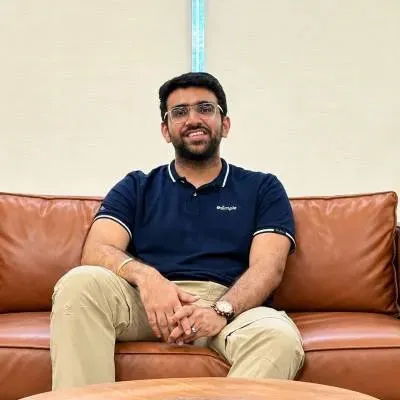
India needs an export-execution mindset: Vishesh Jain

Interview with Vishesh Jain, Founder & CEO, EximpleWhat gaps in India’s global trade ecosystem led you to build Eximple, and what problem did you see businesses struggling with most?Eximple came out of a problem that all three founders had seen from different choke points in the trade ecosystem. India has millions of MSMEs and manufacturers, and many of them can make products that are genuinely competitive on quality. Yet only a small fraction is able to build meaningful international businesses. In our experience, the gap is usually not manufacturing capability; it is the ability to exe..

Next Story
Building Material

Nuvoco reports 13.5% revenue growth in Q2 FY27

Nuvoco Vistas Corp. Ltd. reported consolidated revenue of Rs 27.9 billion for Q2 FY27, up 13.5% year on year. Cement sales volume rose 9% to 4.7 million tonnes (MMT), while EBITDA increased 11% to Rs 4.11 billion.The company said it began its cement operations in 2014 with a 2.3 MMT per annum (MMTPA) operation at Nimbol. It now aims to reach 35 MMTPA of cement capacity by FY28, nearly 15 times its initial capacity. Its portfolio spans cement, ready-mix concrete and modern building materials.On sustainability and cost efficiency, Nuvoco partnered with CleanMax for a 46.4 MW wind-solar hybrid re..

Advertisement

Subscribe to Our Newsletter

Get daily newsletters around different themes from Construction world.

STAY CONNECTED

Advertisement

SPECIAL OFFER
QR Code