+
Kochi Metro Phase Three DPR Proposes Direct Airport Link
AVIATION & AIRPORTS

Kochi Metro Phase Three DPR Proposes Direct Airport Link

The detailed project report for Kochi Metro Phase three envisages a direct airport connection and airport check-in facilities at selected stations along the Phase one and Phase two corridors. The plan also provides for increased train frequency during peak hours and reduced headway to align services with flight schedules, while specifically excluding direct connectivity to Angamaly railway station. The proposed 17.5 kilometre line is to originate at Aluva, proceed to Kariyad, pass the airport and terminate at Karayamparambu in Angamaly.

The DPR proposes 15 stations, including Thottakkattukara, Kunnampuram, Parambayam, Nedumbassery, Athani, Kariyad, Airport Railway Station, Airport, Nayathode, Kavarapparambu, Arikkal Junction, LF Hospital, Angamaly Town, Kothakulangara and Karayamparambu. The alignment runs via Nayathode, Kavarapparambu and Arikkal Junction before reaching Karayamparambu.

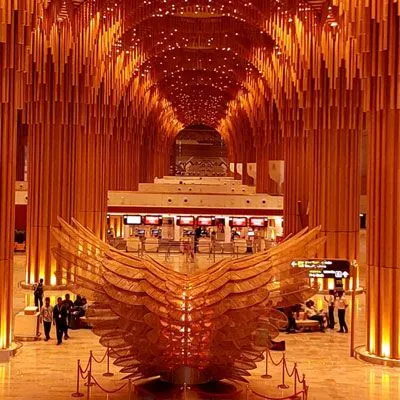
Cochin International Airport Ltd has held discussions with Kochi Metro Rail Ltd on the siting of the airport metro station and has identified the land in front of the Taj Hotel, between the international and domestic terminals, as the most suitable location. An escalator is planned to link the station with the airport and the location will also connect with the airport railway station to ease interchange between rail and air networks. Around 20 cents of CIAL land is to be earmarked for the project. Unlike Phase two, the DPR specifically includes parking facilities at the proposed stations.

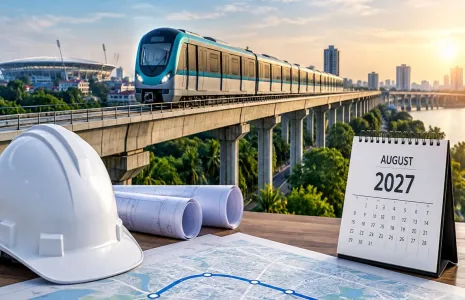
The project is targeted for completion by 2031, with land acquisition and statutory approvals due to begin in 2027 and the overall process estimated to take around four years. The DPR considers an underground stretch near the airport only as a reference option and identifies an elevated viaduct as the most economical alignment. The Phase three project is currently estimated to cost around Rs 70-80 bn, while an underground stretch would add nearly Rs 20 bn to the cost. Officials said routing the metro to Angamaly railway station would require a return to NH 544, lengthen the corridor, increase land acquisition and raise costs, which led to its exclusion from the present alignment.

The detailed project report for Kochi Metro Phase three envisages a direct airport connection and airport check-in facilities at selected stations along the Phase one and Phase two corridors. The plan also provides for increased train frequency during peak hours and reduced headway to align services with flight schedules, while specifically excluding direct connectivity to Angamaly railway station. The proposed 17.5 kilometre line is to originate at Aluva, proceed to Kariyad, pass the airport and terminate at Karayamparambu in Angamaly. The DPR proposes 15 stations, including Thottakkattukara, Kunnampuram, Parambayam, Nedumbassery, Athani, Kariyad, Airport Railway Station, Airport, Nayathode, Kavarapparambu, Arikkal Junction, LF Hospital, Angamaly Town, Kothakulangara and Karayamparambu. The alignment runs via Nayathode, Kavarapparambu and Arikkal Junction before reaching Karayamparambu. Cochin International Airport Ltd has held discussions with Kochi Metro Rail Ltd on the siting of the airport metro station and has identified the land in front of the Taj Hotel, between the international and domestic terminals, as the most suitable location. An escalator is planned to link the station with the airport and the location will also connect with the airport railway station to ease interchange between rail and air networks. Around 20 cents of CIAL land is to be earmarked for the project. Unlike Phase two, the DPR specifically includes parking facilities at the proposed stations. The project is targeted for completion by 2031, with land acquisition and statutory approvals due to begin in 2027 and the overall process estimated to take around four years. The DPR considers an underground stretch near the airport only as a reference option and identifies an elevated viaduct as the most economical alignment. The Phase three project is currently estimated to cost around Rs 70-80 bn, while an underground stretch would add nearly Rs 20 bn to the cost. Officials said routing the metro to Angamaly railway station would require a return to NH 544, lengthen the corridor, increase land acquisition and raise costs, which led to its exclusion from the present alignment.

Related Stories

Gold Stories

Next Story
Infrastructure Urban

TransIndia Launches World View Collection at Meridian

TransIndia Group has recently launched ‘The World View Collection’ at TransIndia Meridian, its residential development in Mumbai’s Sion-Matunga Corridor. The campaign introduces residences located on the 22nd floor and above, offering expansive views of the cityscape, Eastern Bay and the sea.The collection positions elevation as an integral part of the living experience, with the higher-floor homes designed around openness, changing skylines and wider city views. Rather than focusing only on floor height, the campaign highlights how elevated residences can offer a different perspective o..

Next Story
Real Estate

Villaro Design Studio Opens on MG Road in Delhi

Furniture designer Yuvraj Vohra has recently launched the new Villaro Design Studio on MG Road, Delhi, introducing a furniture brand built around an architectural approach to design, materiality and craftsmanship.Trained as an architect, Vohra approaches furniture as an integral part of the spatial experience rather than as standalone objects. Villaro's design philosophy focuses on proportion, material expression and the relationship between furniture and its surrounding architecture.The collection explores combinations of stone, marble, wood, metal and upholstery, with materials treated as st..

Next Story
Infrastructure Urban

India-Belgium Trade Shows Signs of Recovery in FY2026

India-Belgium economic relations are gaining renewed momentum following Belgian Prime Minister Bart De Wever’s three-day official visit to India from September 2–4, 2026. The visit, the first by a Belgian Prime Minister to India in two decades, focused on strengthening cooperation across trade, investment, defence, technology, connectivity and logistics.Belgium is an important European investment and trading partner for India, with cumulative foreign direct investment inflows of around $4.25 billion between April 2000 and March 2026. The country is a major European manufacturing, trade and..

Advertisement

Subscribe to Our Newsletter

Get daily newsletters around different themes from Construction world.

STAY CONNECTED

Advertisement

SPECIAL OFFER
QR Code