Dehradun Bypass Construction Advancing To Ease Traffic
ROADS & HIGHWAYS

Dehradun Bypass Construction Advancing To Ease Traffic

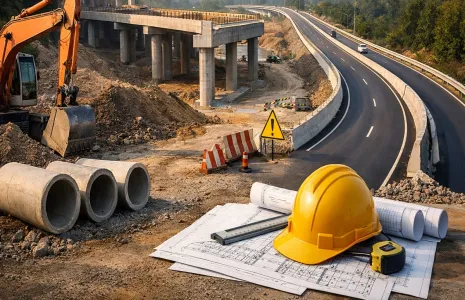
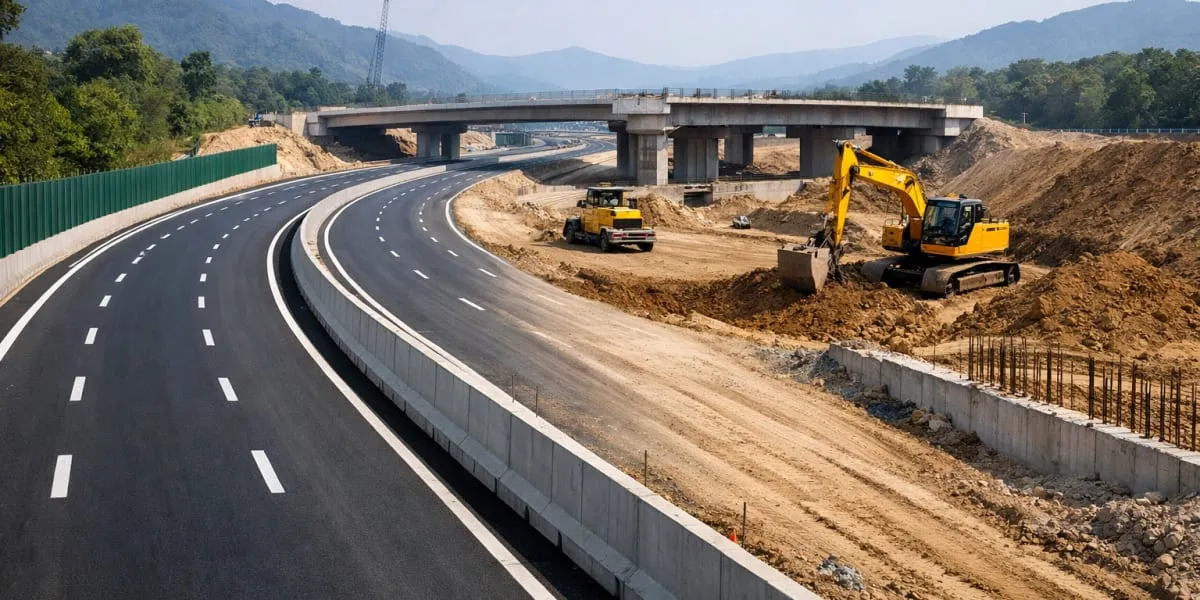
NHAI is constructing a 12 km greenfield four-lane access-controlled bypass to link the Delhi?Dehradun Economic Corridor in Uttarakhand. The alignment runs from Jhajhra to the Paonta Saheb-Ballupur section of NH-7 and ends near Asharori Check Post in Dehradun district. The scheme is being implemented at a capital cost of around Rs 7.16 billion (bn), and physical progress is around 44 per cent. Completion is scheduled for April 2027. Designed as a fully access-controlled national highway, the bypass will act as an alternate south-western route to divert non-destined traffic away from Dehradun city towards Selaqui industrial area, Vikasnagar, Herbertpur and Paonta Sahib. It is expected to reduce traffic congestion and vehicular pollution in the urban core. The route will also strengthen inter-state connectivity to northern regions, including Haryana, Punjab and Himachal Pradesh via the Delhi-Dehradun Economic Corridor. The design focuses on sustainability, with a design speed of 100 kmph and regulated stretches at 80 kmph to minimise impact on forest land. Right of Way has been optimised to 30 metres instead of the conventional 60 metres to preserve trees and ecological balance. These measures aim to balance mobility needs with environmental protection. Mitigation measures for wildlife include a 350-metre-long Vehicular Over Pass (VOP) and a dedicated Cattle Over Pass (COP), together with seven minor bridges and 21 box culverts. Movement of smaller fauna, such as reptiles and amphibians, will be facilitated through five dedicated Hume Pipe culverts. Continuous fencing and signage indicating speed limits and wildlife zones are being installed to minimise human-wildlife conflict. The bypass will improve connectivity to tourist destinations such as Mussoorie and to support tourism growth in the region. Upon completion, it will divert heavy and transit traffic away from the city, improving urban mobility and the quality of life for residents. The project is expected to provide lasting relief to Dehradun commuters and local communities.

NHAI is constructing a 12 km greenfield four-lane access-controlled bypass to link the Delhi?Dehradun Economic Corridor in Uttarakhand. The alignment runs from Jhajhra to the Paonta Saheb-Ballupur section of NH-7 and ends near Asharori Check Post in Dehradun district. The scheme is being implemented at a capital cost of around Rs 7.16 billion (bn), and physical progress is around 44 per cent. Completion is scheduled for April 2027. Designed as a fully access-controlled national highway, the bypass will act as an alternate south-western route to divert non-destined traffic away from Dehradun city towards Selaqui industrial area, Vikasnagar, Herbertpur and Paonta Sahib. It is expected to reduce traffic congestion and vehicular pollution in the urban core. The route will also strengthen inter-state connectivity to northern regions, including Haryana, Punjab and Himachal Pradesh via the Delhi-Dehradun Economic Corridor. The design focuses on sustainability, with a design speed of 100 kmph and regulated stretches at 80 kmph to minimise impact on forest land. Right of Way has been optimised to 30 metres instead of the conventional 60 metres to preserve trees and ecological balance. These measures aim to balance mobility needs with environmental protection. Mitigation measures for wildlife include a 350-metre-long Vehicular Over Pass (VOP) and a dedicated Cattle Over Pass (COP), together with seven minor bridges and 21 box culverts. Movement of smaller fauna, such as reptiles and amphibians, will be facilitated through five dedicated Hume Pipe culverts. Continuous fencing and signage indicating speed limits and wildlife zones are being installed to minimise human-wildlife conflict. The bypass will improve connectivity to tourist destinations such as Mussoorie and to support tourism growth in the region. Upon completion, it will divert heavy and transit traffic away from the city, improving urban mobility and the quality of life for residents. The project is expected to provide lasting relief to Dehradun commuters and local communities.

Related Stories

Gold Stories

Next Story
Infrastructure Urban

KONE Opens India's First Digital Experience Centre in Pune

KONE, a global elevator and escalator manufacturer, has inaugurated its first Digital Experience Centre (DEC) in India, located in Pune. The facility aims to showcase how artificial intelligence (AI), connectivity and data-driven technologies can enhance customer experiences and improve building operations.The centre was inaugurated by Jussi Herlin, Executive Vice Chair, KONE Corporation; Philippe Delorme, President and CEO, KONE; and Nandan Nilekani, Co-founder and Chairman of the Board, Infosys.Designed as an interactive customer environment, the facility demonstrates digital solutions cover..

Next Story
Infrastructure Urban

CII GreenCo Launches Circularity Guidelines for Indian Industry

The Confederation of Indian Industry (CII) GreenCo Council has launched the CII GreenCo Circularity Guidelines – Pilot Version at the 17th CII GreenCo Waste & Resource Management Summit 2026 in Chennai. The initiative aims to strengthen resource efficiency, waste reduction and circular economy practices across Indian manufacturing and process industries.The guidelines introduce a structured framework with circularity indices covering raw materials, consumables, packaging and other resource inputs. These indicators will help industries assess existing practices, identify opportunities to ..

Next Story
Infrastructure Energy

Global Electronics Association Launches IPC-1783-CO2E Standard

The Global Electronics Association has introduced IPC-1783-CO2E, a new international standard aimed at improving consistency, transparency and comparability in product carbon footprint reporting across the electronics manufacturing industry.The standard, titled International Standard for Data Collection and Reporting of CO2 Equivalent (CO2e) Emissions for the Electronics Manufacturing Supply Chain, provides industry-specific guidance for collecting, estimating and reporting carbon emissions data.With increasing regulatory requirements and customer expectations, electronics manufacturers face c..

Advertisement

Subscribe to Our Newsletter

Get daily newsletters around different themes from Construction world.

STAY CONNECTED

Advertisement

SPECIAL OFFER
QR Code