+
Delhi-Mumbai Expressway Nine-km Delhi Stretch Opens for Trial
ROADS & HIGHWAYS

Delhi-Mumbai Expressway Nine-km Delhi Stretch Opens for Trial

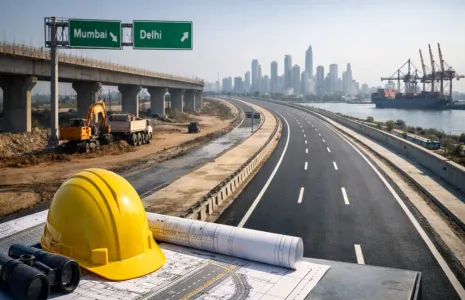
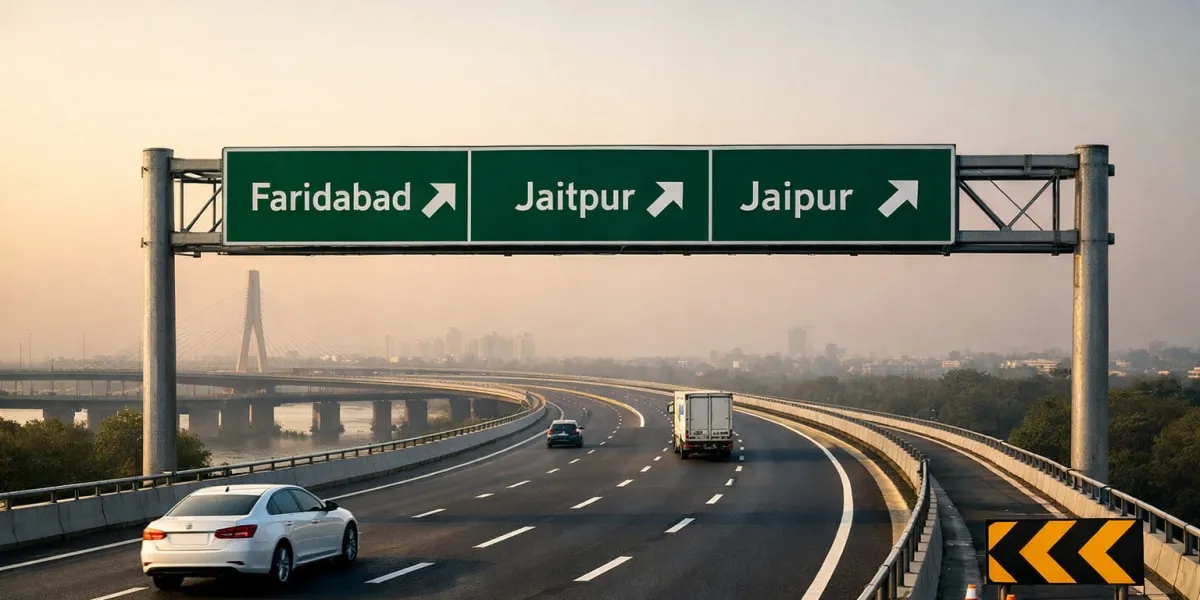
A newly built section of the Delhi-Mumbai Expressway in the capital has opened to traffic on a trial basis, providing a new corridor from Sarai Kale Khan and the DND Flyway towards Faridabad and, ultimately, Jaipur. Hindustan Times reported that the trial is expected to run for about a month before the stretch is formally opened. Authorities began limited runs on the carriageway directing vehicles towards Faridabad via Jaitpur and Meethapur.

Traffic officials said the new corridor could ease pressure on Mathura Road and offer an alternative for commuters travelling from Delhi, Noida and Ghaziabad towards Haryana and Rajasthan. The route connects with the Ring Road and the DND Flyway near the Sarai Kale Khan and Maharani Bagh area, allowing motorists to head southwards without entering congested inner roads. Road officials are using the trial period to assess traffic flow and arrangements before full opening.

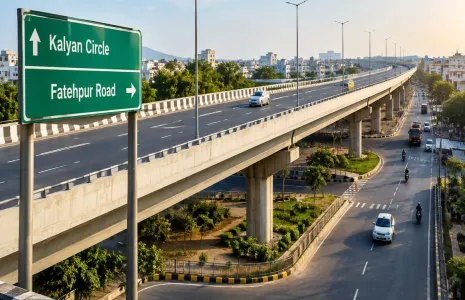
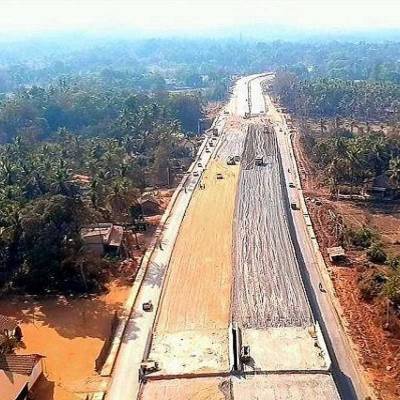
The Delhi portion under trial measures nine km, with around seven and a half km constructed as an elevated carriageway and the remainder at ground level; the alignment includes a 140-metre structure over the Agra Canal. Access points at Jaitpur and Meethapur have been planned but remain closed during the initial phase, with only through traffic to Faridabad being permitted. Residents of New Friends Colony, Sukhdev Vihar, Sarita Vihar and Kalindi Kunj and commuters from Noida and Ghaziabad may benefit from the additional route around the frequently congested Kalindi Kunj crossing.

The National Highways Authority of India (NHAI) has not issued a formal inauguration date, while an official confirmed the road is ready for limited public use and that entry points may be opened during subsequent trials. Traffic personnel have been deployed at the corridor's zero point to direct motorists towards Faridabad and Jaipur, and drivers are being asked to maintain a speed limit of 40 kmph during the trial. Once fully operational, the Delhi section is expected to provide an additional connection for traffic heading towards Faridabad and Jaipur and to ease pressure on some of south Delhi's busiest roads.

A newly built section of the Delhi-Mumbai Expressway in the capital has opened to traffic on a trial basis, providing a new corridor from Sarai Kale Khan and the DND Flyway towards Faridabad and, ultimately, Jaipur. Hindustan Times reported that the trial is expected to run for about a month before the stretch is formally opened. Authorities began limited runs on the carriageway directing vehicles towards Faridabad via Jaitpur and Meethapur. Traffic officials said the new corridor could ease pressure on Mathura Road and offer an alternative for commuters travelling from Delhi, Noida and Ghaziabad towards Haryana and Rajasthan. The route connects with the Ring Road and the DND Flyway near the Sarai Kale Khan and Maharani Bagh area, allowing motorists to head southwards without entering congested inner roads. Road officials are using the trial period to assess traffic flow and arrangements before full opening. The Delhi portion under trial measures nine km, with around seven and a half km constructed as an elevated carriageway and the remainder at ground level; the alignment includes a 140-metre structure over the Agra Canal. Access points at Jaitpur and Meethapur have been planned but remain closed during the initial phase, with only through traffic to Faridabad being permitted. Residents of New Friends Colony, Sukhdev Vihar, Sarita Vihar and Kalindi Kunj and commuters from Noida and Ghaziabad may benefit from the additional route around the frequently congested Kalindi Kunj crossing. The National Highways Authority of India (NHAI) has not issued a formal inauguration date, while an official confirmed the road is ready for limited public use and that entry points may be opened during subsequent trials. Traffic personnel have been deployed at the corridor's zero point to direct motorists towards Faridabad and Jaipur, and drivers are being asked to maintain a speed limit of 40 kmph during the trial. Once fully operational, the Delhi section is expected to provide an additional connection for traffic heading towards Faridabad and Jaipur and to ease pressure on some of south Delhi's busiest roads.

Related Stories

Gold Stories

Next Story
Real Estate

BMC OC Amnesty Scheme Requires Key Approvals from Mumbai Societies

The Brihanmumbai Municipal Corporation (BMC) has clarified that housing societies applying under its Occupation Certificate (OC) amnesty scheme must possess key approvals linked to the original construction. The requirements include a valid Intimation of Disapproval (IOD), an approved building plan and a Commencement Certificate (CC), along with a No Objection Certificate (NOC) from the developer or original construction applicant. The Standard Operating Procedure (SOP) makes clear that the absence of an OC alone will not qualify a building for relief. Societies must establish that their build..

Next Story
Real Estate

Gurugram Emerges as Luxury Senior Living Hub

Gurugram is emerging as a potential hub for luxury senior living, supported by available land, healthcare infrastructure, connectivity and a concentration of affluent professionals, high-net-worth individuals and non-resident Indians. These factors could give the city an advantage over land-constrained metros such as Mumbai. A report by the Association of Senior Living India (ASLI) and JLL estimates that India’s organised senior living market could represent a $10.1 bn opportunity by 2030. The sector had about 25,050 organised units as of June 2026, while penetration stood at only 1.5 per ce..

Next Story
Real Estate

Corrosion Costs India’s Infrastructure Rs. 142 bn Annually

Corrosion costs India an estimated Rs. 1.42 tn annually, equivalent to 4.3 per cent of gross domestic product, according to a report by the Confederation of Indian Industry and the National Research Institute. Infrastructure accounts for Rs. 142 bn of the annual burden, making it the sector with the largest absolute cost among those examined. The report, presented at the CII Annual Infrastructure Summit 2026, said the infrastructure-sector cost equals about 2.9 per cent of the sector’s gross domestic product. It estimated that effective measures could generate maximum savings of Rs. 495.8 bn..

Advertisement

Subscribe to Our Newsletter

Get daily newsletters around different themes from Construction world.

STAY CONNECTED

Advertisement

SPECIAL OFFER
QR Code