Bengaluru Metro expansion seen driving office demand
RAILWAYS & METRO RAIL

Bengaluru Metro expansion seen driving office demand

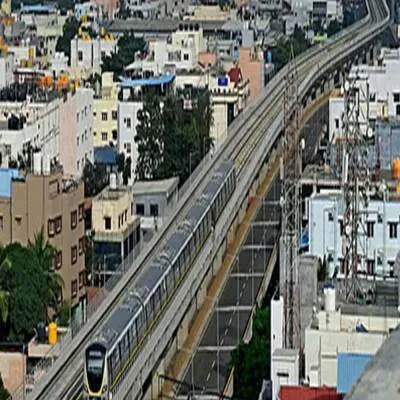
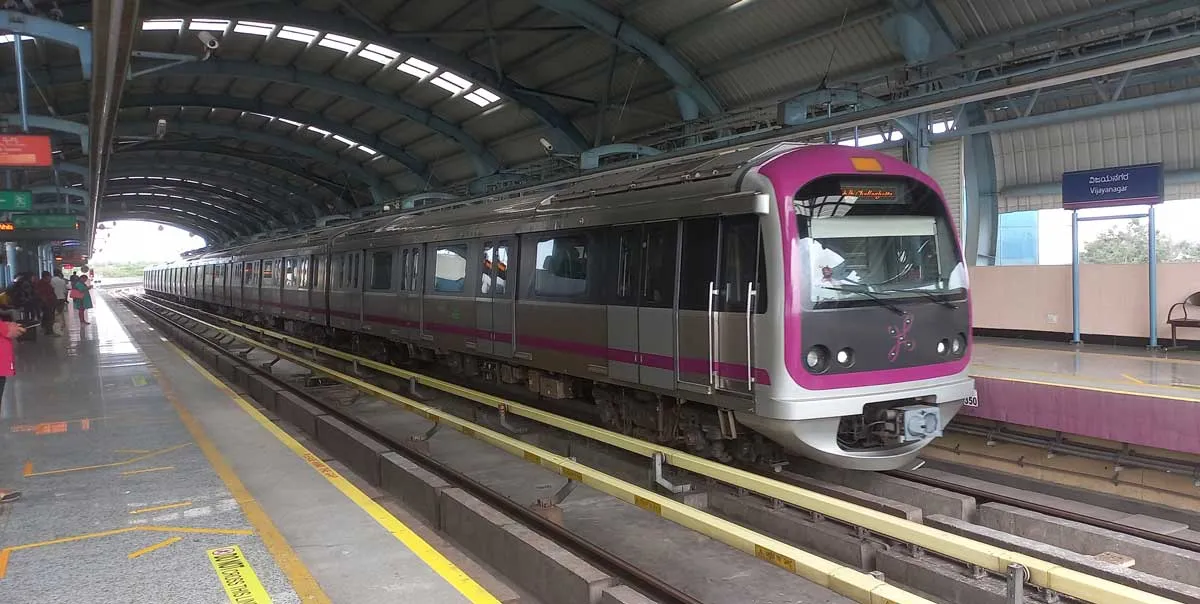
Bengaluru’s expanding metro network is expected to emerge as a major catalyst for real estate growth, with the Yellow and Pink Lines likely to boost both office demand and residential prices across key micro-markets, according to a report by Colliers India.
The report estimates that over the next two years, Bengaluru could witness an additional 5–7 million sq ft of Grade A office space demand across the Central Business District (CBD), Secondary Business District (SBD) and Electronic City. Improved metro connectivity and reduced commute times are expected to drive higher occupier interest and accelerate developer activity.
Colliers noted that office hubs located along the Yellow and Pink Line corridors could contribute around 15–20% of Bengaluru’s total Grade A office stock by 2027. With demand rising in these well-connected zones, rentals in key business pockets are projected to increase by 5–10% in the near term.
“The expansion of Bengaluru’s metro network is set to boost the city’s office market across key central and secondary business districts and peripheral locations such as Electronic City. The operational Yellow Line has already improved connectivity to Electronic City, the city's southern technology hub, boosting demand. At the same time, the upcoming Pink Line is expected to further enhance Grade A office uptake in its catchment areas,” said Arpit Mehrotra, Managing Director, Office Services, India, Colliers.
The report further suggests that residential markets around metro corridors could see a sharp rise in capital values, with housing prices expected to increase by up to 40% in certain pockets due to enhanced accessibility and infrastructure-led development.
Industry experts said metro-linked growth is increasingly influencing investment decisions, as businesses and homebuyers prioritise locations with seamless transit connectivity. With Bengaluru’s metro network steadily expanding, developers are also expected to intensify project launches around key stations and interchange zones, strengthening the city’s long-term real estate outlook.

Bengaluru’s expanding metro network is expected to emerge as a major catalyst for real estate growth, with the Yellow and Pink Lines likely to boost both office demand and residential prices across key micro-markets, according to a report by Colliers India.The report estimates that over the next two years, Bengaluru could witness an additional 5–7 million sq ft of Grade A office space demand across the Central Business District (CBD), Secondary Business District (SBD) and Electronic City. Improved metro connectivity and reduced commute times are expected to drive higher occupier interest and accelerate developer activity.Colliers noted that office hubs located along the Yellow and Pink Line corridors could contribute around 15–20% of Bengaluru’s total Grade A office stock by 2027. With demand rising in these well-connected zones, rentals in key business pockets are projected to increase by 5–10% in the near term.“The expansion of Bengaluru’s metro network is set to boost the city’s office market across key central and secondary business districts and peripheral locations such as Electronic City. The operational Yellow Line has already improved connectivity to Electronic City, the city's southern technology hub, boosting demand. At the same time, the upcoming Pink Line is expected to further enhance Grade A office uptake in its catchment areas,” said Arpit Mehrotra, Managing Director, Office Services, India, Colliers.The report further suggests that residential markets around metro corridors could see a sharp rise in capital values, with housing prices expected to increase by up to 40% in certain pockets due to enhanced accessibility and infrastructure-led development.Industry experts said metro-linked growth is increasingly influencing investment decisions, as businesses and homebuyers prioritise locations with seamless transit connectivity. With Bengaluru’s metro network steadily expanding, developers are also expected to intensify project launches around key stations and interchange zones, strengthening the city’s long-term real estate outlook.

Next Story
Infrastructure Transport

Sector 51-52 Metro skywalk in Noida remains shut despite being ready for over a year

Thousands of commuters travelling between Delhi Metro Rail Corporation’s (DMRC) Sector 52 station and Noida Metro Rail Corporation’s (NMRC) Sector 51 station continue to face daily inconvenience as the 300-metre air-conditioned skywalk connecting the two stations remains closed, despite being completed over a year ago, according to a report.The Noida Metro Rail Corporation built the foot overbridge to enable a seamless interchange between the Delhi Metro and Noida Metro networks. However, pending finishing work and a structural obstruction have delayed its opening.Krishna Karunesh, Chief E..

Next Story
Infrastructure Transport

Maharashtra clears Metro Line 5A, expansion of Mumbai Metro Line 5

The Maharashtra government has approved the expansion of Mumbai Metro Line 5 along with a new integrated corridor, Metro Line 5A, forming a combined 34.2-km metro network across the Thane-Bhiwandi-Kalyan-Ulhasnagar belt. The integrated project has been cleared at an estimated cost of ₹18,130.55 crore, according to a government resolution (GR).Metro Line 5 was originally approved in October 2017 as a 24.9-km fully elevated corridor with 17 stations connecting Thane, Bhiwandi and Kalyan, with an initial project cost of ₹8,416.51 crore. The corridor is being developed in two phases.The first ..

Advertisement

Subscribe to Our Newsletter

Get daily newsletters around different themes from Construction world.

STAY CONNECTED

Advertisement

Advertisement

Advertisement