Chennai Metro Rail floats tender for 5.8 km underground stretch
RAILWAYS & METRO RAIL

Chennai Metro Rail floats tender for 5.8 km underground stretch

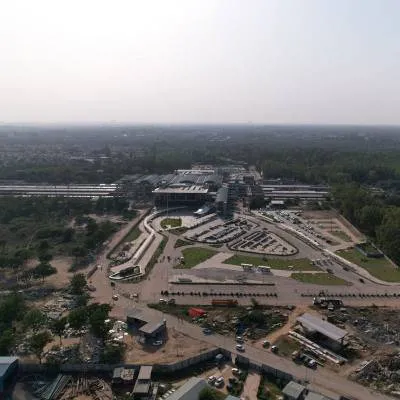
Chennai Metro Rail Limited (CMRL) has once again invited bids in 2021. The bids are for Phase-II 5. 8 km underground stretch between Kolathur and Nathamuni. It is also considered to be one of the most difficult underground stretches.

The rocky soil condition of the stretch is what makes it challenging. The first tender had been floated for the same in January last year. It is a part of the six construction tenders that were canceled due to various reasons including not having many proposals or proposals being higher than the estimated price. The total Phase-II underground stretch of 118.9 km will be approximately completed by the end of 2025.

On corridor 5 between Madhavaram and Sholinganallur, there is only a single underground stretch of 5.8 km between Kolathur and Nathamuni. The CMRL has sent invitations for the construction of underground lines along with the twin tunnels for upline as well as a downline. The duration of the project completion will be 3.8 years.

The initial soil investigation by CRML stated that the soil conditions are the reason why the construction is going to be tough.

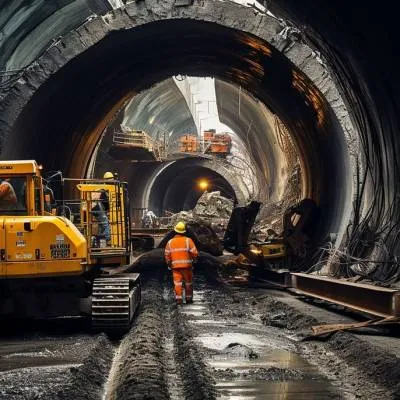
The soil is mainly like black granite or like quartz or charnockite. The tunnel boring machines need to be operated at a suitable speed of 8 meters every day. And it is going to be a challenge for the engineer. Otherwise, the surrounding buildings can suffer. The depth of the tunnels is going to be between 15 meters to 21 meters.

Image Source

Chennai Metro Rail Limited (CMRL) has once again invited bids in 2021. The bids are for Phase-II 5. 8 km underground stretch between Kolathur and Nathamuni. It is also considered to be one of the most difficult underground stretches. The rocky soil condition of the stretch is what makes it challenging. The first tender had been floated for the same in January last year. It is a part of the six construction tenders that were canceled due to various reasons including not having many proposals or proposals being higher than the estimated price. The total Phase-II underground stretch of 118.9 km will be approximately completed by the end of 2025. On corridor 5 between Madhavaram and Sholinganallur, there is only a single underground stretch of 5.8 km between Kolathur and Nathamuni. The CMRL has sent invitations for the construction of underground lines along with the twin tunnels for upline as well as a downline. The duration of the project completion will be 3.8 years. The initial soil investigation by CRML stated that the soil conditions are the reason why the construction is going to be tough. The soil is mainly like black granite or like quartz or charnockite. The tunnel boring machines need to be operated at a suitable speed of 8 meters every day. And it is going to be a challenge for the engineer. Otherwise, the surrounding buildings can suffer. The depth of the tunnels is going to be between 15 meters to 21 meters. Image Source

Related Stories

Gold Stories

Next Story
Infrastructure Urban

KONE Opens India's First Digital Experience Centre in Pune

KONE, a global elevator and escalator manufacturer, has inaugurated its first Digital Experience Centre (DEC) in India, located in Pune. The facility aims to showcase how artificial intelligence (AI), connectivity and data-driven technologies can enhance customer experiences and improve building operations.The centre was inaugurated by Jussi Herlin, Executive Vice Chair, KONE Corporation; Philippe Delorme, President and CEO, KONE; and Nandan Nilekani, Co-founder and Chairman of the Board, Infosys.Designed as an interactive customer environment, the facility demonstrates digital solutions cover..

Next Story
Infrastructure Urban

CII GreenCo Launches Circularity Guidelines for Indian Industry

The Confederation of Indian Industry (CII) GreenCo Council has launched the CII GreenCo Circularity Guidelines – Pilot Version at the 17th CII GreenCo Waste & Resource Management Summit 2026 in Chennai. The initiative aims to strengthen resource efficiency, waste reduction and circular economy practices across Indian manufacturing and process industries.The guidelines introduce a structured framework with circularity indices covering raw materials, consumables, packaging and other resource inputs. These indicators will help industries assess existing practices, identify opportunities to ..

Next Story
Infrastructure Energy

Global Electronics Association Launches IPC-1783-CO2E Standard

The Global Electronics Association has introduced IPC-1783-CO2E, a new international standard aimed at improving consistency, transparency and comparability in product carbon footprint reporting across the electronics manufacturing industry.The standard, titled International Standard for Data Collection and Reporting of CO2 Equivalent (CO2e) Emissions for the Electronics Manufacturing Supply Chain, provides industry-specific guidance for collecting, estimating and reporting carbon emissions data.With increasing regulatory requirements and customer expectations, electronics manufacturers face c..

Advertisement

Subscribe to Our Newsletter

Get daily newsletters around different themes from Construction world.

STAY CONNECTED

Advertisement

SPECIAL OFFER
QR Code