Delhi Metro Expansion Plan Adds Seven Corridors And 65 Stations
RAILWAYS & METRO RAIL

Delhi Metro Expansion Plan Adds Seven Corridors And 65 Stations

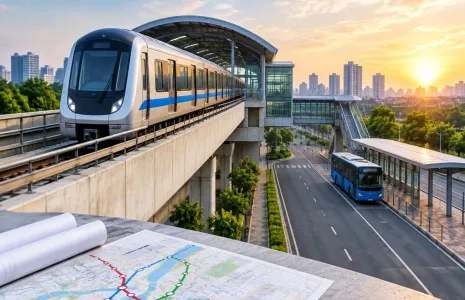
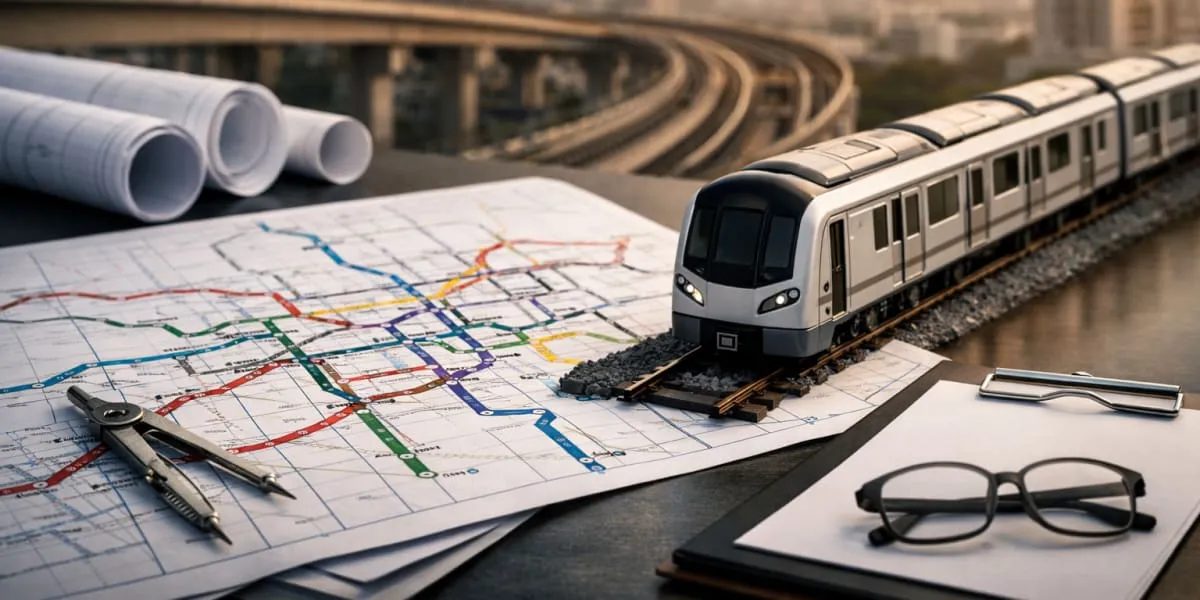
The Delhi Metro Rail Corporation (DMRC) has set out a major expansion plan under Phase V-B that envisages Seven new corridors covering 97 km and adding 65 stations to the network. The project description released by authorities outlines the scale of planned growth and the areas to be brought into the metro network. The proposal forms part of a broader strategy to enhance urban mass transit in the capital region. The documentation provides route maps, preliminary station lists and indicative interchange locations for planners.

The new corridors are designed to extend connectivity across underserved neighbourhoods and provide additional interchange points with existing lines. The addition of 65 stations increases access to rapid transit for commuters and redistributes passenger flows across the system. Network planners emphasise the importance of integrated station design and multimodal links in accommodating future demand. Design briefs attached to the outline highlight accessibility features and passenger circulation at major hubs.

An additional 97 km of track expands route coverage and supports higher operational frequency along busy corridors. The plan emphasises station spacing and alignment choices that balance speed with accessibility for local trips. Engineers are considering alignment optimisation to limit land acquisition and integrate with existing transport infrastructure. Technical annexes reference signalling upgrades and track design standards aligned with the existing network.

Funding and detailed timelines were not specified in the project summary available with the announcement. The proposal sets out phased implementation possibilities and an expanded station footprint that describes potential effects on commuting patterns across the region. Stakeholders have been invited to review technical drawings and planning assessments as part of the statutory process. Continued public engagement and inter-agency coordination remain essential to translate the outlined corridors into operational services, and to coordinate testing, staffing requirements and urban integration efforts across several municipal jurisdictions regionally.

The Delhi Metro Rail Corporation (DMRC) has set out a major expansion plan under Phase V-B that envisages Seven new corridors covering 97 km and adding 65 stations to the network. The project description released by authorities outlines the scale of planned growth and the areas to be brought into the metro network. The proposal forms part of a broader strategy to enhance urban mass transit in the capital region. The documentation provides route maps, preliminary station lists and indicative interchange locations for planners. The new corridors are designed to extend connectivity across underserved neighbourhoods and provide additional interchange points with existing lines. The addition of 65 stations increases access to rapid transit for commuters and redistributes passenger flows across the system. Network planners emphasise the importance of integrated station design and multimodal links in accommodating future demand. Design briefs attached to the outline highlight accessibility features and passenger circulation at major hubs. An additional 97 km of track expands route coverage and supports higher operational frequency along busy corridors. The plan emphasises station spacing and alignment choices that balance speed with accessibility for local trips. Engineers are considering alignment optimisation to limit land acquisition and integrate with existing transport infrastructure. Technical annexes reference signalling upgrades and track design standards aligned with the existing network. Funding and detailed timelines were not specified in the project summary available with the announcement. The proposal sets out phased implementation possibilities and an expanded station footprint that describes potential effects on commuting patterns across the region. Stakeholders have been invited to review technical drawings and planning assessments as part of the statutory process. Continued public engagement and inter-agency coordination remain essential to translate the outlined corridors into operational services, and to coordinate testing, staffing requirements and urban integration efforts across several municipal jurisdictions regionally.

Next Story
Infrastructure Urban

Blue Dart posts revenue growth in FY26 on e-commerce and B2B demand

Blue Dart Express Limited, South Asia’s express air and integrated transportation and distribution company, has reported year-on-year growth in revenue for the financial year ended March 31, 2026, driven by strong momentum in e-commerce shipments and B2B surface express solutions.Announcing its financial results after the Board Meeting held in Mumbai, the company said revenue from operations rose to Rs 6,141 crore in FY2025–26, compared to Rs 5,720 crore in FY2024–25. Profit after tax for the year stood at Rs 240 crore.For the quarter ended March 31, 2026, Blue Dart reported revenue from..

Next Story
Infrastructure Urban

Terex launches TRAC vibration analysis system

Terex®, a global provider of specialised equipment solutions, has launched TRAC, a new vibration analysis system designed to deliver deeper insight into the performance, condition and long-term structural integrity of screening equipment.Announced in Hosur on May 11, 2026, the TRAC system is now available across screening equipment offered under Terex Materials Processing (MP) brands, including Powerscreen®, Finlay®, EvoQuip®, MDS®, Terex® Washing Systems, Terex® MPS (Cedarapids®, Simplicity®), MAGNA™ and Terex® Ecotec.Developed specifically for vibratory screening equipment by Ter..

Next Story
Infrastructure Urban

ADIO partners Motherson to set up large automotive components hub in KEZAD

The Abu Dhabi Investment Office (ADIO) has announced its support for Samvardhana Motherson International Limited’s (Motherson) new manufacturing hub in Abu Dhabi, marking a major step in strengthening the emirate’s position as a global centre for advanced manufacturing and automotive supply chains.ADIO said the partnership aligns with its strategy to accelerate high-value industrial investments and build resilient supply chains across priority sectors, further reinforcing Abu Dhabi’s competitiveness as a regional and global manufacturing and export hub.Under the partnership, a large-scal..

Advertisement

Subscribe to Our Newsletter

Get daily newsletters around different themes from Construction world.

STAY CONNECTED

Advertisement

Advertisement

Advertisement