DMRC Signs MoU With INSEAD To Boost Metro Capacity
RAILWAYS & METRO RAIL

DMRC Signs MoU With INSEAD To Boost Metro Capacity

Delhi Metro Rail Corporation (DMRC) has signed a memorandum of understanding with INSEAD to strengthen capacity across the metro sector. The collaboration is intended to foster managerial and technical skills among metro professionals and to support systemic improvements in planning, operations and governance. DMRC will work with the business school to co-design training for executives, enhance leadership pipelines and develop research that addresses sectoral challenges. The partnership is to combine practical experience with academic frameworks.

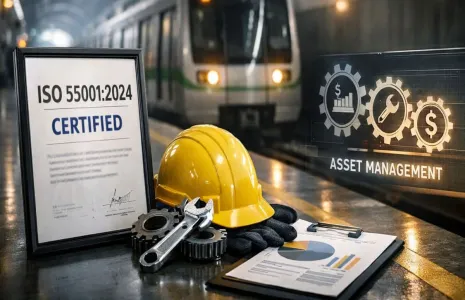
The programmes envisaged will range from customised executive education to modular courses and applied research initiatives. Faculty from INSEAD will collaborate with DMRC practitioners to translate field insights into curricula while DMRC will provide operational case studies and project sites for experiential learning. Emphasis will be placed on asset management, safety protocols, financial sustainability and service quality. Attention will also be given to digital transformation and the adoption of international best practice adapted to local contexts.

The arrangement is expected to support capacity building at multiple levels within urban transport agencies and to create a pipeline of talent that can manage future expansion. Joint workshops and seminars will be organised to disseminate findings and to build consensus on policy and operational reforms. The partners anticipate that applied studies will yield actionable recommendations for cost management, performance measurement and customer experience improvement. Collaborative publications and white papers will aim to inform policymakers and industry stakeholders.

The memorandum of understanding is another example of public sector agencies collaborating with academic institutions to accelerate institutional learning and innovation. Stakeholders expect that the partnership will contribute to safer, more efficient and financially resilient metro systems while informing wider urban mobility planning. DMRC and INSEAD plan to monitor outcomes and refine programmes based on feedback and performance metrics. The collaboration is intended to be scalable and replicable across other cities and agencies.

Delhi Metro Rail Corporation (DMRC) has signed a memorandum of understanding with INSEAD to strengthen capacity across the metro sector. The collaboration is intended to foster managerial and technical skills among metro professionals and to support systemic improvements in planning, operations and governance. DMRC will work with the business school to co-design training for executives, enhance leadership pipelines and develop research that addresses sectoral challenges. The partnership is to combine practical experience with academic frameworks. The programmes envisaged will range from customised executive education to modular courses and applied research initiatives. Faculty from INSEAD will collaborate with DMRC practitioners to translate field insights into curricula while DMRC will provide operational case studies and project sites for experiential learning. Emphasis will be placed on asset management, safety protocols, financial sustainability and service quality. Attention will also be given to digital transformation and the adoption of international best practice adapted to local contexts. The arrangement is expected to support capacity building at multiple levels within urban transport agencies and to create a pipeline of talent that can manage future expansion. Joint workshops and seminars will be organised to disseminate findings and to build consensus on policy and operational reforms. The partners anticipate that applied studies will yield actionable recommendations for cost management, performance measurement and customer experience improvement. Collaborative publications and white papers will aim to inform policymakers and industry stakeholders. The memorandum of understanding is another example of public sector agencies collaborating with academic institutions to accelerate institutional learning and innovation. Stakeholders expect that the partnership will contribute to safer, more efficient and financially resilient metro systems while informing wider urban mobility planning. DMRC and INSEAD plan to monitor outcomes and refine programmes based on feedback and performance metrics. The collaboration is intended to be scalable and replicable across other cities and agencies.

Related Stories

Gold Stories

Next Story
Infrastructure Urban

KONE Opens India's First Digital Experience Centre in Pune

KONE, a global elevator and escalator manufacturer, has inaugurated its first Digital Experience Centre (DEC) in India, located in Pune. The facility aims to showcase how artificial intelligence (AI), connectivity and data-driven technologies can enhance customer experiences and improve building operations.The centre was inaugurated by Jussi Herlin, Executive Vice Chair, KONE Corporation; Philippe Delorme, President and CEO, KONE; and Nandan Nilekani, Co-founder and Chairman of the Board, Infosys.Designed as an interactive customer environment, the facility demonstrates digital solutions cover..

Next Story
Infrastructure Urban

CII GreenCo Launches Circularity Guidelines for Indian Industry

The Confederation of Indian Industry (CII) GreenCo Council has launched the CII GreenCo Circularity Guidelines – Pilot Version at the 17th CII GreenCo Waste & Resource Management Summit 2026 in Chennai. The initiative aims to strengthen resource efficiency, waste reduction and circular economy practices across Indian manufacturing and process industries.The guidelines introduce a structured framework with circularity indices covering raw materials, consumables, packaging and other resource inputs. These indicators will help industries assess existing practices, identify opportunities to ..

Next Story
Infrastructure Energy

Global Electronics Association Launches IPC-1783-CO2E Standard

The Global Electronics Association has introduced IPC-1783-CO2E, a new international standard aimed at improving consistency, transparency and comparability in product carbon footprint reporting across the electronics manufacturing industry.The standard, titled International Standard for Data Collection and Reporting of CO2 Equivalent (CO2e) Emissions for the Electronics Manufacturing Supply Chain, provides industry-specific guidance for collecting, estimating and reporting carbon emissions data.With increasing regulatory requirements and customer expectations, electronics manufacturers face c..

Advertisement

Subscribe to Our Newsletter

Get daily newsletters around different themes from Construction world.

STAY CONNECTED

Advertisement

SPECIAL OFFER
QR Code