Golpahari To Jugsalai Road To Be Widened To Four Lanes
RAILWAYS & METRO RAIL

Golpahari To Jugsalai Road To Be Widened To Four Lanes

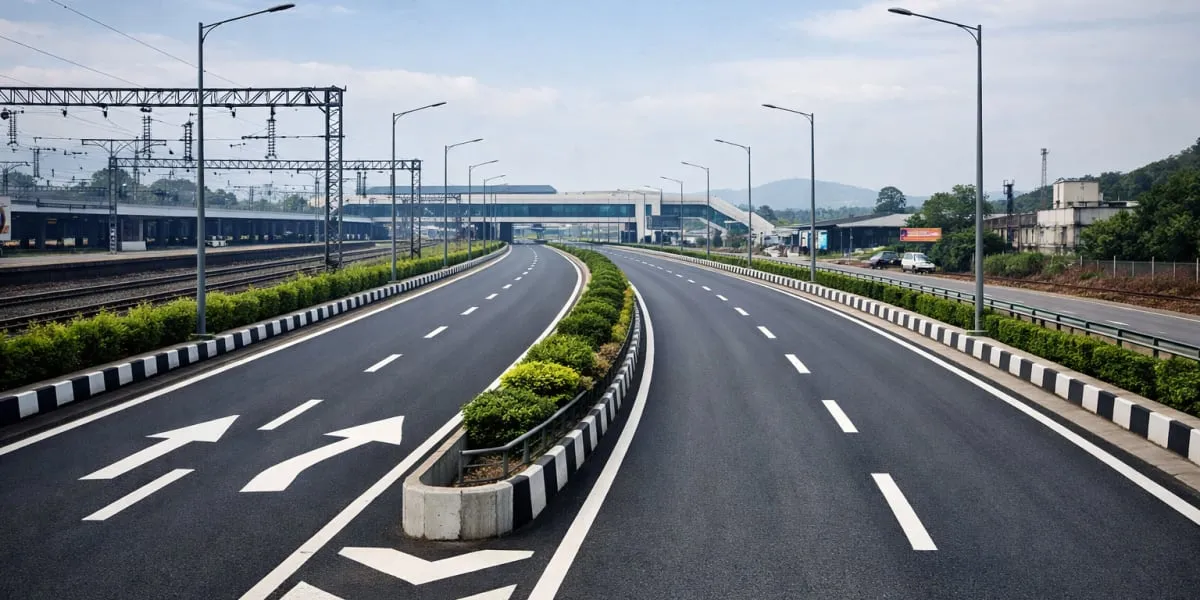
The redevelopment of Tatanagar Railway Station includes a significant road widening project, with the stretch from Golpahari to Sankata Singh Petrol Pump in Jugsalai to be expanded into a four-lane thoroughfare. The upgraded road will run for approximately one point five kilometres and will be expanded to a width of 30–40 metres to ease traffic congestion and improve regional connectivity. The project is expected to relieve bottlenecks around the station and support smoother access for commuters and freight movement.

Indian Railways has prepared an extensive redevelopment plan valued at Rs 10 billion (bn) and the process to initiate work has been accelerated. In the first phase a new station building will be constructed at an estimated cost of Rs two point eight three billion (bn) and a modern coaching depot for Vande Bharat trains will be developed at an investment of Rs four billion (bn). Authorities have prioritised these components to upgrade operational capacity and passenger amenities.

As part of the expansion five new platforms will be added to the existing five, increasing the total to 10 platforms to handle greater train traffic. Passenger convenience improvements will include 16 elevators and 14 escalators to aid accessibility for elderly passengers and persons with disabilities. The station layout has been redesigned to streamline passenger flows and reduce transfer times between services.

Multi-storey station buildings will be erected on both sides, with a ground plus three storey structure on the northern side and a ground plus six storey building on the southern side linked by an elevated air concourse for seamless movement across platforms. The existing station entry will be redeveloped as the South Station Building with modern amenities such as food kiosks, taxi counters, help desks and spacious waiting areas, while the Burmamines side will become the North Station Building. An official indicated the entire redevelopment was targeted for completion within 36 months and would transform the station into a modern transport hub while enhancing the urban landscape of Jamshedpur.

The redevelopment of Tatanagar Railway Station includes a significant road widening project, with the stretch from Golpahari to Sankata Singh Petrol Pump in Jugsalai to be expanded into a four-lane thoroughfare. The upgraded road will run for approximately one point five kilometres and will be expanded to a width of 30–40 metres to ease traffic congestion and improve regional connectivity. The project is expected to relieve bottlenecks around the station and support smoother access for commuters and freight movement. Indian Railways has prepared an extensive redevelopment plan valued at Rs 10 billion (bn) and the process to initiate work has been accelerated. In the first phase a new station building will be constructed at an estimated cost of Rs two point eight three billion (bn) and a modern coaching depot for Vande Bharat trains will be developed at an investment of Rs four billion (bn). Authorities have prioritised these components to upgrade operational capacity and passenger amenities. As part of the expansion five new platforms will be added to the existing five, increasing the total to 10 platforms to handle greater train traffic. Passenger convenience improvements will include 16 elevators and 14 escalators to aid accessibility for elderly passengers and persons with disabilities. The station layout has been redesigned to streamline passenger flows and reduce transfer times between services. Multi-storey station buildings will be erected on both sides, with a ground plus three storey structure on the northern side and a ground plus six storey building on the southern side linked by an elevated air concourse for seamless movement across platforms. The existing station entry will be redeveloped as the South Station Building with modern amenities such as food kiosks, taxi counters, help desks and spacious waiting areas, while the Burmamines side will become the North Station Building. An official indicated the entire redevelopment was targeted for completion within 36 months and would transform the station into a modern transport hub while enhancing the urban landscape of Jamshedpur.

Related Stories

Gold Stories

Next Story
Infrastructure Urban

KONE Opens India's First Digital Experience Centre in Pune

KONE, a global elevator and escalator manufacturer, has inaugurated its first Digital Experience Centre (DEC) in India, located in Pune. The facility aims to showcase how artificial intelligence (AI), connectivity and data-driven technologies can enhance customer experiences and improve building operations.The centre was inaugurated by Jussi Herlin, Executive Vice Chair, KONE Corporation; Philippe Delorme, President and CEO, KONE; and Nandan Nilekani, Co-founder and Chairman of the Board, Infosys.Designed as an interactive customer environment, the facility demonstrates digital solutions cover..

Next Story
Infrastructure Urban

CII GreenCo Launches Circularity Guidelines for Indian Industry

The Confederation of Indian Industry (CII) GreenCo Council has launched the CII GreenCo Circularity Guidelines – Pilot Version at the 17th CII GreenCo Waste & Resource Management Summit 2026 in Chennai. The initiative aims to strengthen resource efficiency, waste reduction and circular economy practices across Indian manufacturing and process industries.The guidelines introduce a structured framework with circularity indices covering raw materials, consumables, packaging and other resource inputs. These indicators will help industries assess existing practices, identify opportunities to ..

Next Story
Infrastructure Energy

Global Electronics Association Launches IPC-1783-CO2E Standard

The Global Electronics Association has introduced IPC-1783-CO2E, a new international standard aimed at improving consistency, transparency and comparability in product carbon footprint reporting across the electronics manufacturing industry.The standard, titled International Standard for Data Collection and Reporting of CO2 Equivalent (CO2e) Emissions for the Electronics Manufacturing Supply Chain, provides industry-specific guidance for collecting, estimating and reporting carbon emissions data.With increasing regulatory requirements and customer expectations, electronics manufacturers face c..

Advertisement

Subscribe to Our Newsletter

Get daily newsletters around different themes from Construction world.

STAY CONNECTED

Advertisement

SPECIAL OFFER
QR Code