Indian Railways Approves Rs 6,475.8 Million Projects in Gujarat and Bihar
RAILWAYS & METRO RAIL

Indian Railways Approves Rs 6,475.8 Million Projects in Gujarat and Bihar

The Ministry of Railways has approved two key infrastructure projects in Gujarat and Bihar to strengthen rail connectivity, reduce congestion and improve operational efficiency. The combined cost of the projects is Rs 6,475.8 million (mn). The approvals form part of Indian Railways' wider capacity augmentation and network decongestion programme and reflect sustained investment in rail infrastructure. The projects are intended to support growing demand for both passenger and freight movement across the affected corridors.

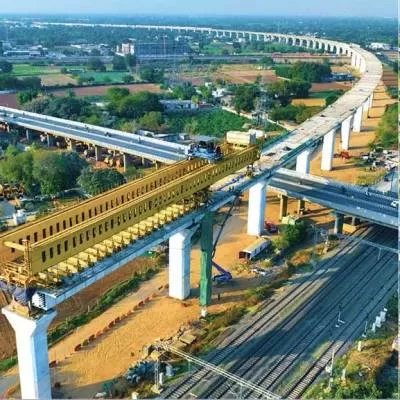
One project involves the construction of a Rail Over Rail (RoR) flyover at Kosamba under Western Railway to integrate the nine point two kilometre Kosamba–Umrapada gauge conversion section with the Mumbai–Vadodara main line at an estimated cost of Rs 3,443.8 mn. The RoR structure is required because the alignment of the Dedicated Freight Corridor renders surface crossings unfeasible, making grade separation the viable option. Once completed, the flyover is expected to enable seamless connectivity and safer, uninterrupted train movement while maximising the benefits of the ongoing gauge conversion. Reduced interface with the freight corridor is expected to cut delays and improve scheduled operating windows for both services.

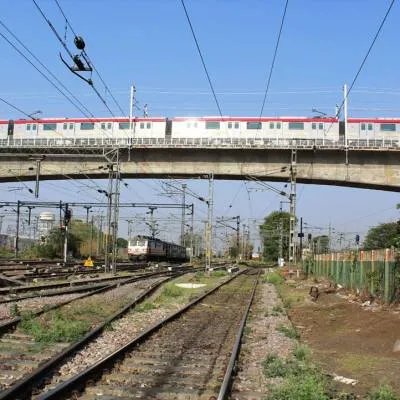
The second project is the construction of a 13.38 kilometre rail bypass at Bhagalpur under Eastern Railway at an estimated cost of Rs 3,032.0 mn. The bypass will connect Gonudham Halt on the Barahat–Bhagalpur section with Sabour on the Bhagalpur–Sahibganj route, eliminating the need for time consuming engine reversals at Bhagalpur junction. The Barahat–Bhagalpur section is currently operating beyond 125 per cent capacity, leading to severe congestion and delays.

The Ministry anticipates that the bypass will ease congestion, improve punctuality and streamline operations for both passenger and freight services. Both projects are expected to enhance safety and operational fluidity while supporting growing demand for rail movement. Implementation of the schemes is projected to reduce dwell time at critical junctions and to improve the reliability of schedules on the connected routes. The initiatives are in line with ongoing efforts to upgrade infrastructure and decongest the national rail network.

The Ministry of Railways has approved two key infrastructure projects in Gujarat and Bihar to strengthen rail connectivity, reduce congestion and improve operational efficiency. The combined cost of the projects is Rs 6,475.8 million (mn). The approvals form part of Indian Railways' wider capacity augmentation and network decongestion programme and reflect sustained investment in rail infrastructure. The projects are intended to support growing demand for both passenger and freight movement across the affected corridors. One project involves the construction of a Rail Over Rail (RoR) flyover at Kosamba under Western Railway to integrate the nine point two kilometre Kosamba–Umrapada gauge conversion section with the Mumbai–Vadodara main line at an estimated cost of Rs 3,443.8 mn. The RoR structure is required because the alignment of the Dedicated Freight Corridor renders surface crossings unfeasible, making grade separation the viable option. Once completed, the flyover is expected to enable seamless connectivity and safer, uninterrupted train movement while maximising the benefits of the ongoing gauge conversion. Reduced interface with the freight corridor is expected to cut delays and improve scheduled operating windows for both services. The second project is the construction of a 13.38 kilometre rail bypass at Bhagalpur under Eastern Railway at an estimated cost of Rs 3,032.0 mn. The bypass will connect Gonudham Halt on the Barahat–Bhagalpur section with Sabour on the Bhagalpur–Sahibganj route, eliminating the need for time consuming engine reversals at Bhagalpur junction. The Barahat–Bhagalpur section is currently operating beyond 125 per cent capacity, leading to severe congestion and delays. The Ministry anticipates that the bypass will ease congestion, improve punctuality and streamline operations for both passenger and freight services. Both projects are expected to enhance safety and operational fluidity while supporting growing demand for rail movement. Implementation of the schemes is projected to reduce dwell time at critical junctions and to improve the reliability of schedules on the connected routes. The initiatives are in line with ongoing efforts to upgrade infrastructure and decongest the national rail network.

Next Story
Infrastructure Transport

MMRDA Removes 1.14 lakh m of Metro Barricades

In a bid to ease congestion and improve urban mobility during monsoon, MMRDA has undertaken one of the largest coordinated barricade removal and monsoon preparedness drives across its ongoing metro and infrastructure projects.With substantial progress achieved in viaduct and structural works across multiple metro corridors, barricades from completed stretches beneath metro viaducts are being systematically removed, restoring maximum possible road space before the monsoon. Wider carriageways across key arterial roads are expected to improve traffic flow, reduce congestion, support better rainwa..

Next Story
Infrastructure Transport

Pune Division to Remove All Diamond Crossings by Year-End

The Pune railway division has announced plans to remove all 16 diamond crossings by the end of 2026 as part of a major yard remodelling project following the derailment of a Vande Bharat Express at Pune Junction on April 27. Railway authorities said the replacements aim to improve safety and streamline train operations across the busy station. The decision followed a Central Railway finding that the accident involved a non-standard diamond crossing and highlighted the need for replacement. Regular maintenance of existing crossings will continue until the replacement work is completed. Official..

Next Story
Infrastructure Urban

Goa Declares 80 Million Square Metres No Development Zone

The Goa state government has declared 80 million square metres (mn) of land a no development zone, designating the area as protected from new construction. The notification reclassifies tracts across the state under a no development category for planning and regulatory purposes. The declaration signals a formal halt to new building permits within the defined zone. Authorities indicated that maps will be issued to show broad boundaries while detailed surveys will refine precise limits. The move transfers responsibility for enforcement to local planning authorities and relevant departments, whic..

Advertisement

Subscribe to Our Newsletter

Get daily newsletters around different themes from Construction world.

STAY CONNECTED

Advertisement

Advertisement

Advertisement