Indian Railways Approves Rs 6,475.8 mn Projects in Gujarat and Bihar
RAILWAYS & METRO RAIL

Indian Railways Approves Rs 6,475.8 mn Projects in Gujarat and Bihar

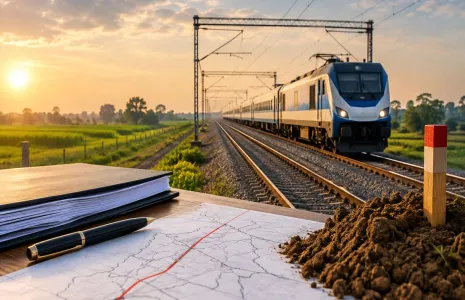
The Ministry of Railways has approved two infrastructure projects in Gujarat and Bihar aimed at strengthening rail connectivity, reducing long standing congestion and improving operational efficiency across key corridors. The combined cost of the projects is Rs 6,475.8 million (mn), with allocations for detailed construction under the Western Railway and Eastern Railway zones to address capacity bottlenecks. The approvals form part of a broader programme of capacity augmentation and network decongestion that seeks to support rising passenger and freight demand while enhancing safety and service reliability.

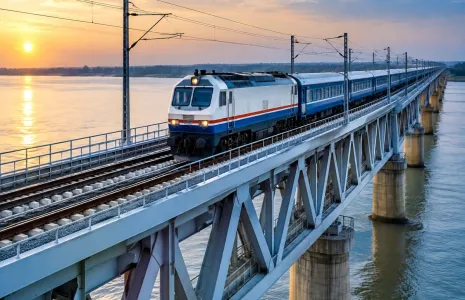
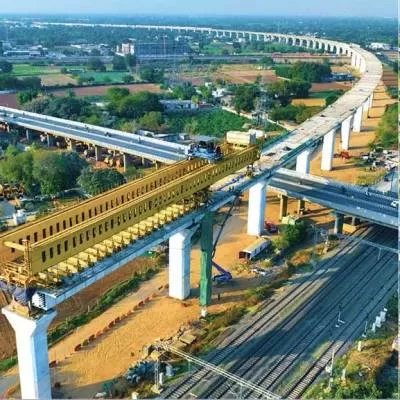
Under the Western Railway, one project comprises a Rail Over Rail flyover at Kosamba to integrate a nine point two kilometre gauge conversion section between Kosamba and Umrapada with the Mumbai-Vadodara main line, and the work is estimated at Rs 3,443.8 mn. The flyover is being advanced because the Dedicated Freight Corridor alignment makes surface crossings unfeasible, and the elevated structure is expected to enable uninterrupted and safer train movement while maximising the benefits of the gauge conversion for both freight and passenger services.

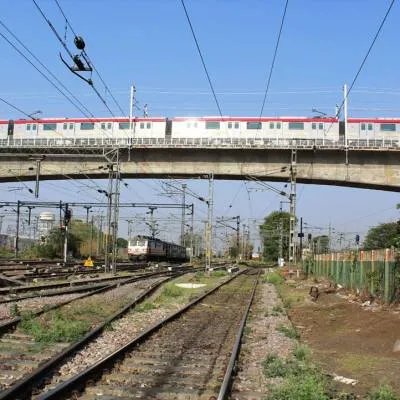
The other project under the Eastern Railway is a 13.38 kilometre rail bypass at Bhagalpur that will connect Gonudham Halt on the Barahat-Bhagalpur section with Sabour on the Bhagalpur-Sahibganj route, and it is estimated at Rs 3,032.0 mn. The bypass is designed to streamline train movements by avoiding the need for engine reversals at Bhagalpur, a practice that currently contributes to delays and reduces overall network efficiency.

The Ministry indicated that the bypass and the flyover will ease severe congestion, improve punctuality and enhance safety across the affected corridors while providing more reliable paths for freight movement. Officials expect improved operational fluidity to lower transit times and support economic activity by facilitating timely movement of goods and passengers. The measures are consistent with ongoing efforts to modernise the network.

The Ministry of Railways has approved two infrastructure projects in Gujarat and Bihar aimed at strengthening rail connectivity, reducing long standing congestion and improving operational efficiency across key corridors. The combined cost of the projects is Rs 6,475.8 million (mn), with allocations for detailed construction under the Western Railway and Eastern Railway zones to address capacity bottlenecks. The approvals form part of a broader programme of capacity augmentation and network decongestion that seeks to support rising passenger and freight demand while enhancing safety and service reliability. Under the Western Railway, one project comprises a Rail Over Rail flyover at Kosamba to integrate a nine point two kilometre gauge conversion section between Kosamba and Umrapada with the Mumbai-Vadodara main line, and the work is estimated at Rs 3,443.8 mn. The flyover is being advanced because the Dedicated Freight Corridor alignment makes surface crossings unfeasible, and the elevated structure is expected to enable uninterrupted and safer train movement while maximising the benefits of the gauge conversion for both freight and passenger services. The other project under the Eastern Railway is a 13.38 kilometre rail bypass at Bhagalpur that will connect Gonudham Halt on the Barahat-Bhagalpur section with Sabour on the Bhagalpur-Sahibganj route, and it is estimated at Rs 3,032.0 mn. The bypass is designed to streamline train movements by avoiding the need for engine reversals at Bhagalpur, a practice that currently contributes to delays and reduces overall network efficiency. The Ministry indicated that the bypass and the flyover will ease severe congestion, improve punctuality and enhance safety across the affected corridors while providing more reliable paths for freight movement. Officials expect improved operational fluidity to lower transit times and support economic activity by facilitating timely movement of goods and passengers. The measures are consistent with ongoing efforts to modernise the network.

Next Story
Equipment

MYCRANE Crosses 1,000 Customers in India

MYCRANE, the global platform for crane rental and purchase, has achieved major commercial milestones in India, reinforcing the country’s position as one of its fastest-growing strategic markets. The company has surpassed 1,000 registered customers and 1,000 crane suppliers nationwide, while completing more than 100 paid orders.The growth reflects rising adoption of digital procurement solutions across India’s construction, infrastructure, energy and industrial sectors. Equipment sourced through the platform is supporting projects across the country, with several leading contractors and EPC..

Next Story
Infrastructure Urban

AMTOE 2026 Opens Global Machine Tool Sourcing Hub

The Asian Machine Tool Online Exhibition 2026 (AMTOE 2026) has officially opened as a B2B sourcing platform connecting global buyers with verified Asian suppliers across the machine tool and manufacturing sector. The exhibition will run until 31 October 2026 through a hybrid online and offline model, offering extended sourcing and business networking opportunities.Co-organised by AsianNet and TradeAsia, the event aims to strengthen links between Asian manufacturers and international importers while improving cross-border procurement efficiency and supplier matching.Since launching in 2022, AMT..

Next Story
Infrastructure Energy

Vedanta Lifts Renewable Energy Use by Over 50%

On World Earth Day, Vedanta Limited announced that its renewable energy usage rose by over 50 per cent year on year to 3.97 billion units in FY26, helping avoid 3 million tonnes of carbon dioxide emissions.The company said its portfolio of metals, minerals, power, and oil & gas continues to support advanced manufacturing, electrification, energy transition and clean technology. Aluminium, copper and silver remain critical for applications such as mobility, power transmission, renewable infrastructure and solar photovoltaics, while iron, steel and zinc continue to support energy infrastruct..

Advertisement

Subscribe to Our Newsletter

Get daily newsletters around different themes from Construction world.

STAY CONNECTED

Advertisement

Advertisement

Advertisement