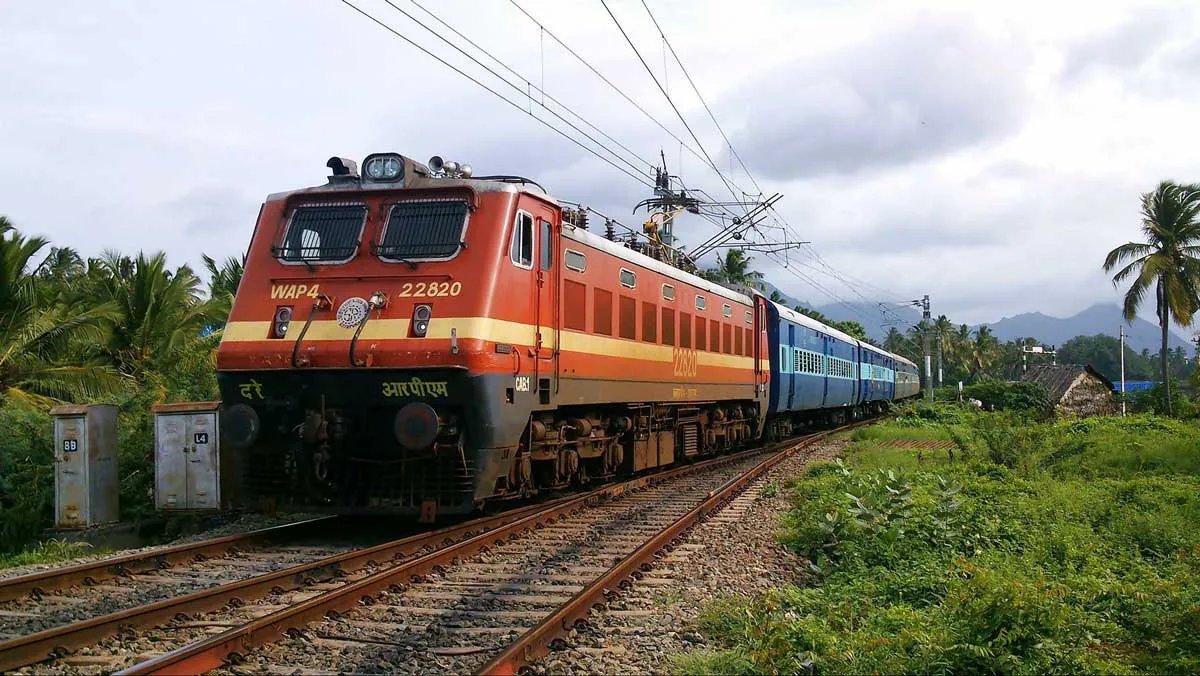
Indian Railways Safety Push Cuts Accidents, Builds Passenger Trust
RAILWAYS & METRO RAIL

Indian Railways Safety Push Cuts Accidents, Builds Passenger Trust

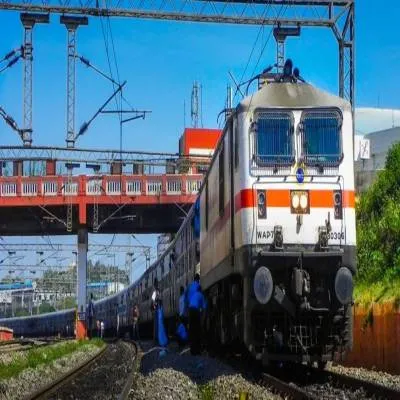
Indian Railways, which carries over two crore passengers daily across more than 25,000 trains, has witnessed a significant improvement in safety outcomes over the last decade, driven by stronger infrastructure, advanced monitoring systems and sustained financial investment. While expansion once dominated the public narrative, railway policy since 2014 has increasingly placed safety at the centre of operations.

Union Minister for Railways Ashwini Vaishnaw, writing in a national publication, highlighted that global railway safety is measured through fatalities or accidents per billion passenger-kilometres. He said that during Prime Minister Narendra Modi’s first term, a clear focus was established on “Safety First”, leading to a comprehensive technology-led safety transformation.

According to Vaishnaw, the Consequential Accident Index has now fallen to 0.01, helping Indian Railways compare favourably with global averages for large mixed-traffic rail systems. He noted that consequential train accidents dropped sharply from 135 in 2014–15 to 16 in 2025–26, a reduction of nearly 89 percent, even as rail operations expanded.

Vaishnaw said the safety push has been backed by a major financial commitment, with safety-related expenditure rising from Rs 39,200 crore in 2013–14 to Rs 1,17,693 crore in 2025–26, and Rs 1,20,389 crore planned for 2026–27.

Among key initiatives is Kavach, India’s indigenous Automatic Train Protection system, which has been commissioned across 1,452 route kilometres on high-density corridors. The Minister also pointed to the elimination of unmanned level crossings on the broad gauge network by January 2019, supported by construction of more than 14,000 road overbridges and underpasses.

He further highlighted improvements in rolling stock and track quality, including the production of over 42,600 LHB coaches between 2014 and 2025, and advanced rail testing that has reduced fractures and weld failures significantly.

Vaishnaw stressed that safety success is often reflected in the absence of headlines, adding that sustained reductions in accidents and fatalities indicate a deeper cultural shift across the railway system.

Indian Railways, which carries over two crore passengers daily across more than 25,000 trains, has witnessed a significant improvement in safety outcomes over the last decade, driven by stronger infrastructure, advanced monitoring systems and sustained financial investment. While expansion once dominated the public narrative, railway policy since 2014 has increasingly placed safety at the centre of operations.Union Minister for Railways Ashwini Vaishnaw, writing in a national publication, highlighted that global railway safety is measured through fatalities or accidents per billion passenger-kilometres. He said that during Prime Minister Narendra Modi’s first term, a clear focus was established on “Safety First”, leading to a comprehensive technology-led safety transformation.According to Vaishnaw, the Consequential Accident Index has now fallen to 0.01, helping Indian Railways compare favourably with global averages for large mixed-traffic rail systems. He noted that consequential train accidents dropped sharply from 135 in 2014–15 to 16 in 2025–26, a reduction of nearly 89 percent, even as rail operations expanded.Vaishnaw said the safety push has been backed by a major financial commitment, with safety-related expenditure rising from Rs 39,200 crore in 2013–14 to Rs 1,17,693 crore in 2025–26, and Rs 1,20,389 crore planned for 2026–27.Among key initiatives is Kavach, India’s indigenous Automatic Train Protection system, which has been commissioned across 1,452 route kilometres on high-density corridors. The Minister also pointed to the elimination of unmanned level crossings on the broad gauge network by January 2019, supported by construction of more than 14,000 road overbridges and underpasses.He further highlighted improvements in rolling stock and track quality, including the production of over 42,600 LHB coaches between 2014 and 2025, and advanced rail testing that has reduced fractures and weld failures significantly.Vaishnaw stressed that safety success is often reflected in the absence of headlines, adding that sustained reductions in accidents and fatalities indicate a deeper cultural shift across the railway system.

Next Story
Real Estate

Vestian reports 36% drop in construction activity in Q1

Vestian reported a 36 per cent quarter-on-quarter decline in new office completions to 9.7 million sq ft in Q1 2026, marking the lowest level in the past four quarters amid the West Asia crisis.The slowdown was led by cities such as Bengaluru, Hyderabad and Mumbai, where developers adopted a cautious approach. Hyderabad saw the steepest drop, with completions falling 95 per cent to 0.3 million sq ft from 6.0 million sq ft in the previous quarter.Despite constrained supply, office absorption rose 20 per cent year-on-year to 21.53 million sq ft, driven by sustained demand from global capability ..

Next Story
Real Estate

fäm Properties reports 95% sales in Dubai 2026 supply

Data from DXBinteract shows that 41,015 of 43,217 units due this year have already been sold. Across the 2026–2029 pipeline, 71.45 per cent of 426,182 units have been committed, indicating sustained absorption levels.The analysis highlights strong demand across leading developers, with several reporting near or full sell-outs. Emaar and Meraas have sold over 99 per cent of their 2026 inventory, while Dubai Holding and Meydan projects are fully sold.Commenting on the trend, Firas Al Msaddi, CEO, fam Properties, said, “Dubai continues to demonstrate a level of forward demand that is structur..

Next Story
Equipment

EKKI Pumps launches Hori-Max sump pump range

EKKI Pumps has launched its Hori-Max range of horizontal multistage sump submersible pumps at Plumbex 2026 in Bengaluru.The new range, comprising Hori-Max S, Hori-Max SVR and Hori-Max M series, is designed for water transfer and boosting applications across residential, commercial, infrastructure and agricultural segments.The pumps feature a multistage horizontal design with high-efficiency components, including FG 250 cast iron diffusers and stainless steel impellers, enabling consistent pressure and improved hydraulic performance. A key capability is operation in shallow water conditions, wi..

Advertisement

Subscribe to Our Newsletter

Get daily newsletters around different themes from Construction world.

STAY CONNECTED

Advertisement

Advertisement

Advertisement