Indian Railways Scales Up Deployment of Kavach 4.0 Safety System
RAILWAYS & METRO RAIL

Indian Railways Scales Up Deployment of Kavach 4.0 Safety System

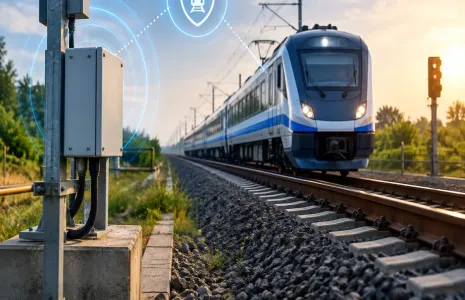
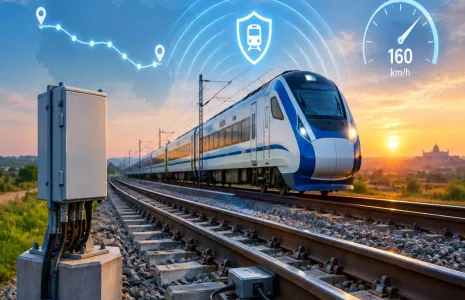
Kavach, India’s indigenously developed Automatic Train Protection (ATP) system, continues to advance in deployment across the national rail network. The system, certified to the highest Safety Integrity Level (SIL-4), automatically applies brakes if a loco pilot fails to act within speed limits and enhances safe train operations, including during adverse weather conditions.

Field trials on passenger trains began in February 2016, followed by independent safety assessment. Based on these results, three firms were approved in 2018–19 to supply Kavach Version 3.2. The system was formally adopted as India’s National ATP in July 2020.

Implementation of Kavach involves several major activities:

Installation of station-level Kavach across all stations and block sections

Deployment of RFID tags along the entire track

Installation of telecom towers across each section

Laying of optical fibre cable

Provision of loco-mounted Kavach for every locomotive on Indian Railways

Following deployment of Kavach 3.2 over 1,465 route km on South Central Railway, improvements were incorporated into the updated Version 4.0, approved by RDSO on 16 July 2024. The upgraded version offers enhanced location accuracy, improved signalling information in large yards, station-to-station interface over optical fibre and direct integration with existing electronic interlocking. These features support large-scale deployment across India’s diverse network.

Kavach Version 4.0 has now been successfully commissioned over 738 route km:

633 route km on the Palwal–Mathura–Nagda section of the Delhi–Mumbai route

105 route km on the Howrah–Bardhaman section of the Delhi–Howrah route

Implementation is progressing across remaining sections of both corridors. Track-side deployment has also begun over 15,512 route km, covering the Golden Quadrilateral, Golden Diagonal, high-density network and other priority sections. Bids have been invited to equip a further 9,069 locomotives with Kavach 4.0.

Specialised training programmes are under way at Indian Railways’ centralised institutes. More than 40,000 personnel — including 30,000 loco pilots and assistant loco pilots — have been trained through courses developed with IRISET.

The approximate cost of track-side and station-level Kavach installation is Rs 5 million per km, while equipping each locomotive costs about Rs 8 million. Expenditure on Kavach works up to October 2025 stands at Rs 23.5436 billion, with Rs 16.7319 billion allocated for 2025–26.

Progress on key Kavach items is as follows:

Laying of optical fibre cable: 7,129 km

Installation of telecom towers: 860 units

Kavach at stations: 549 locations

Installation of track-side equipment: 2,674 route km

Kavach provided on locomotives: 4,154 locos

This information was provided by Shri Ashwini Vaishnaw, Union Minister for Railways, Information & Broadcasting and Electronics & Information Technology, in a written reply in the Rajya Sabha.

Kavach, India’s indigenously developed Automatic Train Protection (ATP) system, continues to advance in deployment across the national rail network. The system, certified to the highest Safety Integrity Level (SIL-4), automatically applies brakes if a loco pilot fails to act within speed limits and enhances safe train operations, including during adverse weather conditions. Field trials on passenger trains began in February 2016, followed by independent safety assessment. Based on these results, three firms were approved in 2018–19 to supply Kavach Version 3.2. The system was formally adopted as India’s National ATP in July 2020. Implementation of Kavach involves several major activities: Installation of station-level Kavach across all stations and block sections Deployment of RFID tags along the entire track Installation of telecom towers across each section Laying of optical fibre cable Provision of loco-mounted Kavach for every locomotive on Indian Railways Following deployment of Kavach 3.2 over 1,465 route km on South Central Railway, improvements were incorporated into the updated Version 4.0, approved by RDSO on 16 July 2024. The upgraded version offers enhanced location accuracy, improved signalling information in large yards, station-to-station interface over optical fibre and direct integration with existing electronic interlocking. These features support large-scale deployment across India’s diverse network. Kavach Version 4.0 has now been successfully commissioned over 738 route km: 633 route km on the Palwal–Mathura–Nagda section of the Delhi–Mumbai route 105 route km on the Howrah–Bardhaman section of the Delhi–Howrah route Implementation is progressing across remaining sections of both corridors. Track-side deployment has also begun over 15,512 route km, covering the Golden Quadrilateral, Golden Diagonal, high-density network and other priority sections. Bids have been invited to equip a further 9,069 locomotives with Kavach 4.0. Specialised training programmes are under way at Indian Railways’ centralised institutes. More than 40,000 personnel — including 30,000 loco pilots and assistant loco pilots — have been trained through courses developed with IRISET. The approximate cost of track-side and station-level Kavach installation is Rs 5 million per km, while equipping each locomotive costs about Rs 8 million. Expenditure on Kavach works up to October 2025 stands at Rs 23.5436 billion, with Rs 16.7319 billion allocated for 2025–26. Progress on key Kavach items is as follows: Laying of optical fibre cable: 7,129 km Installation of telecom towers: 860 units Kavach at stations: 549 locations Installation of track-side equipment: 2,674 route km Kavach provided on locomotives: 4,154 locos This information was provided by Shri Ashwini Vaishnaw, Union Minister for Railways, Information & Broadcasting and Electronics & Information Technology, in a written reply in the Rajya Sabha.

Next Story
Infrastructure Urban

Centre Boosts FPO Growth With New Credit And Market Support

The Government is implementing the Central Sector Scheme on the formation and promotion of 10,000 Farmer Producer Organisations (FPOs), under which all 10,000 FPOs have now been registered. The scheme provides Rs 1.8 million per FPO for three years as management support, a matching equity grant of up to Rs 1.5 million, and a credit guarantee of up to Rs 0.02 billion through eligible lending institutions. It also offers assistance for training, market linkages and alignment with other schemes. FPOs receive support to obtain input licences for seed, fertiliser and pesticide supplies, as well as..

Next Story
Infrastructure Urban

PM-KISAN Drives Farm Income Gains And Rural Stability

The PM-KISAN scheme, a central sector initiative launched in February 2019, aims to support the financial needs of farmers holding cultivable land. Under the scheme, Rs 6,000 per year is transferred in three equal instalments to Aadhaar-seeded bank accounts through Direct Benefit Transfer. Eligibility is based primarily on cultivable landholding, with certain exclusions for individuals of higher economic status. A farmer-centric digital infrastructure ensures scheme benefits reach farmers across India without intermediaries. With full transparency in registration and verification, the Governm..

Next Story
Infrastructure Urban

Govt Extends Pro Tem Security Certificate To Two Years

In a further push to improve ease of doing business and ensure continuity for the telecom industry, the National Centre for Communication Security (NCCS) under the Department of Telecommunications has extended the validity of the Pro Tem Security Certification from six months to two years. The Pro Tem Certification, initially launched in October 2024 with a six-month validity, was designed to prevent business disruption for IP Router and Wi-Fi CPE products, which became subject to mandatory security certification from 1 October 2024. Under this certification, OEMs submit a declaration confirm..

Advertisement

Subscribe to Our Newsletter

Get daily newsletters around different themes from Construction world.

STAY CONNECTED

Advertisement

Advertisement

Advertisement

Advertisement

Open In App