Indore-Budni Rail Line Tunnel Excavation Reaches Key Milestone
RAILWAYS & METRO RAIL

Indore-Budni Rail Line Tunnel Excavation Reaches Key Milestone

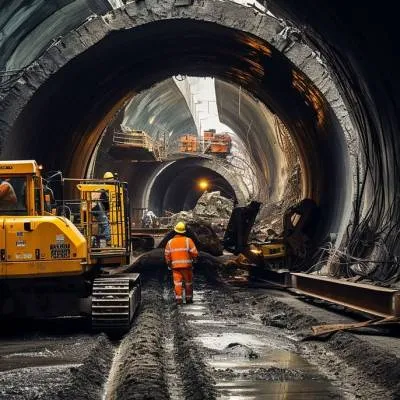
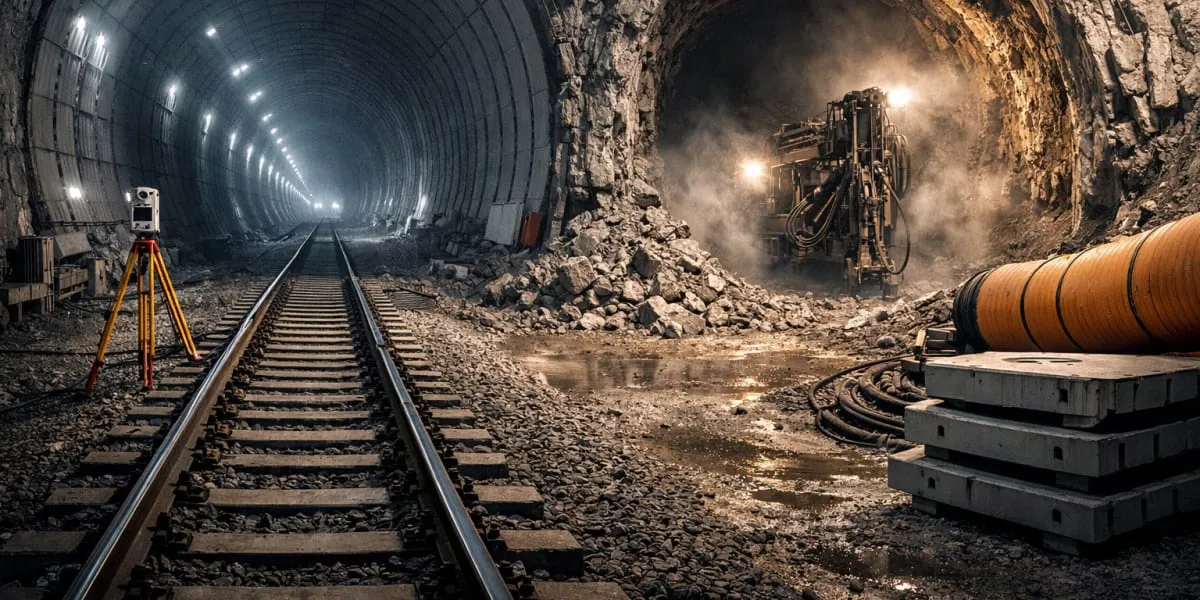
The Indore-Budni New Railway Line Project has reached a notable tunnelling milestone as Rail Vikas Nigam Limited (RVNL) reported significant progress in underground excavation. Work on Tunnel two has advanced to 500 metres of total underground excavation while Tunnel one has recorded 108 metres of progress. The achievement forms part of a broader push to enhance rail connectivity between Indore and Jabalpur and to support regional economic growth.

According to project data the 500 metres of excavation in Tunnel two comprised 265 metres at Portal one and 235 metres at Portal two. Tunnelling operations combine mechanised and conventional techniques adapted to local geology and hydrology and crews are executing concurrent face advances to maintain schedule. Temporary support structures and muck removal systems have been installed to facilitate safe access and efficient material movement.

Tunnel two spans 8,640 metres and will be the longest railway tunnel in Central India when completed, while Tunnel one measures 1,160 metres. Because Tunnel two exceeds three km in length an 8,640 metres long escape tunnel (ET) is being constructed parallel to the main bore in accordance with Railway Board guidelines to ensure passenger safety and emergency egress. Ventilation shafts, drainage provisions and safety chambers are being incorporated into the design at strategic intervals.

Tunnelling is being carried out using the New Austrian Tunnelling Method (NATM) and other advanced techniques to contend with complex strata and water ingress. Project engineers reported steady progress despite challenging conditions, citing technical planning, continuous monitoring and adaptive support installation as key enablers. The workforce has maintained round the clock operations under strict safety protocols to sustain momentum.

On completion the Indore-Budni line is expected to shorten the route by approximately 68 km and to improve passenger convenience while boosting freight movement, logistics and regional trade. Work across bridges, viaducts and ancillary infrastructure is progressing simultaneously to meet the project timeline and to ensure integrated system readiness.

The Indore-Budni New Railway Line Project has reached a notable tunnelling milestone as Rail Vikas Nigam Limited (RVNL) reported significant progress in underground excavation. Work on Tunnel two has advanced to 500 metres of total underground excavation while Tunnel one has recorded 108 metres of progress. The achievement forms part of a broader push to enhance rail connectivity between Indore and Jabalpur and to support regional economic growth. According to project data the 500 metres of excavation in Tunnel two comprised 265 metres at Portal one and 235 metres at Portal two. Tunnelling operations combine mechanised and conventional techniques adapted to local geology and hydrology and crews are executing concurrent face advances to maintain schedule. Temporary support structures and muck removal systems have been installed to facilitate safe access and efficient material movement. Tunnel two spans 8,640 metres and will be the longest railway tunnel in Central India when completed, while Tunnel one measures 1,160 metres. Because Tunnel two exceeds three km in length an 8,640 metres long escape tunnel (ET) is being constructed parallel to the main bore in accordance with Railway Board guidelines to ensure passenger safety and emergency egress. Ventilation shafts, drainage provisions and safety chambers are being incorporated into the design at strategic intervals. Tunnelling is being carried out using the New Austrian Tunnelling Method (NATM) and other advanced techniques to contend with complex strata and water ingress. Project engineers reported steady progress despite challenging conditions, citing technical planning, continuous monitoring and adaptive support installation as key enablers. The workforce has maintained round the clock operations under strict safety protocols to sustain momentum. On completion the Indore-Budni line is expected to shorten the route by approximately 68 km and to improve passenger convenience while boosting freight movement, logistics and regional trade. Work across bridges, viaducts and ancillary infrastructure is progressing simultaneously to meet the project timeline and to ensure integrated system readiness.

Next Story
Equipment

MYCRANE Crosses 1,000 Customers in India

MYCRANE, the global platform for crane rental and purchase, has achieved major commercial milestones in India, reinforcing the country’s position as one of its fastest-growing strategic markets. The company has surpassed 1,000 registered customers and 1,000 crane suppliers nationwide, while completing more than 100 paid orders.The growth reflects rising adoption of digital procurement solutions across India’s construction, infrastructure, energy and industrial sectors. Equipment sourced through the platform is supporting projects across the country, with several leading contractors and EPC..

Next Story
Infrastructure Urban

AMTOE 2026 Opens Global Machine Tool Sourcing Hub

The Asian Machine Tool Online Exhibition 2026 (AMTOE 2026) has officially opened as a B2B sourcing platform connecting global buyers with verified Asian suppliers across the machine tool and manufacturing sector. The exhibition will run until 31 October 2026 through a hybrid online and offline model, offering extended sourcing and business networking opportunities.Co-organised by AsianNet and TradeAsia, the event aims to strengthen links between Asian manufacturers and international importers while improving cross-border procurement efficiency and supplier matching.Since launching in 2022, AMT..

Next Story
Infrastructure Energy

Vedanta Lifts Renewable Energy Use by Over 50%

On World Earth Day, Vedanta Limited announced that its renewable energy usage rose by over 50 per cent year on year to 3.97 billion units in FY26, helping avoid 3 million tonnes of carbon dioxide emissions.The company said its portfolio of metals, minerals, power, and oil & gas continues to support advanced manufacturing, electrification, energy transition and clean technology. Aluminium, copper and silver remain critical for applications such as mobility, power transmission, renewable infrastructure and solar photovoltaics, while iron, steel and zinc continue to support energy infrastruct..

Advertisement

Subscribe to Our Newsletter

Get daily newsletters around different themes from Construction world.

STAY CONNECTED

Advertisement

Advertisement

Advertisement