+
Kochi Metro Needs Eight More Trains After Pink Line
RAILWAYS & METRO RAIL

Kochi Metro Needs Eight More Trains After Pink Line

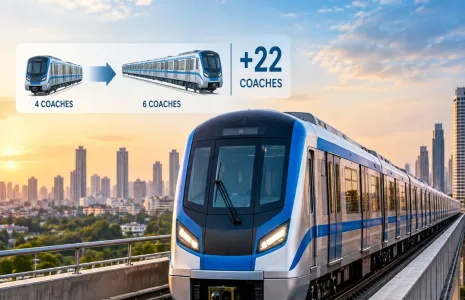
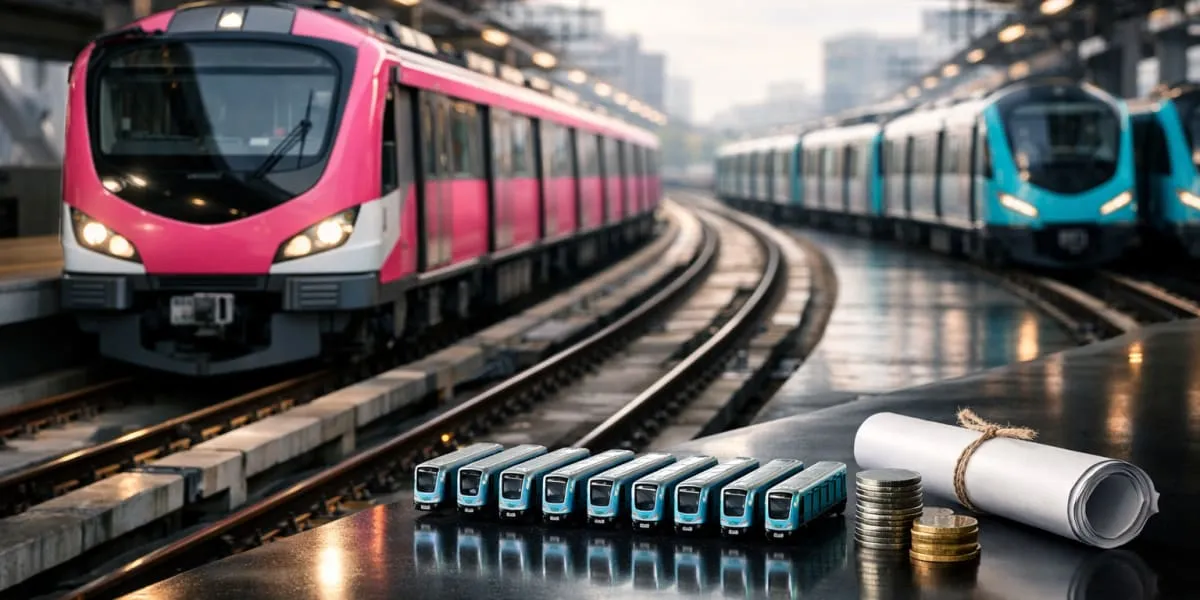
Kochi Metro Rail Ltd requires eight additional trains after completion of the Pink Line, taking the total fleet requirement to 33, the managing director Loknath Behera said. KMRL currently has 25 trains procured for Phase I, of which 18 are normally in operation while seven are rotated for scheduled maintenance. The proposed procurement remains on hold because of funding constraints.

With completion of Phase II, a 10.58 km elevated corridor from JLN Stadium to Infopark with 10 new stations, the existing fleet will be insufficient to maintain the desired service frequency while allowing trains to undergo maintenance. Behera indicated that optimum utilisation of Phase I and Phase II resources would require eight more trains to keep headways at seven to ten minutes. He warned that without additional trains the interval between services could rise to around 20 minutes for Phase II operations.

The requirement had been identified during the previous administration when KMRL proposed procuring the trains and was asked to seek assistance from the Centre. Behera noted that the Asian Infrastructure Investment Bank is willing to provide funding but both the Union and state governments must agree.

In the absence of central assistance the state would have to bear the entire estimated cost of Rs 2.75 billion (bn), complicating the procurement timetable. KMRL could seek a share from the Centre because Kochi Metro is a fifty-fifty project, but discussions have yet to finalise the arrangement. Procurement timing is critical as ordered trains take two years to arrive, so an order placed now would likely see delivery in 2028, roughly one year after Phase II is expected to begin operations.

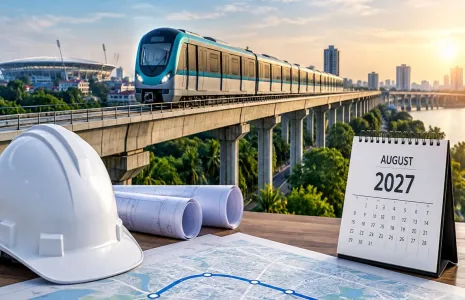
KMRL plans to complete the stretch to Infopark by June 2027, with the viaduct due by March and stations and traction systems by June to enable operations. The Phase II project is backed by a Rs 10.16 bn loan from AIIB and structural work is progressing. The trains are sourced from Alstom Transport India at its manufacturing unit in Sri City, Andhra Pradesh.

Kochi Metro Rail Ltd requires eight additional trains after completion of the Pink Line, taking the total fleet requirement to 33, the managing director Loknath Behera said. KMRL currently has 25 trains procured for Phase I, of which 18 are normally in operation while seven are rotated for scheduled maintenance. The proposed procurement remains on hold because of funding constraints. With completion of Phase II, a 10.58 km elevated corridor from JLN Stadium to Infopark with 10 new stations, the existing fleet will be insufficient to maintain the desired service frequency while allowing trains to undergo maintenance. Behera indicated that optimum utilisation of Phase I and Phase II resources would require eight more trains to keep headways at seven to ten minutes. He warned that without additional trains the interval between services could rise to around 20 minutes for Phase II operations. The requirement had been identified during the previous administration when KMRL proposed procuring the trains and was asked to seek assistance from the Centre. Behera noted that the Asian Infrastructure Investment Bank is willing to provide funding but both the Union and state governments must agree. In the absence of central assistance the state would have to bear the entire estimated cost of Rs 2.75 billion (bn), complicating the procurement timetable. KMRL could seek a share from the Centre because Kochi Metro is a fifty-fifty project, but discussions have yet to finalise the arrangement. Procurement timing is critical as ordered trains take two years to arrive, so an order placed now would likely see delivery in 2028, roughly one year after Phase II is expected to begin operations. KMRL plans to complete the stretch to Infopark by June 2027, with the viaduct due by March and stations and traction systems by June to enable operations. The Phase II project is backed by a Rs 10.16 bn loan from AIIB and structural work is progressing. The trains are sourced from Alstom Transport India at its manufacturing unit in Sri City, Andhra Pradesh.

Related Stories

Gold Stories

Next Story
Infrastructure Energy

L&T Delivers 110 Modules for Australia’s Largest Urea Plant

Larsen & Toubro (L&T) has completed the fabrication and delivery of 110 modules for Project CERES, Australia’s largest urea manufacturing plant, marking a significant milestone in the execution of the 2.3 MTPA facility. The project is being developed by Perdaman Chemicals & Fertilisers in Karratha, Western Australia, under the Saipem-Clough Joint Venture. L&T’s scope comprised 47 Pre-assembled Units and 63 Pre-assembled Racks, with the modules weighing approximately 64,000 metric tonnes. Fabricated at the company’s Modular Fabrication Facility at Kattupalli near Chennai, the modules wer..

Next Story
Infrastructure Urban

EPFO Wage Ceiling Raised to Rs 25,000 per Month

The Union Cabinet has approved the proposal to increase the wage ceiling for mandatory coverage under the Employees’ Provident Fund Organisation (EPFO) from Rs 15,000 to Rs 25,000 per month. The move is expected to bring over 51 lakh additional employees under the EPFO social security framework.The revised ceiling will extend access to provident fund savings, pension benefits under the Employees’ Pension Scheme (EPS) and insurance coverage under the Employees’ Deposit Linked Insurance Scheme (EDLI) to a wider section of employees earning between Rs 15,000 and Rs 25,000 per month.The EPFO..

Next Story
Infrastructure Transport

Maharashtra to Get Rs 270 Billion Shipbuilding Cluster

Mazagon Dock Shipbuilders Ltd (MDL) will invest around Rs 27,000 crore to develop a greenfield shipbuilding cluster at Dighi Port in Maharashtra’s Raigad district. The project is expected to create nearly 90,000 employment opportunities, according to the state government.MDL has signed a memorandum of understanding (MoU) with National Shipbuilding and Heavy Industries Park Maharashtra Ltd (NSHIPML) for the development of the project in the presence of Maharashtra Chief Minister Devendra Fadnavis.Under the agreement, MDL aims to establish an annual shipbuilding capacity of at least 2 million ..

Advertisement

Subscribe to Our Newsletter

Get daily newsletters around different themes from Construction world.

STAY CONNECTED

Advertisement

SPECIAL OFFER
QR Code