+
Kochi Metro Network Ends 2025 With Record Ridership
RAILWAYS & METRO RAIL

Kochi Metro Network Ends 2025 With Record Ridership

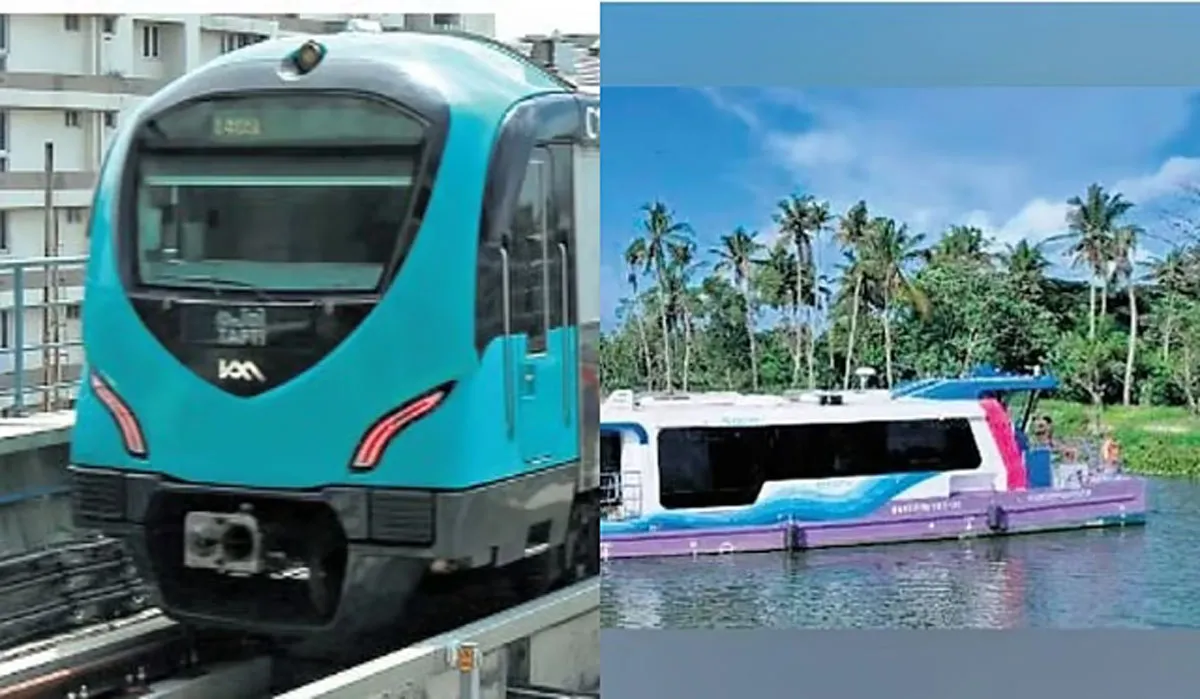
Kochi Metro Rail Limited closed 2025 with record-breaking ridership across its integrated transport network comprising metro rail, water metro and electric feeder buses, reflecting sustained growth in urban mobility demand.

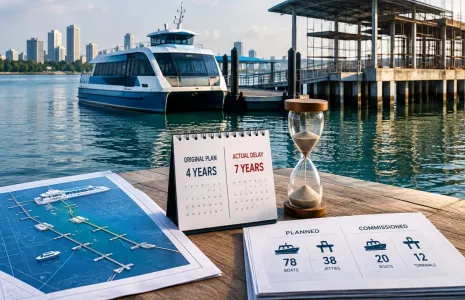
During the year, more than 36.5 million passengers travelled on the metro rail, marking a growth of 4.2 per cent over 2024 and a four-fold increase compared with 2017, its first full year of operations. Cumulative metro rail ridership has now crossed 175 million passengers. The water metro recorded over 2.33 million passengers in 2025, registering a 15 per cent rise from the previous year and an increase of nearly 1 million compared with 2023, when services were launched. Over the past three years, more than 5.7 million passengers have used the water metro.

December once again emerged as a peak month for both services, with the water metro benefiting significantly from tourist inflows linked to the Kochi-Muziris Biennale. The holiday rush to Fort Kochi and Mattancherry drove daily ridership consistently above 10,000 passengers, particularly between December 24 and 31. The High Court–Fort Kochi route recorded the highest demand during this period.

Metro rail services carried 3.27 million passengers in December, with traffic surging towards the end of the month. Ridership stood at 124,639 passengers on December 30 and exceeded 139,000 on New Year’s Eve. On New Year’s Day, total metro network usage crossed 160,000 passengers, with 139,766 using the metro rail and about 15,000 travelling on the water metro.

Single-day water metro ridership peaked at 17,058 passengers on December 28, surpassing the earlier record set in December 2024. While final figures for New Year’s Day are still being compiled, Kochi Water Metro Limited reported its highest-ever single-day revenue of about Rs 44.7 million, indicating another record performance.

Monthly metro rail ridership has remained steady in recent months, with 3.17 million passengers in September, 3.04 million in October and 3.11 million in November, pointing to sustained commuter confidence. Managing Director Loknath Behera said punctual operations, cleanliness, hygiene and staff conduct played a key role in building public trust, which was evident during the New Year celebrations.

He added that the deployment of 15 electric feeder buses connecting metro stations and water metro terminals across multiple routes has strengthened first- and last-mile connectivity. The feeder bus services also saw strong festive demand, recording a single-day high of 6,817 passengers on December 31, when services were operated through New Year’s Eve for the first time, running until 4 am.

Kochi Metro Rail Limited closed 2025 with record-breaking ridership across its integrated transport network comprising metro rail, water metro and electric feeder buses, reflecting sustained growth in urban mobility demand. During the year, more than 36.5 million passengers travelled on the metro rail, marking a growth of 4.2 per cent over 2024 and a four-fold increase compared with 2017, its first full year of operations. Cumulative metro rail ridership has now crossed 175 million passengers. The water metro recorded over 2.33 million passengers in 2025, registering a 15 per cent rise from the previous year and an increase of nearly 1 million compared with 2023, when services were launched. Over the past three years, more than 5.7 million passengers have used the water metro. December once again emerged as a peak month for both services, with the water metro benefiting significantly from tourist inflows linked to the Kochi-Muziris Biennale. The holiday rush to Fort Kochi and Mattancherry drove daily ridership consistently above 10,000 passengers, particularly between December 24 and 31. The High Court–Fort Kochi route recorded the highest demand during this period. Metro rail services carried 3.27 million passengers in December, with traffic surging towards the end of the month. Ridership stood at 124,639 passengers on December 30 and exceeded 139,000 on New Year’s Eve. On New Year’s Day, total metro network usage crossed 160,000 passengers, with 139,766 using the metro rail and about 15,000 travelling on the water metro. Single-day water metro ridership peaked at 17,058 passengers on December 28, surpassing the earlier record set in December 2024. While final figures for New Year’s Day are still being compiled, Kochi Water Metro Limited reported its highest-ever single-day revenue of about Rs 44.7 million, indicating another record performance. Monthly metro rail ridership has remained steady in recent months, with 3.17 million passengers in September, 3.04 million in October and 3.11 million in November, pointing to sustained commuter confidence. Managing Director Loknath Behera said punctual operations, cleanliness, hygiene and staff conduct played a key role in building public trust, which was evident during the New Year celebrations. He added that the deployment of 15 electric feeder buses connecting metro stations and water metro terminals across multiple routes has strengthened first- and last-mile connectivity. The feeder bus services also saw strong festive demand, recording a single-day high of 6,817 passengers on December 31, when services were operated through New Year’s Eve for the first time, running until 4 am.

Next Story
Infrastructure Transport

Second Mountain Tunnel Breakthrough in Palghar Advances High Speed Rail

The Mumbai-Ahmedabad high speed rail (MAHSR) project reached a milestone with the breakthrough of a mountain tunnel in Palghar, Maharashtra. Mountain tunnel MT-six measures 454 metres long and 14.4 metres wide and will accommodate up and down tracks. The breakthrough follows MT-five near Saphale on second January 2026 and the MT-six excavation was completed from both ends using the New Austrian Tunnelling Method. The ministry reported that the tunnelling was completed within 12 months. The New Austrian Tunnelling Method is favoured for its flexibility in complex geology and irregular tunnel s..

Next Story
Infrastructure Transport

Modi Government Pushes Atmanirbhar Container Drive With BCSL MoU

The Union Government advanced a plan to create an integrated, domestically anchored container ecosystem with the signing of a Memorandum of Understanding to establish the Bharat Container Shipping Line (BCSL). The MoU was signed by key agencies including the Shipping Corporation of India and Container Corporation of India alongside major port authorities and Sagarmala Finance Corporation Limited under the Ministry of Ports, Shipping and Waterways, in the presence of senior ministers. The initiative aligns with the Container Manufacturing Assistance Scheme announced in the Union Budget 2026–2..

Next Story
Infrastructure Urban

Ministry Reports Gains In Mobility For Marginalised Communities

The Ministry of Social Justice and Empowerment is implementing skill development, education and rehabilitation schemes to promote socio-economic mobility and sustainable livelihoods for marginalised and disadvantaged communities across the country. Programmes target Scheduled Castes, Other Backward Classes, Economically Weaker Sections, De-notified Tribes and Safai Karamcharis through specialised implementing corporations and empanelled training institutes. Pradhan Mantri Dakshata Aur Kushalta Sampann Hitgrahi Yojana, or PM-DAKSH, provided skill training and placement support through the Nati..

Advertisement

Subscribe to Our Newsletter

Get daily newsletters around different themes from Construction world.

STAY CONNECTED

Advertisement

Advertisement

Advertisement

Open In App