Namma Metro Receives 13th Yellow Line Train In Bengaluru
RAILWAYS & METRO RAIL

Namma Metro Receives 13th Yellow Line Train In Bengaluru

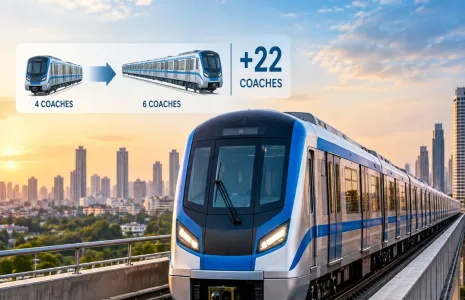
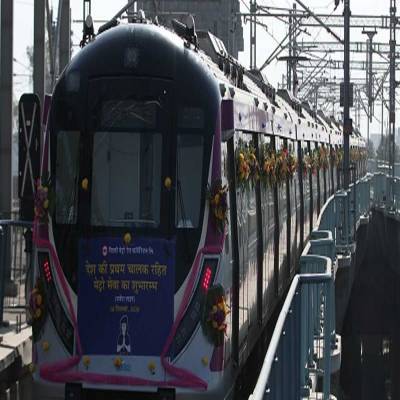
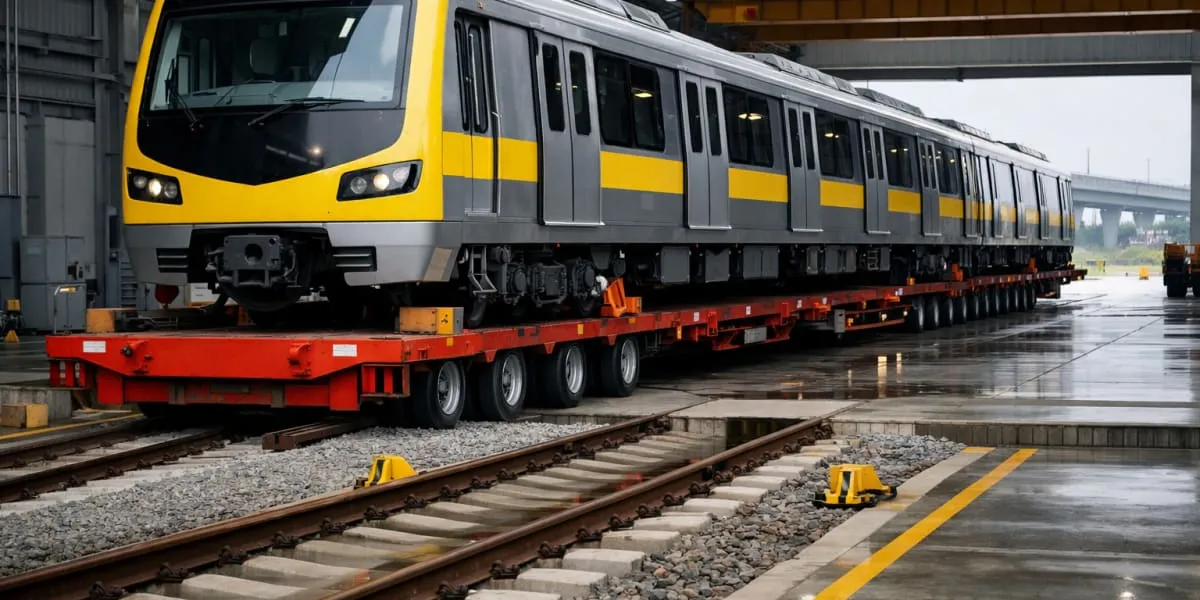
The Bangalore Metro Rail Corporation Limited received the 13th train for the Yellow Line when a six-coach set arrived at the Hebbagodi depot early on Monday and was unloaded from trailers. The coaches will be assembled into a single trainset and moved to the Inspection Bay Line for static testing. Officials said the arrival formed part of a continuing programme to augment capacity on the corridor.

Before entering passenger service the train must complete 750 km of dynamic testing on the main line tracks, a process that is restricted to night-time hours. Static testing in the Inspection Bay Line is intended to verify integration of onboard systems and to ensure that equipment functions correctly before dynamic trials. Dynamic testing assesses operational performance under real running conditions and informs final commissioning steps.

The 19.75 km Yellow Line currently operates with 10 trains and provides a peak-hour frequency of seven minutes. Two additional trains are undergoing testing and were expected to be deployed in the coming weeks, officials said. The received set increases the number of delivered trains for the line to 13, offering scope for reduced wait times when fully commissioned.

Depot teams will complete assembly work and safety inspections before scheduling the required night-time dynamic runs, after which regulatory clearance will be sought for passenger operations. The phased introduction of tested trains is intended to strengthen service resilience and to accommodate rising commuter demand on the corridor. Authorities indicated that further deployments would be aligned with testing outcomes and operational planning.

Operational teams will monitor performance data closely during the dynamic phase and will adjust driver training and maintenance schedules as required to sustain reliability. Incremental additions to the fleet are intended to reduce crowding during peak periods and to provide buffer capacity for service disruptions. Commuters are likely to benefit from shorter waiting times once the commissioning sequence is complete.

"Join industry leaders at RAHSTA Expo, India's premier platform for roads, highways and traffic infrastructure. Register now to explore innovations, network with experts and shape the future of mobility."

The Bangalore Metro Rail Corporation Limited received the 13th train for the Yellow Line when a six-coach set arrived at the Hebbagodi depot early on Monday and was unloaded from trailers. The coaches will be assembled into a single trainset and moved to the Inspection Bay Line for static testing. Officials said the arrival formed part of a continuing programme to augment capacity on the corridor. Before entering passenger service the train must complete 750 km of dynamic testing on the main line tracks, a process that is restricted to night-time hours. Static testing in the Inspection Bay Line is intended to verify integration of onboard systems and to ensure that equipment functions correctly before dynamic trials. Dynamic testing assesses operational performance under real running conditions and informs final commissioning steps. The 19.75 km Yellow Line currently operates with 10 trains and provides a peak-hour frequency of seven minutes. Two additional trains are undergoing testing and were expected to be deployed in the coming weeks, officials said. The received set increases the number of delivered trains for the line to 13, offering scope for reduced wait times when fully commissioned. Depot teams will complete assembly work and safety inspections before scheduling the required night-time dynamic runs, after which regulatory clearance will be sought for passenger operations. The phased introduction of tested trains is intended to strengthen service resilience and to accommodate rising commuter demand on the corridor. Authorities indicated that further deployments would be aligned with testing outcomes and operational planning. Operational teams will monitor performance data closely during the dynamic phase and will adjust driver training and maintenance schedules as required to sustain reliability. Incremental additions to the fleet are intended to reduce crowding during peak periods and to provide buffer capacity for service disruptions. Commuters are likely to benefit from shorter waiting times once the commissioning sequence is complete.

Next Story
Infrastructure Energy

Centre Prioritising Energy Security With Coal Gasification

Union minister for Coal and Mines G Kishan Reddy said the Centre is prioritising energy security through a strategic shift to coal gasification and has announced incentives totalling Rs 460 billion (bn) to support the effort. He said more than 35 companies will start coal gasification activities in India within two months and that the government is encouraging firms that bring technology to close the domestic technology gap. The minister described the initiative as aimed at reducing import dependence and developing indigenous capacity. India has the fifth-largest coal reserve in the world, and..

Next Story
Infrastructure Urban

BHEL and Coal India Invest Rs 250 bn in Odisha Gasification

Bharat Heavy Electricals (BHEL) and Coal India (CIL) are jointly investing Rs 250 billion in a coal gasification project in Odisha, with the Prime Minister laying the foundation stone in Jharsuguda. Union Coal and Mines Minister G Kishan Reddy described the initiative as a transformative shift in coal utilisation that will open industrial avenues for the state. The project moves coal beyond conventional power generation to industrial feedstocks. Coal gasification will convert coal into synthesis gas, a versatile feedstock for chemicals, fertilisers and synthetic fuels, and the technology is ex..

Next Story
Infrastructure Energy

BCCL Hands Over Dugdha Coal Washery To JSW Steel

Bharat Coking Coal has handed over the Dugdha Coal Washery to JSW Steel, marking the first coal washery asset monetisation under the Ministry of Coal's asset monetisation programme. The handover took place in the presence of senior officials from Bharat Coking Coal Ltd, JSW Steel and JSW Energy. The washery has a capacity of two million tonnes per annum (mn t per annum), and its transfer is intended to introduce private sector practices into coal beneficiation operations. The monetisation is aimed at modernising coal sector assets, improving operational efficiency and enhancing resource utilis..

Advertisement

Subscribe to Our Newsletter

Get daily newsletters around different themes from Construction world.

STAY CONNECTED

Advertisement

Advertisement

Advertisement