+
Navratna PSU Secures Rs 7292.8 mn Rail Electrification Order
RAILWAYS & METRO RAIL

Navratna PSU Secures Rs 7292.8 mn Rail Electrification Order

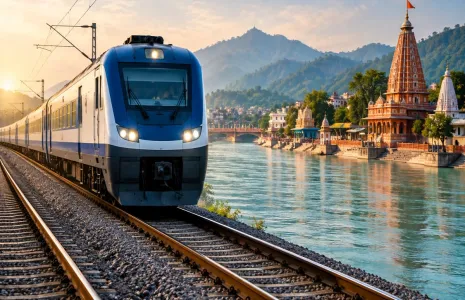
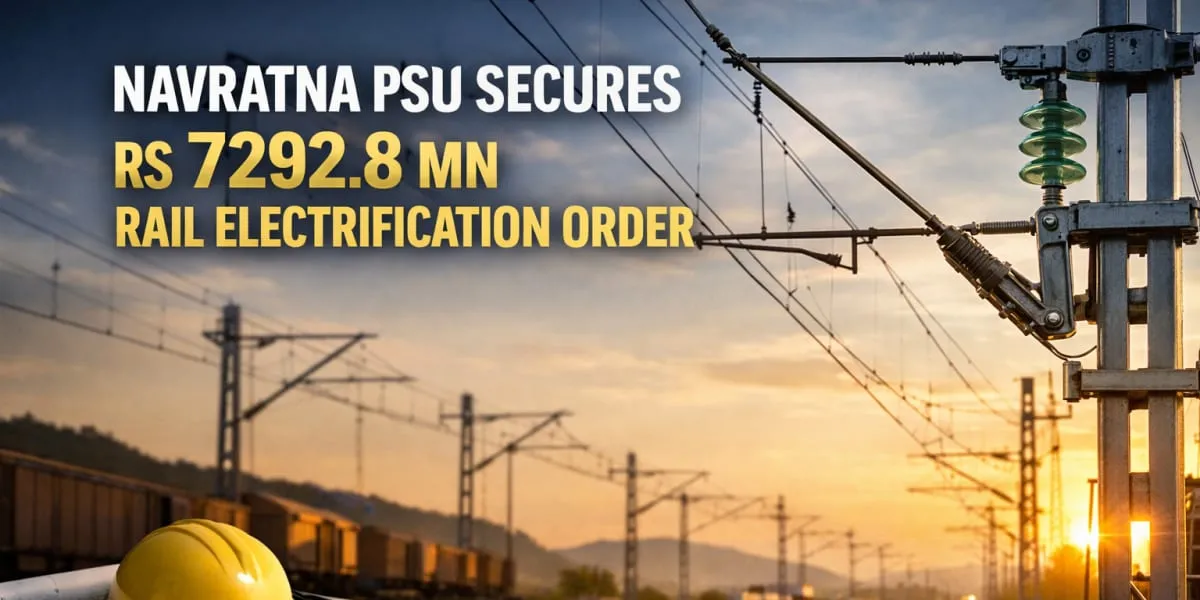
RITES, a Schedule 'A' public sector enterprise under the Ministry of Railways, has secured a Rs 7292.8 million (mn) order from South Western Railway for the electrification of the Mysuru-Hassan-Mangaluru corridor, including the Hassan-Arsikere section. The contract is on a cost-plus turnkey basis and the stated project cost excludes GST while including RITES fees. The filing indicated that execution is ongoing and that the assignment forms part of the company's continuing railway electrification work. The value figure follows an earlier order secured by the company in 2021 for related projects.

The company clarified that the transaction is between a government organisation and a government-owned company and therefore does not constitute a related party transaction. The filing emphasised the government-to-government character of the award and restated compliance with applicable procurement norms. The order was presented as a revised estimate building on prior work commissioned by the Ministry of Railways. Administrative and technical supervision will continue under the terms of the contract.

Railway electrification is being pursued to improve energy efficiency, to reduce carbon emissions and to lower operational costs across the rail network. The Mysuru-Hassan-Mangaluru project is expected to strengthen regional connectivity and to facilitate better freight and passenger movement in southern India. The works are aligned with national objectives to modernise rail infrastructure and to support more sustainable transport. The scheme will also support operational reliability and timetable adherence across the corridor.

The contract reinforces RITES's role in supporting railway infrastructure development both domestically and internationally. The company will undertake engineering, procurement and commissioning activities as specified under the turnkey arrangement. Progress on the corridor will be reported through routine regulatory filings as the project advances. Project schedules will be coordinated with local authorities to minimise disruption and to ensure safety and quality standards.

RITES, a Schedule 'A' public sector enterprise under the Ministry of Railways, has secured a Rs 7292.8 million (mn) order from South Western Railway for the electrification of the Mysuru-Hassan-Mangaluru corridor, including the Hassan-Arsikere section. The contract is on a cost-plus turnkey basis and the stated project cost excludes GST while including RITES fees. The filing indicated that execution is ongoing and that the assignment forms part of the company's continuing railway electrification work. The value figure follows an earlier order secured by the company in 2021 for related projects. The company clarified that the transaction is between a government organisation and a government-owned company and therefore does not constitute a related party transaction. The filing emphasised the government-to-government character of the award and restated compliance with applicable procurement norms. The order was presented as a revised estimate building on prior work commissioned by the Ministry of Railways. Administrative and technical supervision will continue under the terms of the contract. Railway electrification is being pursued to improve energy efficiency, to reduce carbon emissions and to lower operational costs across the rail network. The Mysuru-Hassan-Mangaluru project is expected to strengthen regional connectivity and to facilitate better freight and passenger movement in southern India. The works are aligned with national objectives to modernise rail infrastructure and to support more sustainable transport. The scheme will also support operational reliability and timetable adherence across the corridor. The contract reinforces RITES's role in supporting railway infrastructure development both domestically and internationally. The company will undertake engineering, procurement and commissioning activities as specified under the turnkey arrangement. Progress on the corridor will be reported through routine regulatory filings as the project advances. Project schedules will be coordinated with local authorities to minimise disruption and to ensure safety and quality standards.

Next Story
Infrastructure Urban

Implementation Status of Jal Jeevan Mission

Since August 2019 the Government has implemented Jal Jeevan Mission to provide assured potable water through household tap connections in rural India. At the start of the mission only 32.3 million (mn) rural households, representing 16.7 per cent, were reported to have tap water connections. States and union territories have reported that 125.8 mn additional rural households have since been provided with tap connections. As a result, of about 193.6 mn rural households roughly 158.2 mn, or 81.71 per cent, are reported to have tap water supply at home.\n\nThe State, district and village level st..

Next Story
Infrastructure Urban

Jal Jeevan Mission Reaches Eighty One Per Cent Rural Coverage

The Government reported substantial progress under the Jal Jeevan Mission, launched in August 2019 to provide tap water to every rural household. At launch only 32.3 million (mn) rural households had tap connections and states and Union territories reported provision of 125.8 mn additional households by March 2026. Consequently, out of about 193.6 mn rural households around 158.2 mn, or 81.71 per cent, are reported to have tap water at home. The Finance Minister announced extension of the mission until 2028 in the 2025-26 budget speech. The Swachh Bharat Mission Grameen, launched in October 20..

Next Story
Infrastructure Urban

Empowering Local Governance for Sustainable Rural Water Supply

The Ministry of Jal Shakti has aligned the Jal Jeevan Mission (JJM) with the 73rd Amendment to strengthen village level planning and community ownership of water supply. Gram Panchayats, village water and sanitation committees and Pani Samitis are to plan, implement, manage and maintain piped water systems, with gram sabha processes formalising handover and oversight. Implementation support agencies including non government organisations, community based organisations and self help groups have been empanelled to train local committees and promote women participation. Under JJM, the department ..

Advertisement

Subscribe to Our Newsletter

Get daily newsletters around different themes from Construction world.

STAY CONNECTED

Advertisement

Advertisement

Advertisement