Pune Metro Line 3 Nears Commercial Launch
RAILWAYS & METRO RAIL

Pune Metro Line 3 Nears Commercial Launch

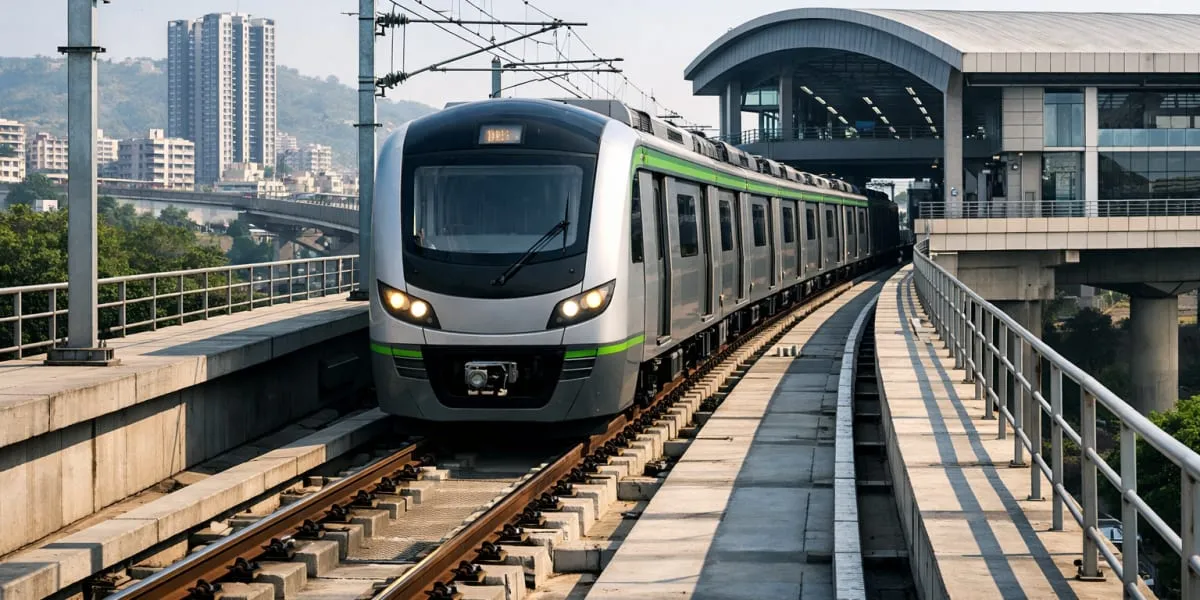
Pune Metro Line 3 has completed end-to-end trial runs across its entire 23 km elevated corridor linking Hinjawadi and Shivajinagar under a public–private partnership formed under the New Metro Policy, 2017. The completion of full corridor trials marks a major milestone as authorities prepare for commercial operations that are expected to transform urban mobility in Pune.

Major construction and systems milestones are complete. Viaduct construction is finished and all 23 station structures are ready while entry and exit works are at advanced stages. Track laying, third-rail electrification and signalling have been finished, and the rolling stock passed oscillation trials conducted by the Research Designs and Standards Organisation (RDSO) and secured approvals from the Commissioner of Metro Rail Safety and the Ministry of Railways to operate at a maximum speed of 85 kmph. The trial runs have demonstrated the corridor’s readiness for passenger services.

The line will open in phases, the first covering a 13.3 km stretch between Maan and RK Laxman Museum with 12 stations, which authorities expect to be ready by June 2026 subject to statutory approvals. A subsequent phase will extend service to District Court station to enable integration with the Maha Metro network. Once fully operational the metro is expected to cut travel time between Shivajinagar and Hinjawadi to around 45 minutes from the current 90 minutes, reducing the journey by more than 50 per cent.

The project features Communications-Based Train Control, Make in India rolling stock and smart ticketing with sustainability measures such as rooftop solar, rainwater harvesting and electric vehicle charging. Partners have planned last-mile connectivity and an inclusive staffing model with operations run by an all-women cadre of train operators; Keolis has recruited nearly 100 women. Project leadership said the corridor will provide a faster, safer and sustainable mode of transport for thousands of commuters including IT professionals, students and residents.

"Join industry leaders at RAHSTA Expo, India's premier platform for roads, highways and traffic infrastructure. Register now to explore innovations, network with experts and shape the future of mobility."

Pune Metro Line 3 has completed end-to-end trial runs across its entire 23 km elevated corridor linking Hinjawadi and Shivajinagar under a public–private partnership formed under the New Metro Policy, 2017. The completion of full corridor trials marks a major milestone as authorities prepare for commercial operations that are expected to transform urban mobility in Pune. Major construction and systems milestones are complete. Viaduct construction is finished and all 23 station structures are ready while entry and exit works are at advanced stages. Track laying, third-rail electrification and signalling have been finished, and the rolling stock passed oscillation trials conducted by the Research Designs and Standards Organisation (RDSO) and secured approvals from the Commissioner of Metro Rail Safety and the Ministry of Railways to operate at a maximum speed of 85 kmph. The trial runs have demonstrated the corridor’s readiness for passenger services. The line will open in phases, the first covering a 13.3 km stretch between Maan and RK Laxman Museum with 12 stations, which authorities expect to be ready by June 2026 subject to statutory approvals. A subsequent phase will extend service to District Court station to enable integration with the Maha Metro network. Once fully operational the metro is expected to cut travel time between Shivajinagar and Hinjawadi to around 45 minutes from the current 90 minutes, reducing the journey by more than 50 per cent. The project features Communications-Based Train Control, Make in India rolling stock and smart ticketing with sustainability measures such as rooftop solar, rainwater harvesting and electric vehicle charging. Partners have planned last-mile connectivity and an inclusive staffing model with operations run by an all-women cadre of train operators; Keolis has recruited nearly 100 women. Project leadership said the corridor will provide a faster, safer and sustainable mode of transport for thousands of commuters including IT professionals, students and residents.

Next Story
Real Estate

VeARC leases 27,000 sq ft office space in Bengaluru

VeARC India has leased approximately 27,000 sq ft of office space at The Executive Centre's (TEC) Helios Business Park on Outer Ring Road (ORR), Bengaluru, to support the expansion of its Global Capability Centre (GCC) operations.The new workspace accommodates more than 450 workstations and is intended to support the company's growing workforce in India. VeARC India serves as the Global Capability Centre for Long Arc Capital.Located on Bengaluru's Outer Ring Road, the office provides access to one of the city's key technology and business corridors. The expansion comes amid continued growth in..

Next Story
Real Estate

Bharat Shah Family Buys Four Luxury Apartments In Worli For Rs1.8 bn

The family of veteran investor Bharat Shah has acquired four ultra-luxury apartments on the higher floors of Kalpataru One in Worli, South Mumbai, for Rs1.8 billion (bn). The purchases were registered on 6 July 2026 and were executed through Preeti Bharat Shah and Kinnari Bharat Shah, who bought the flats from Kalpataru Properties Limited. Property registration documents reviewed by Zapkey show the total consideration at Rs1.7941 billion. The transactions recorded a per square foot RERA carpet price of Rs0.101 million (mn), with each apartment valued at about Rs448.5 million. The four residenc..

Next Story
Infrastructure Urban

NITI Aayog Consultation On Critical Mineral Supply Chains

NITI Aayog convened a stakeholder consultation in New Delhi on Wednesday to assess requirements for critical minerals across strategic sectors, bringing together experts from government, research institutions, academia and industry. The meeting aimed to estimate current and future demand, identify supply chain vulnerabilities and discuss measures to strengthen domestic capabilities in exploration, processing and recycling. The exercise formed part of broader efforts to secure mineral value chains essential for economic growth, technological advancement and national security.\n\nDiscussions con..

Advertisement

Subscribe to Our Newsletter

Get daily newsletters around different themes from Construction world.

STAY CONNECTED

Advertisement

Advertisement

Advertisement