Pune Metro Line 3 to Operate on 750-Volt Third Rail and CBTC
RAILWAYS & METRO RAIL

Pune Metro Line 3 to Operate on 750-Volt Third Rail and CBTC

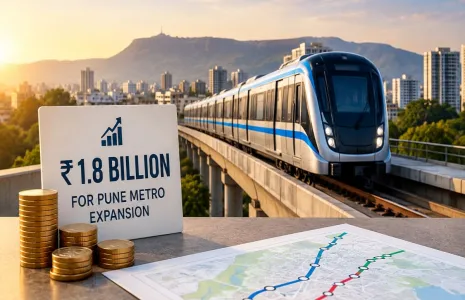
Pune Metro Line 3 (Line 3) is advancing towards commercial operations and will run on a 750-volt DC third-rail electrification system across its 23-km Hinjawadi to Shivajinagar corridor. The release stated that this will be the first deployment of such technology in the city and aligns Pune with other Indian metros that use third-rail power for dense urban networks. Line 3 was described as fully elevated and designed for high-frequency service.

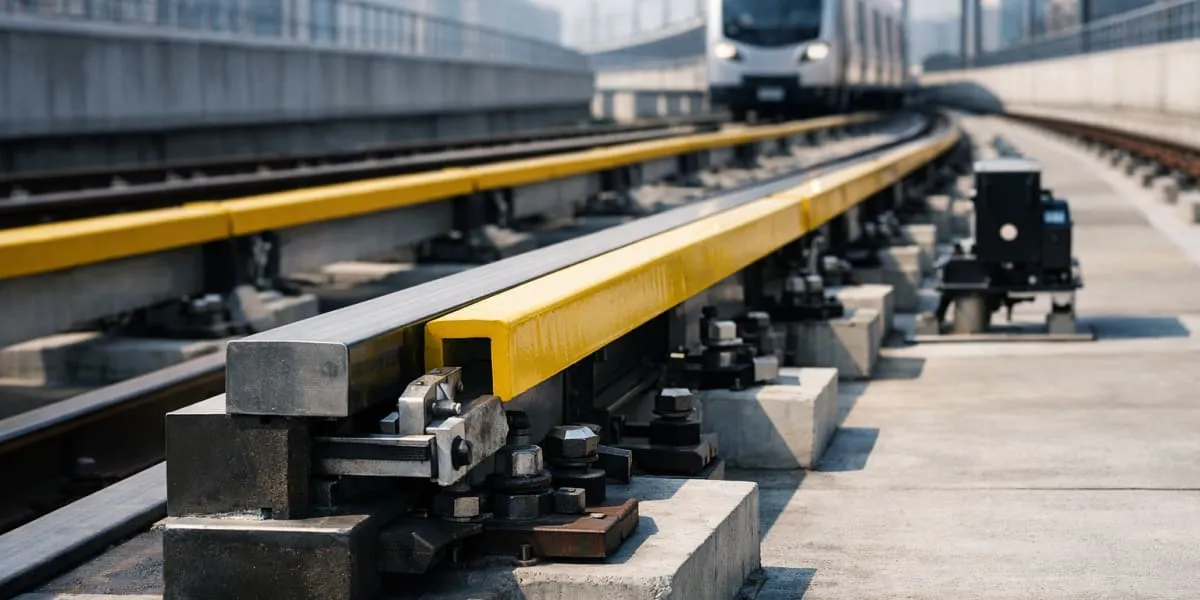
Third-rail electrification delivers power via an additional conductor rail alongside the running tracks rather than overhead wires and masts. Collector shoes mounted under trains draw electricity from the conductor rail, removing the need for overhead equipment and reducing visual clutter along busy growth corridors.

The project will incorporate Communications-Based Train Control (CBTC), an advanced digital signalling system that continuously exchanges information between trains and trackside equipment to determine train location, speed and movement in real time. The combination of third-rail power and CBTC is intended to enable shorter headways, higher passenger throughput and future automation upgrades.

The corridor links Hinjawadi's Rajiv Gandhi Infotech Park with Wakad, Baner, Balewadi, University Circle and Shivajinagar, and trial runs have been completed across the full 23-km elevated route. Commissioning will proceed in phases, with the 13.3-km section between Maan and R K Laxman Museum comprising 12 stations to be operationalised first, followed by extension to the District Court for integration with the Maha Metro network.

The authorities indicated that the line has reached a final phase of readiness subject to statutory approvals and regulatory clearances. Once fully operational, Line 3 is expected to cut travel time between Shivajinagar and Hinjawadi to around 45 minutes from one and a half hours, reducing commute duration by more than 50 per cent and offering commuters more reliable and streamlined journeys.

Pune Metro Line 3 (Line 3) is advancing towards commercial operations and will run on a 750-volt DC third-rail electrification system across its 23-km Hinjawadi to Shivajinagar corridor. The release stated that this will be the first deployment of such technology in the city and aligns Pune with other Indian metros that use third-rail power for dense urban networks. Line 3 was described as fully elevated and designed for high-frequency service. Third-rail electrification delivers power via an additional conductor rail alongside the running tracks rather than overhead wires and masts. Collector shoes mounted under trains draw electricity from the conductor rail, removing the need for overhead equipment and reducing visual clutter along busy growth corridors. The project will incorporate Communications-Based Train Control (CBTC), an advanced digital signalling system that continuously exchanges information between trains and trackside equipment to determine train location, speed and movement in real time. The combination of third-rail power and CBTC is intended to enable shorter headways, higher passenger throughput and future automation upgrades. The corridor links Hinjawadi's Rajiv Gandhi Infotech Park with Wakad, Baner, Balewadi, University Circle and Shivajinagar, and trial runs have been completed across the full 23-km elevated route. Commissioning will proceed in phases, with the 13.3-km section between Maan and R K Laxman Museum comprising 12 stations to be operationalised first, followed by extension to the District Court for integration with the Maha Metro network. The authorities indicated that the line has reached a final phase of readiness subject to statutory approvals and regulatory clearances. Once fully operational, Line 3 is expected to cut travel time between Shivajinagar and Hinjawadi to around 45 minutes from one and a half hours, reducing commute duration by more than 50 per cent and offering commuters more reliable and streamlined journeys.

Next Story
Infrastructure Urban

Enerpac Launches Safer Industrial Lifting Solutions in India

Enerpac has introduced its CR-Series Cribbing Ring Sets and TJP-Series 30-Ton Hydraulic Toe Jack in India, expanding its range of precision lifting solutions for manufacturing, infrastructure and energy applications. The products are designed to improve safety, control and efficiency during heavy lifting, load holding and machine-moving operations. The CR-Series Cribbing Ring Sets provide an engineered alternative to improvised cribbing methods such as wooden blocks and steel plates. Their interlocking design offers predictable and mechanically secured load support for applications including t..

Next Story
Infrastructure Urban

Tembo Global Opens Vasai Plant, Raises Capacity to 100,000 MTPA

Tembo Global Industries has commissioned a new manufacturing facility in Vasai, Maharashtra, increasing its annual production capacity from 18,000 metric tonnes per annum to 100,000 MTPA. Developed with an investment of Rs 75 crore, the 120,000 sq ft integrated facility is expected to improve manufacturing efficiency, support product development and strengthen the company’s supply-chain capabilities. Its location in Vasai provides connectivity for sourcing raw materials and distributing finished products, which is expected to support faster deliveries, lower logistics costs and improved op..

Next Story
Infrastructure Transport

BorgWarner Wins China Transfer Case Order for New SUV

BorgWarner has secured an order to supply its torque-on-demand transfer case with mechanical lock for a newly developed full-size SUV from a Chinese original equipment manufacturer. Production of the vehicle is scheduled to begin in the fourth quarter of 2026. The Mlock torque-on-demand system combines automatic four-wheel drive torque distribution with mechanical locking modes. BorgWarner said the technology is designed to balance on-road efficiency with off-road capability across different driving conditions. Unlike traditional part-time four-wheel drive systems that require drivers to manua..

Advertisement

Subscribe to Our Newsletter

Get daily newsletters around different themes from Construction world.

STAY CONNECTED

Advertisement

Advertisement

Advertisement