Railway Board Approves India's First Hydrogen Train
RAILWAYS & METRO RAIL

Railway Board Approves India's First Hydrogen Train

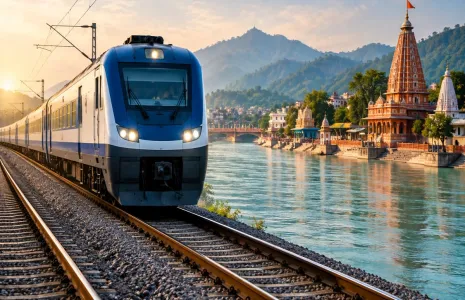
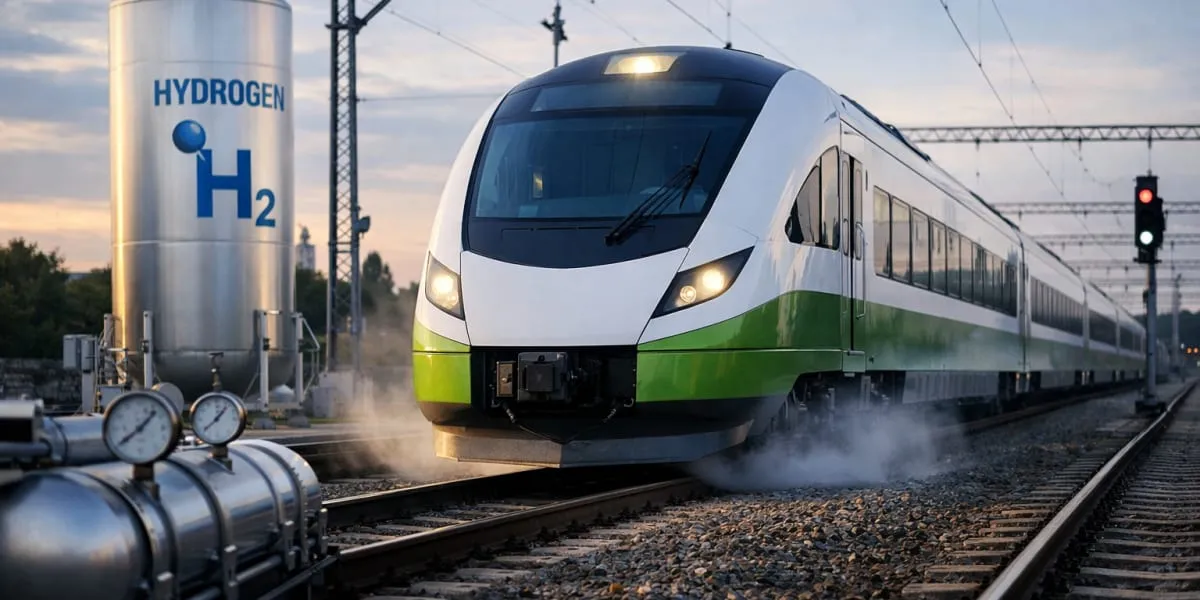
The Railway Board has approved the introduction of the country's first hydrogen-powered train set in a letter dated 22 May 2026 to the Research Designs and Standards Organisation and Northern Railway. The sanction covers a 10-car hydrogen train set and specifies operation at a maximum speed of 75 kmph on the Jind-Sonipat section of the Delhi division. The approval followed an application submitted on 16 March 2026 through the Chief Commissioner of Railway Safety.

The train set is described as the world's longest at 10 coaches on the broad gauge platform and the most powerful, with two driving power cars of 1,200 kilowatt (kW) each, giving a combined output of 2,400 kW. It comprises two driving power cars and eight passenger cars. The configuration has been detailed in the board communication as a hydrogen fuel cell-based formation.

Oscillation trials on the set were completed in March, with the Research Designs and Standards Organisation conducting tests as part of the evaluation process. The rolling stock has been cleared only for operations on the dedicated Jind-Sonipat section, while scheduled maintenance has been planned at Shakurbasti depot. Permission for movement of the train set from Jind to Shakurbasti and back in a dead condition, hauled by a locomotive, must be ensured in accordance with extant codal provisions.

The board communication outlined operational limits, including maximum speed and specific movement authorisations, and noted that maintenance arrangements are in place. With the introduction into commercial service, India will join countries already operating hydrogen-powered trains such as Germany, Sweden, Japan and China. The advance places a new technology on the national network, signalling a move towards low-emission traction options.

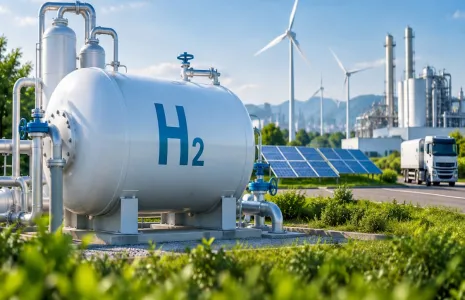
The train set is intended to emit no carbon dioxide in normal operation, with only water vapour as exhaust, according to the documentation. Further deployment beyond the sanctioned section will require separate clearances and maintenance planning before any extension of operations is authorised.

The Railway Board has approved the introduction of the country's first hydrogen-powered train set in a letter dated 22 May 2026 to the Research Designs and Standards Organisation and Northern Railway. The sanction covers a 10-car hydrogen train set and specifies operation at a maximum speed of 75 kmph on the Jind-Sonipat section of the Delhi division. The approval followed an application submitted on 16 March 2026 through the Chief Commissioner of Railway Safety. The train set is described as the world's longest at 10 coaches on the broad gauge platform and the most powerful, with two driving power cars of 1,200 kilowatt (kW) each, giving a combined output of 2,400 kW. It comprises two driving power cars and eight passenger cars. The configuration has been detailed in the board communication as a hydrogen fuel cell-based formation. Oscillation trials on the set were completed in March, with the Research Designs and Standards Organisation conducting tests as part of the evaluation process. The rolling stock has been cleared only for operations on the dedicated Jind-Sonipat section, while scheduled maintenance has been planned at Shakurbasti depot. Permission for movement of the train set from Jind to Shakurbasti and back in a dead condition, hauled by a locomotive, must be ensured in accordance with extant codal provisions. The board communication outlined operational limits, including maximum speed and specific movement authorisations, and noted that maintenance arrangements are in place. With the introduction into commercial service, India will join countries already operating hydrogen-powered trains such as Germany, Sweden, Japan and China. The advance places a new technology on the national network, signalling a move towards low-emission traction options. The train set is intended to emit no carbon dioxide in normal operation, with only water vapour as exhaust, according to the documentation. Further deployment beyond the sanctioned section will require separate clearances and maintenance planning before any extension of operations is authorised.

Next Story
Infrastructure Transport

MMRDA advances 250 m on Orange Gate–Marine Drive tunnel

The Mumbai Metropolitan Region Development Authority (MMRDA) has completed 250 m of underground tunnelling for the Orange Gate–Marine Drive Urban Road Tunnel using India’s largest slurry shield tunnel boring machine (TBM) deployed for an urban road project.The project involves twin tunnels extending over 7 km beneath critical transport corridors, including Central Railway, Western Railway and Metro Line 3. The work requires high-precision engineering to navigate densely developed urban infrastructure.Once completed, the tunnel is expected to reduce travel time between Orange Gate and Marin..

Next Story
Infrastructure Urban

Hindustan Zinc Pays Rs 188.46 Billion in FY26

Hindustan Zinc contributed Rs 188.46 billion to the public exchequer in FY 2025-26, according to its 9th Tax Transparency Report. The contribution, equivalent to 46 per cent of the company’s revenue, included direct and indirect taxes, government royalties, dividends to the Government of India, withholding taxes and other statutory levies.The company’s five-year cumulative contribution to the exchequer stood at Rs 915.72 billion. In FY26, Hindustan Zinc reported revenue of Rs 408.44 billion, EBITDA of Rs 221.62 billion and profit after tax of Rs 138.32 billion. It also achieved its highest..

Next Story
Infrastructure Urban

World of Concrete India 2026 Opens in Mumbai

Informa Markets in India will host the 12th edition of World of Concrete India 2026 from 3–5 June 2026 at the Bombay Exhibition Centre, Mumbai. The specialised B2B exhibition will bring together manufacturers, suppliers, contractors, developers, architects, consultants, infrastructure companies, project leaders and government stakeholders.The event is expected to feature over 350 brands and more than 18,000 trade professionals. It will cover concrete and cement, dry mortar, precast technologies, formwork, construction chemicals, industrial and commercial flooring, scaffolding, safety solutio..

Advertisement

Subscribe to Our Newsletter

Get daily newsletters around different themes from Construction world.

STAY CONNECTED

Advertisement

Advertisement

Advertisement

-->