Rajnath Cites Global Conflicts To Urge Self-Reliance In Drone Manufacturing
DEFENSE

Rajnath Cites Global Conflicts To Urge Self-Reliance In Drone Manufacturing

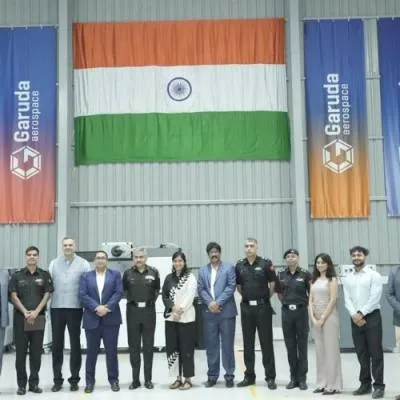
Defence minister Rajnath cited ongoing global conflicts to underline the strategic urgency of self reliance in drone manufacturing and supply chains. He emphasised that changing geopolitical dynamics have exposed vulnerabilities that can affect operational readiness and national security. The minister urged a strengthened domestic industrial base to ensure continuity of critical unmanned systems. He urged coordination with allied nations and domestic suppliers to build robust, secure supply chains for critical components.

He outlined plans to incentivise research and development and to provide fiscal and regulatory support to manufacturers and start-ups. The strategy aims to promote greater participation from private industry and to accelerate technology transfer and production scaling. Enhanced testing facilities and training programmes were cited as priorities to bridge capability gaps. Regulatory reforms were proposed to reduce lead times and to provide predictable frameworks for investment decisions.

He noted that indigenous drones will be deployed across surveillance, logistics and disaster relief roles to bolster resilience and operational flexibility. Emphasis was placed on developing home grown sensors, propulsion systems and artificial intelligence to reduce foreign dependence. Officials were encouraged to streamline procurement and certification to enable faster deployment and to open avenues for exports and job creation. Industry representatives were expected to align design standards with operational requirements to ensure interoperability and maintainability.

The minister indicated that funding mechanisms and public private partnerships will be expanded to support pilot production and scaling with focus on quality standards and lifecycle support. Collaboration with academic institutions and defence research organisations was highlighted to nurture talent and to accelerate prototype to production cycles. He presented self reliance in drone capability as a strategic objective that will be pursued through coordinated policy action and sustained industry engagement. Timelines for key milestones were indicated as subject to review to reflect testing outcomes and evolving strategic needs.

Defence minister Rajnath cited ongoing global conflicts to underline the strategic urgency of self reliance in drone manufacturing and supply chains. He emphasised that changing geopolitical dynamics have exposed vulnerabilities that can affect operational readiness and national security. The minister urged a strengthened domestic industrial base to ensure continuity of critical unmanned systems. He urged coordination with allied nations and domestic suppliers to build robust, secure supply chains for critical components. He outlined plans to incentivise research and development and to provide fiscal and regulatory support to manufacturers and start-ups. The strategy aims to promote greater participation from private industry and to accelerate technology transfer and production scaling. Enhanced testing facilities and training programmes were cited as priorities to bridge capability gaps. Regulatory reforms were proposed to reduce lead times and to provide predictable frameworks for investment decisions. He noted that indigenous drones will be deployed across surveillance, logistics and disaster relief roles to bolster resilience and operational flexibility. Emphasis was placed on developing home grown sensors, propulsion systems and artificial intelligence to reduce foreign dependence. Officials were encouraged to streamline procurement and certification to enable faster deployment and to open avenues for exports and job creation. Industry representatives were expected to align design standards with operational requirements to ensure interoperability and maintainability. The minister indicated that funding mechanisms and public private partnerships will be expanded to support pilot production and scaling with focus on quality standards and lifecycle support. Collaboration with academic institutions and defence research organisations was highlighted to nurture talent and to accelerate prototype to production cycles. He presented self reliance in drone capability as a strategic objective that will be pursued through coordinated policy action and sustained industry engagement. Timelines for key milestones were indicated as subject to review to reflect testing outcomes and evolving strategic needs.

Next Story
Infrastructure Urban

Flender Unveils N-ZAPEX Gear Couplings for Cost-Effective Operation

Flender has unveiled its new N-ZAPEX gear couplings, setting a new industry standard for drive applications in harsh conditions, such as those found in steel, cement, mining, and oil & gas industries. Designed to deliver economic benefits over the entire lifecycle, the N-ZAPEX series offers the highest torque density and misalignment capacities on the market.The N-ZAPEX is available in two versions, XN and XW, each tailored to meet different customer requirements. The XN variant focuses on standardisation, reduced complexity, and cost-effectiveness for smaller sizes, featuring reusable com..

Next Story
Infrastructure Urban

Anil Agarwal Calls for Entrepreneurial Role in Natural Resource PSUs

Anil Agarwal, Chairman of Vedanta, has highlighted the transformative potential of greater entrepreneurial involvement in India's public sector companies within the natural resources space. In a LinkedIn post, he emphasised the importance of empowering India’s pool of entrepreneurs alongside skilled public-sector talent to strengthen domestic production and reduce the country’s reliance on imports.Agarwal drew comparisons with India’s agricultural success, where self-sufficiency and surplus production were achieved. He suggested that a similar approach could unlock substantial value in p..

Next Story
Technology

Advaiya Launches Change Log Archival App for Microsoft Dynamics 365

Advaiya has launched its Change Log Archival app for Microsoft Dynamics 365 Business Central on the Microsoft Marketplace. The app enables organisations to securely archive large volumes of change log data outside the core ERP system while ensuring auditability, compliance, and traceability.As organisations face growing change log records that increase database size and impact system performance, the Change Log Archival app addresses these challenges by archiving historical logs to Azure Blob Storage. This solution optimises storage, maintains data integrity, and ensures accessibility, allowin..

Advertisement

Subscribe to Our Newsletter

Get daily newsletters around different themes from Construction world.

STAY CONNECTED

Advertisement

Advertisement

Advertisement