+
Bihar Reports All Rural Habitations Free From Arsenic And Fluoride
WATER & WASTE

Bihar Reports All Rural Habitations Free From Arsenic And Fluoride

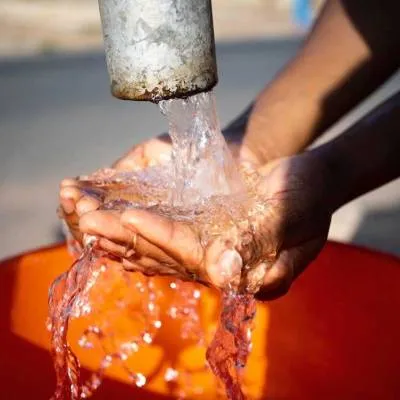
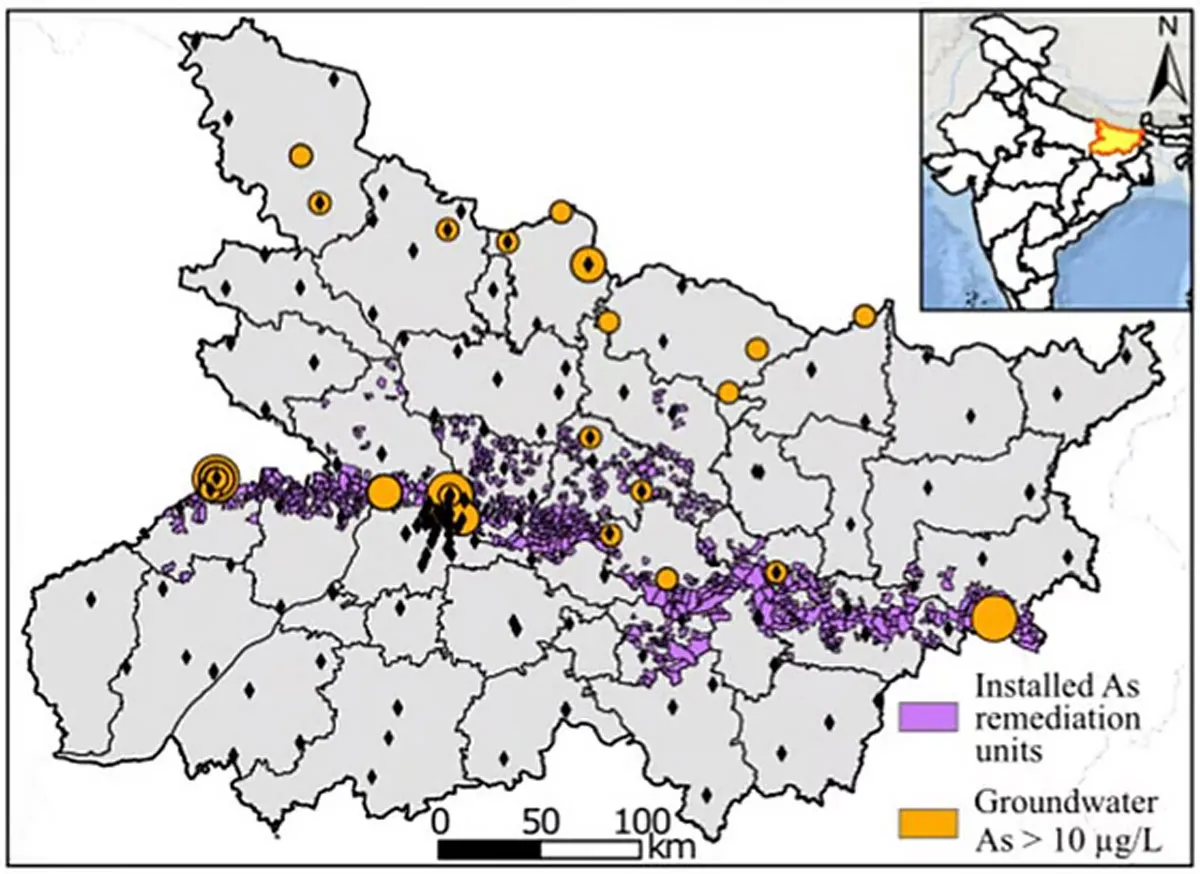
Under the Jal Jeevan Mission (JJM), a web-based Integrated Management Information System (JJM-IMIS) has been developed to enable online reporting of water quality monitoring and surveillance. Through this platform, States and Union Territories report the status of drinking water sources, including the presence of contaminants such as arsenic and fluoride. According to data reported by the State of Bihar on JJM-IMIS, all rural habitations in the State currently have access to safe drinking water free from arsenic and fluoride contamination.

Funds under JJM are released directly to States and UTs, and district-wise financial details are not maintained at the Central level. Since 2019–20, the total Central share released to Bihar under JJM amounts to Rs 7.71 billion. The State Government of Bihar has not drawn JJM funds from 2021–22 onwards.

To strengthen water quality monitoring, an online JJM – Water Quality Management Information System (WQMIS) has also been developed. This platform enables States and UTs to upload water quality test results, sample collection details and surveillance findings. State-wise data reported through WQMIS is available in the public domain.

A ‘Citizen Corner’ on the JJM Dashboard provides public access to village-level water quality test results, enhancing awareness and confidence in rural piped water supply. To encourage testing and ensure potable drinking water, States and UTs have opened water quality laboratories to the general public at nominal rates. Laboratory details are available through the Citizen Corner portal.

The information was provided by the Minister of Jal Shakti, Shri C. R. Patil, in a written reply in the Rajya Sabha.

Under the Jal Jeevan Mission (JJM), a web-based Integrated Management Information System (JJM-IMIS) has been developed to enable online reporting of water quality monitoring and surveillance. Through this platform, States and Union Territories report the status of drinking water sources, including the presence of contaminants such as arsenic and fluoride. According to data reported by the State of Bihar on JJM-IMIS, all rural habitations in the State currently have access to safe drinking water free from arsenic and fluoride contamination. Funds under JJM are released directly to States and UTs, and district-wise financial details are not maintained at the Central level. Since 2019–20, the total Central share released to Bihar under JJM amounts to Rs 7.71 billion. The State Government of Bihar has not drawn JJM funds from 2021–22 onwards. To strengthen water quality monitoring, an online JJM – Water Quality Management Information System (WQMIS) has also been developed. This platform enables States and UTs to upload water quality test results, sample collection details and surveillance findings. State-wise data reported through WQMIS is available in the public domain. A ‘Citizen Corner’ on the JJM Dashboard provides public access to village-level water quality test results, enhancing awareness and confidence in rural piped water supply. To encourage testing and ensure potable drinking water, States and UTs have opened water quality laboratories to the general public at nominal rates. Laboratory details are available through the Citizen Corner portal. The information was provided by the Minister of Jal Shakti, Shri C. R. Patil, in a written reply in the Rajya Sabha.

Next Story
Infrastructure Transport

MMRDA Installs 325-Tonne Steel Spans on Mumbai Metro Line 4

The Mumbai Metropolitan Region Development Authority (MMRDA) has achieved a key construction milestone on Metro Line 4 with the successful installation of three large steel spans at Bhandup West during overnight operations.The spans, together weighing 325 metric tonnes, were launched using eight heavy-duty cranes and 12 multi-axle vehicles. The operation required precise engineering and meticulous planning to minimise disruption in the densely populated suburban area.Due to effective inter-agency coordination, the work—originally scheduled across four nights—was completed within just two n..

Next Story
Infrastructure Transport

CMRL Targets March 2027 Opening for Vadapalani–Panagal Park

Chennai Metro Rail Limited (CMRL) is progressing as scheduled to open the Vadapalani–Panagal Park section of Phase II’s Corridor 4 by March 2027. The 3.5 km underground stretch is part of the 26.1 km Corridor 4 connecting Lighthouse with Poonamallee Bypass.Construction activities are advancing steadily, with tunnelling works between Vadapalani and Panagal Park already completed. Track-laying operations are expected to commence shortly. At Panagal Park station, structural works have reached the concourse and platform levels, while excavation continues at the lowest level.CMRL is also consid..

Next Story
Infrastructure Transport

Maha-Metro Invites Pune Metro Civil Maintenance Bids

Maharashtra Metro Rail Corporation Limited (Maha-Metro) has invited bids for the annual civil maintenance contract of the Pune Metro Rail Project. The tender, bearing ID and number P1-O&M-20/2025, is scheduled to close on 23 February 2026, with a pre-bid meeting slated for 10 February 2026. The earnest money deposit (EMD) for the contract is Rs 3,50,500, and the duration of the contract is one year.The scope of work includes annual civil maintenance of 28 elevated and underground stations, 28.079 km of elevated viaduct including steel bridges, 12.15 km of tunnels, and two depots under the ..

Advertisement

Subscribe to Our Newsletter

Get daily newsletters around different themes from Construction world.

STAY CONNECTED

Advertisement

Advertisement

Advertisement

Open In App