Cabinet Approves Jal Jeevan Mission Two Point Zero and Releases Funds
WATER & WASTE

Cabinet Approves Jal Jeevan Mission Two Point Zero and Releases Funds

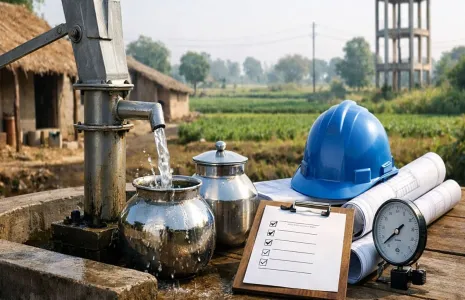
The Union Cabinet approved Jal Jeevan Mission two point zero on 10 March 2026, shifting the mission from an infrastructure-centred approach to a service delivery model with strengthened drinking water governance and an institutional ecosystem for sustainable rural piped potable water supply. The Cabinet approved a total outlay of eight point six nine trillion (tn) and total central assistance of three point five nine trillion (tn), up from two point zero eight trillion (tn).

State and Union Territory governments have begun signing reform-linked memorandums of understanding with the National Jal Jeevan Mission, and twelve States have signed so far. The Union Minister of Jal Shakti chaired a meeting on 13 March to review implementation, urged timely completion and strengthened monitoring, and the operational guidelines were e-released on 22 March.

A total amount of Rs 15,615.3 million (mn) has been released for 2025–26 after mandatory compliance conditions were met. The allocations are Rs 7,929.3 mn for Uttar Pradesh, Rs 5,365.3 mn for Chhattisgarh, Rs 1,540.2 mn for Madhya Pradesh, Rs 653.1 mn for Odisha and Rs 127.4 mn for Maharashtra.

The Ministry requires structured validations before funds are released. These include signing of the MoU, scheme validation against the Sujalam Bharat GIS-linked asset registry, certification of CPHEEO design norm compliance and technical advisories, and proper financial reconciliation of scheme expenditure.

The mission aims to ensure potable tap water for every rural household. At the start in August 2019 only 32.3 million households or 16.7 per cent had tap connections. Since then over 125.9 million additional rural households have been provided connections so that out of about 193.6 million rural households around 158.3 million, or about 81.8 per cent, now have tap water.

The reorientation emphasises accountability, transparency, digital monitoring and community ownership, with annual Jal Utsav campaigns and Gram Panchayat-level reviews through Jal Seva Aankalan and the Meri Panchayat application. Sujalam Bharat has generated 177,156 Sujal Gaon IDs linked to 113,849 scheme IDs to enable end-to-end tracking and support Gram Panchayat commissioning through the Jal Arpan process.

The Union Cabinet approved Jal Jeevan Mission two point zero on 10 March 2026, shifting the mission from an infrastructure-centred approach to a service delivery model with strengthened drinking water governance and an institutional ecosystem for sustainable rural piped potable water supply. The Cabinet approved a total outlay of eight point six nine trillion (tn) and total central assistance of three point five nine trillion (tn), up from two point zero eight trillion (tn). State and Union Territory governments have begun signing reform-linked memorandums of understanding with the National Jal Jeevan Mission, and twelve States have signed so far. The Union Minister of Jal Shakti chaired a meeting on 13 March to review implementation, urged timely completion and strengthened monitoring, and the operational guidelines were e-released on 22 March. A total amount of Rs 15,615.3 million (mn) has been released for 2025–26 after mandatory compliance conditions were met. The allocations are Rs 7,929.3 mn for Uttar Pradesh, Rs 5,365.3 mn for Chhattisgarh, Rs 1,540.2 mn for Madhya Pradesh, Rs 653.1 mn for Odisha and Rs 127.4 mn for Maharashtra. The Ministry requires structured validations before funds are released. These include signing of the MoU, scheme validation against the Sujalam Bharat GIS-linked asset registry, certification of CPHEEO design norm compliance and technical advisories, and proper financial reconciliation of scheme expenditure. The mission aims to ensure potable tap water for every rural household. At the start in August 2019 only 32.3 million households or 16.7 per cent had tap connections. Since then over 125.9 million additional rural households have been provided connections so that out of about 193.6 million rural households around 158.3 million, or about 81.8 per cent, now have tap water. The reorientation emphasises accountability, transparency, digital monitoring and community ownership, with annual Jal Utsav campaigns and Gram Panchayat-level reviews through Jal Seva Aankalan and the Meri Panchayat application. Sujalam Bharat has generated 177,156 Sujal Gaon IDs linked to 113,849 scheme IDs to enable end-to-end tracking and support Gram Panchayat commissioning through the Jal Arpan process.

Next Story
Infrastructure Urban

InsideFPV Delivers ₹10 Crore Kamikaze Drone Order Under MoD’s EPR Route

InsideFPV, a Surat-based drone technology manufacturer, has successfully executed a ₹10 crore defence contract to supply indigenous kamikaze drones under the Ministry of Defence’s Emergency Procurement Route (EPR). The company completed the delivery of hundreds of FPV kamikaze drone platforms within a rapid two-month timeframe, highlighting its ability to meet urgent military procurement timelines.The supply orders were fulfilled under the emergency procurement mechanism, which is aimed at fast-tracking acquisitions for immediate operational needs. InsideFPV’s quick execution reflects it..

Next Story
Infrastructure Energy

Vedanta Resources Secures Fitch Upgrade to ‘BB-’, Best Rating Since 2015

Vedanta Resources Limited (VRL), a global player in metals, oil & gas, critical minerals, power and technology, has received a credit rating upgrade from Fitch Ratings, marking its strongest bond rating in over a decade.Fitch has raised Vedanta Resources’ Long-Term Foreign-Currency Issuer Default Rating (IDR) to ‘BB-’ from ‘B+’, while maintaining a Stable Outlook. The agency also upgraded VRL’s senior unsecured rating, along with the ratings of US dollar-denominated bonds issued by Vedanta Resources Finance II Plc and guaranteed by VRL, to ‘BB-’.The upgrade represents Vedan..

Next Story
Real Estate

NAREDCO NextGen NCR Chapter Launched

The NAREDCO NextGen NCR Chapter was recently launched at Excelerate 2026 in Mumbai, marking a key step towards integrating emerging real estate leaders from the National Capital Region with the national platform. The initiative aims to promote sustainable and responsible urban development through collaboration and knowledge exchange.The event brought together young developers, entrepreneurs, and professionals from across NCR, including Noida, Gurugram, Ghaziabad, Faridabad, Bhiwadi, and Meerut. Discussions focused on urban development, finance, sustainability, innovation, and policy, emphasisi..

Advertisement

Subscribe to Our Newsletter

Get daily newsletters around different themes from Construction world.

STAY CONNECTED

Advertisement

Advertisement

Advertisement