Genus Power Reaches 10 Mn Smart Meters as RDSS Scales
POWER & RENEWABLE ENERGY

Genus Power Reaches 10 Mn Smart Meters as RDSS Scales

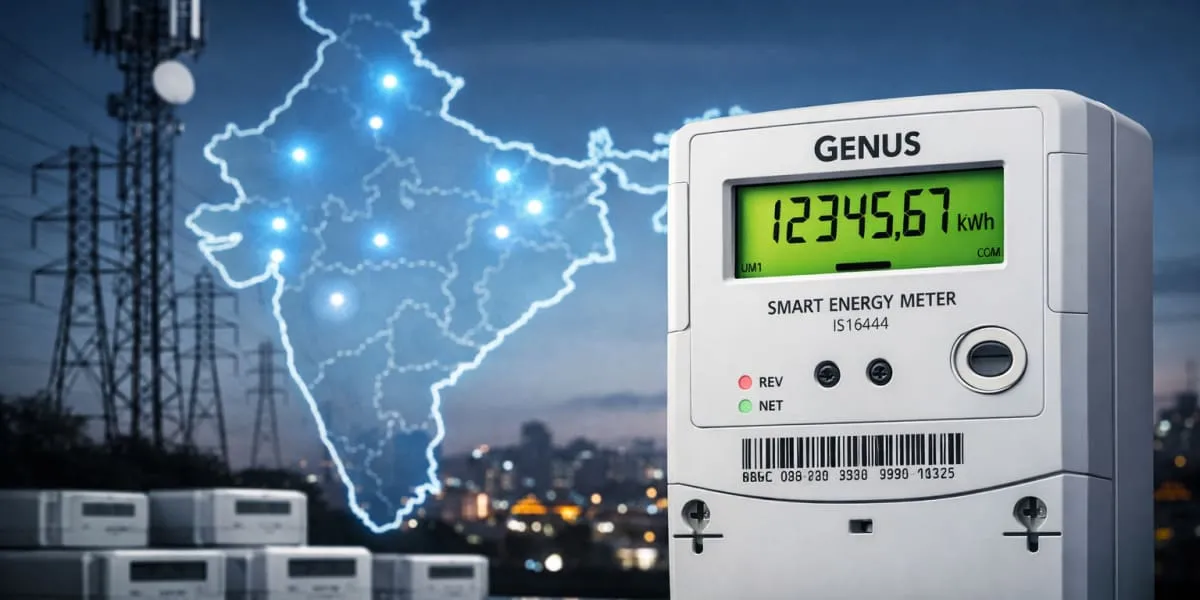
Genus Power has reported the deployment of 10 mn smart meters under the Revamped Distribution Sector Scheme (RDSS) across major distribution companies (DISCOMs) as a leading Advanced Metering Infrastructure Service Provider (AMISP). The rollout spans nine states and underlines the company's pan-India execution capability and role in accelerating large-scale DISCOM reforms. The company now reports 25 mn of its smart meters operating nationwide, representing a significant share of the nearly 56.2 mn smart meters deployed nationally.

Genus has expanded manufacturing capacity with a new integrated facility at Kotputli alongside sites in Jaipur, Haridwar and Guwahati to strengthen production and supply reliability. The company said a further 15 mn meters manufactured by it have been deployed by other AMISP partners and utilities, reflecting robust production capacity and stringent testing standards. Its integrated strengths in design, manufacturing and communication technologies are cited as central to delivery at scale.

The deployments are said to be transforming consumer experience by improving billing accuracy, enhancing transparency, speeding grievance resolution and providing real-time consumption visibility to households and businesses. Genus positions the wider rollouts as enabling better grid planning, efficient peak-demand management, loss reduction and smoother integration of renewable energy. The firm emphasised conviction in domestic manufacturing and long-term system reliability as it scales support to utilities.

Genus is also expanding internationally across Africa, the Middle East, Southeast Asia, the Pacific and SAARC markets, and is advancing its platform toward software-as-a-service and AI-based predictive solutions. Backed by a Government of India recognised research and development centre, ISO 9001 and ISO 14001 certifications and compliance with IS, IEC and MID standards, the company frames itself as a partner for the National Smart Grid Mission. Under RDSS India aims to replace 250 mn conventional meters by 2028, a target the company says it is positioned to support.

Genus Power has reported the deployment of 10 mn smart meters under the Revamped Distribution Sector Scheme (RDSS) across major distribution companies (DISCOMs) as a leading Advanced Metering Infrastructure Service Provider (AMISP). The rollout spans nine states and underlines the company's pan-India execution capability and role in accelerating large-scale DISCOM reforms. The company now reports 25 mn of its smart meters operating nationwide, representing a significant share of the nearly 56.2 mn smart meters deployed nationally. Genus has expanded manufacturing capacity with a new integrated facility at Kotputli alongside sites in Jaipur, Haridwar and Guwahati to strengthen production and supply reliability. The company said a further 15 mn meters manufactured by it have been deployed by other AMISP partners and utilities, reflecting robust production capacity and stringent testing standards. Its integrated strengths in design, manufacturing and communication technologies are cited as central to delivery at scale. The deployments are said to be transforming consumer experience by improving billing accuracy, enhancing transparency, speeding grievance resolution and providing real-time consumption visibility to households and businesses. Genus positions the wider rollouts as enabling better grid planning, efficient peak-demand management, loss reduction and smoother integration of renewable energy. The firm emphasised conviction in domestic manufacturing and long-term system reliability as it scales support to utilities. Genus is also expanding internationally across Africa, the Middle East, Southeast Asia, the Pacific and SAARC markets, and is advancing its platform toward software-as-a-service and AI-based predictive solutions. Backed by a Government of India recognised research and development centre, ISO 9001 and ISO 14001 certifications and compliance with IS, IEC and MID standards, the company frames itself as a partner for the National Smart Grid Mission. Under RDSS India aims to replace 250 mn conventional meters by 2028, a target the company says it is positioned to support.

Next Story
Equipment

MYCRANE Crosses 1,000 Customers in India

MYCRANE, the global platform for crane rental and purchase, has achieved major commercial milestones in India, reinforcing the country’s position as one of its fastest-growing strategic markets. The company has surpassed 1,000 registered customers and 1,000 crane suppliers nationwide, while completing more than 100 paid orders.The growth reflects rising adoption of digital procurement solutions across India’s construction, infrastructure, energy and industrial sectors. Equipment sourced through the platform is supporting projects across the country, with several leading contractors and EPC..

Next Story
Infrastructure Urban

AMTOE 2026 Opens Global Machine Tool Sourcing Hub

The Asian Machine Tool Online Exhibition 2026 (AMTOE 2026) has officially opened as a B2B sourcing platform connecting global buyers with verified Asian suppliers across the machine tool and manufacturing sector. The exhibition will run until 31 October 2026 through a hybrid online and offline model, offering extended sourcing and business networking opportunities.Co-organised by AsianNet and TradeAsia, the event aims to strengthen links between Asian manufacturers and international importers while improving cross-border procurement efficiency and supplier matching.Since launching in 2022, AMT..

Next Story
Infrastructure Energy

Vedanta Lifts Renewable Energy Use by Over 50%

On World Earth Day, Vedanta Limited announced that its renewable energy usage rose by over 50 per cent year on year to 3.97 billion units in FY26, helping avoid 3 million tonnes of carbon dioxide emissions.The company said its portfolio of metals, minerals, power, and oil & gas continues to support advanced manufacturing, electrification, energy transition and clean technology. Aluminium, copper and silver remain critical for applications such as mobility, power transmission, renewable infrastructure and solar photovoltaics, while iron, steel and zinc continue to support energy infrastruct..

Advertisement

Subscribe to Our Newsletter

Get daily newsletters around different themes from Construction world.

STAY CONNECTED

Advertisement

Advertisement

Advertisement