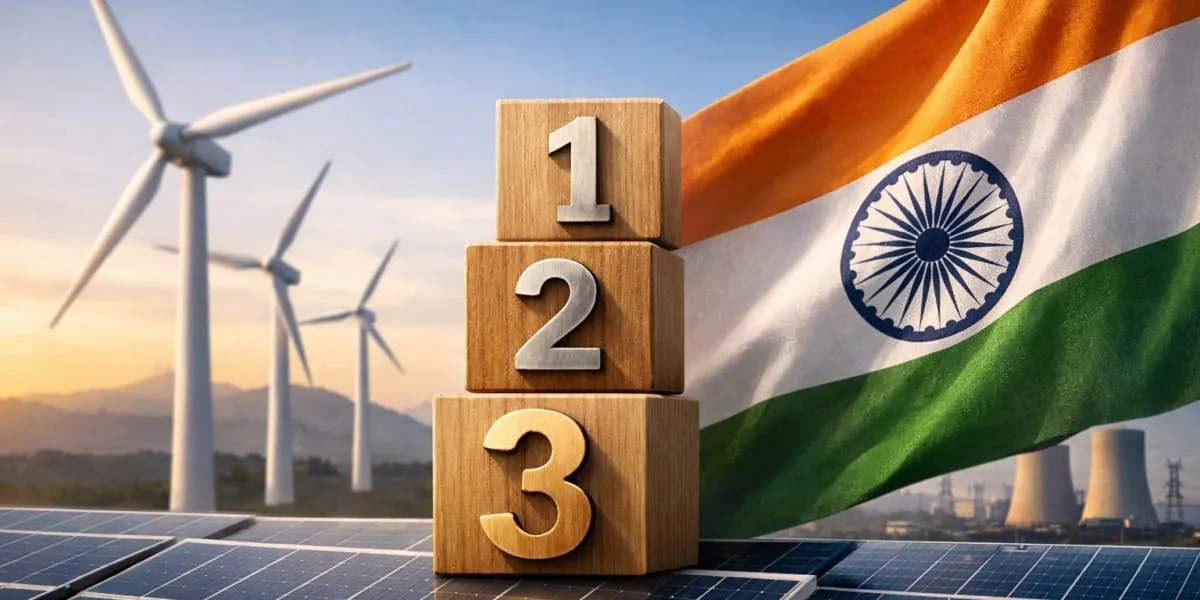
India Third Globally In Renewable Energy Capacity
POWER & RENEWABLE ENERGY

India Third Globally In Renewable Energy Capacity

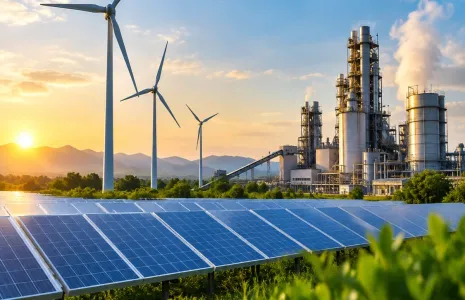
India ranks third globally in renewable energy installed capacity according to the International Renewable Energy Agency (IRENA) statistics for 2026, moving ahead of Brazil in the rankings. The Government reported that total installed capacity from non-fossil fuel sources reached 283.46 GW as on 31 March 2026.

In fiscal year 2025–26 the country recorded a non-fossil capacity addition of 55.3 GW, the highest annual increase to date. In July 2025 renewables met 51.5 per cent of the country’s electricity demand of 203 GW. Total power generation up to March 2026 reached 1,845.921 billion units (BU) and the share of non-fossil fuels in generation was 29.2 per cent, equal to 538.97 BU.

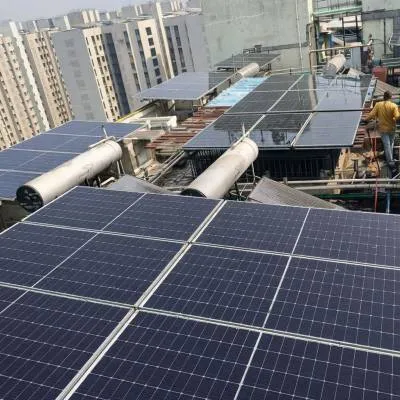
Renewable energy capacity reached 274.68 GW as on 31 March 2026, comprising solar power of 150.26 GW, wind power of 56.09 GW, bioenergy of 11.75 GW, small hydro of five point one seven GW and large hydro of 51.41 GW, while nuclear capacity stood at eight point seven eight GW. Distributed renewable energy from solar contributed 16.3 GW out of the 44.61 GW installed in 2025–26, including seven point six GW under PM KUSUM and eight point seven GW from rooftop installations.

Solar capacity has expanded dramatically since 2014, rising from two point eight two GW to 150.26 GW, while wind capacity increased from 21.04 GW to 56.09 GW. Wind energy recorded its highest ever annual addition of six point zero five GW in 2025–26 and cumulative wind capacity has crossed 56 GW.

The Ministry of New and Renewable Energy (MNRE) is advancing policy measures to reach 500 GW of non-fossil installed capacity by 2030 and has implemented fiscal and regulatory reforms to support domestic manufacturing and deployment. Expenditure in FY 2025–26 against the budget estimate was Rs 241.77 bn of an allocation of Rs 265.49 bn, with the revised estimate at Rs 253.01 bn, while a Rs 500 crore allocation for wind support equates to Rs five bn and the bioenergy budget of Rs 998 crore corresponds to Rs nine point nine eight bn.

India ranks third globally in renewable energy installed capacity according to the International Renewable Energy Agency (IRENA) statistics for 2026, moving ahead of Brazil in the rankings. The Government reported that total installed capacity from non-fossil fuel sources reached 283.46 GW as on 31 March 2026. In fiscal year 2025–26 the country recorded a non-fossil capacity addition of 55.3 GW, the highest annual increase to date. In July 2025 renewables met 51.5 per cent of the country’s electricity demand of 203 GW. Total power generation up to March 2026 reached 1,845.921 billion units (BU) and the share of non-fossil fuels in generation was 29.2 per cent, equal to 538.97 BU. Renewable energy capacity reached 274.68 GW as on 31 March 2026, comprising solar power of 150.26 GW, wind power of 56.09 GW, bioenergy of 11.75 GW, small hydro of five point one seven GW and large hydro of 51.41 GW, while nuclear capacity stood at eight point seven eight GW. Distributed renewable energy from solar contributed 16.3 GW out of the 44.61 GW installed in 2025–26, including seven point six GW under PM KUSUM and eight point seven GW from rooftop installations. Solar capacity has expanded dramatically since 2014, rising from two point eight two GW to 150.26 GW, while wind capacity increased from 21.04 GW to 56.09 GW. Wind energy recorded its highest ever annual addition of six point zero five GW in 2025–26 and cumulative wind capacity has crossed 56 GW. The Ministry of New and Renewable Energy (MNRE) is advancing policy measures to reach 500 GW of non-fossil installed capacity by 2030 and has implemented fiscal and regulatory reforms to support domestic manufacturing and deployment. Expenditure in FY 2025–26 against the budget estimate was Rs 241.77 bn of an allocation of Rs 265.49 bn, with the revised estimate at Rs 253.01 bn, while a Rs 500 crore allocation for wind support equates to Rs five bn and the bioenergy budget of Rs 998 crore corresponds to Rs nine point nine eight bn.

Next Story
Infrastructure Urban

Mineral Auction Rules Amended To Speed Mine Operationalisation

The Ministry of Mines notified the Mineral (Auction) Second Amendment Rules, 2026 on 30 March 2026 to accelerate operationalisation of mines and improve ease of doing business in the mining sector. The amendment follows a prior change to the Mineral (Auction) Rules, 2015 effected on 17 October 2025 that introduced intermediary timelines between issuance of a letter of intent (LoI) and execution of the mining lease. The 2025 change provided that one per cent of performance security would be appropriated for each month of delay by the preferred bidder and introduced incentives for early operatio..

Next Story
Infrastructure Transport

Indian Railways Strengthens Telecom And AI Safety Systems

Indian Railways strengthened its telecom and digital infrastructure during 2025-26 with the aim of improving safety, operational efficiency and the passenger experience. The programme promoted modernisation through advanced technologies, robust communication systems and passenger-centric solutions. These measures were presented as part of a drive to build a digitally integrated rail ecosystem. A key development was the enhancement of the Internet Protocol Multi-Protocol Label Switching (IP MPLS) backbone, commissioned at 1,396 stations to meet bandwidth needs of mission-critical applications. ..

Next Story
Infrastructure Transport

NHAI Holds Workshop on Litigation Management and Coordination

The National Highways Authority of India (NHAI) organised a day-long workshop in New Delhi to strengthen capacity and interdepartmental synergy for faster execution of national highway projects. The event was held under Mission Karmayogi – Sadhana Saptah, an initiative of the Government of India to enhance governance through capacity building and improved processes. The workshop focused on structured and solution oriented deliberations to address implementation constraints. The session was chaired by the NHAI chairman Santosh Kumar Yadav and brought together senior officials from NHAI, the M..

Advertisement

Subscribe to Our Newsletter

Get daily newsletters around different themes from Construction world.

STAY CONNECTED

Advertisement

Advertisement

Advertisement