Rooftop Solar And KUSUM Drive 40% Of India's FY27 Additions
POWER & RENEWABLE ENERGY

Rooftop Solar And KUSUM Drive 40% Of India's FY27 Additions

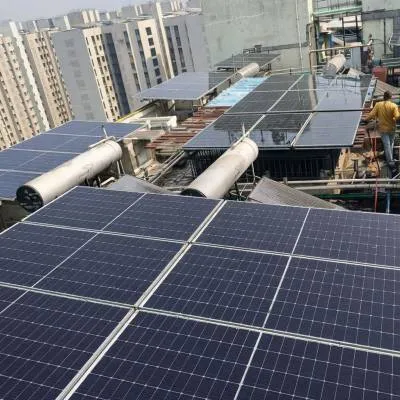
Bernstein has reported that rooftop solar and the Kisan Urja Suraksha evam Utthaan Mahabhiyan scheme accounted for around 40 per cent of India's solar capacity additions in the year to date of FY27 through July, making decentralised projects key drivers of renewable growth as utility scale projects faced transmission-related constraints.

The brokerage noted the shift in composition of solar additions towards rooftop and KUSUM as a notable change in the current fiscal. Bernstein recalled that India recorded strong renewable additions in FY26, adding 45 gigawatt (GW) of solar and six GW of wind capacity, and that rooftop and KUSUM had contributed 22 per cent of solar capacity added that year.

The report said the share of decentralised installations has risen sharply in FY27 through July, with rooftop and KUSUM emerging as major contributors to incremental solar capacity. The brokerage presented the data as evidence of growing uptake of distributed generation even as utility scale assets awaited transmission upgrades.

The report also referred to projections by the Central Electricity Authority that suggest renewable additions could plateau and moderate over the next one to two years as transmission infrastructure catches up, a formulation that introduces an element of uncertainty into capacity forecasts. Policy measures aim to support decentralised deployment, with the PM Surya Ghar target to install rooftop solar systems in 10 million (mn) households with a combined capacity of 30 GW by the end of the financial year. Industry observers said the scheme and the KUSUM programme together are reshaping the investment and deployment landscape for solar in India.

The shift towards rooftop and KUSUM underscores the importance of distributed solutions in meeting national renewables objectives while utility scale projects await grid augmentation. Bernstein suggested that monitoring of transmission capacity and pace of grid upgrades will be critical to sustaining overall additions. The findings point to a near term era in which decentralised generation plays an outsized role in incremental capacity.

Bernstein has reported that rooftop solar and the Kisan Urja Suraksha evam Utthaan Mahabhiyan scheme accounted for around 40 per cent of India's solar capacity additions in the year to date of FY27 through July, making decentralised projects key drivers of renewable growth as utility scale projects faced transmission-related constraints. The brokerage noted the shift in composition of solar additions towards rooftop and KUSUM as a notable change in the current fiscal. Bernstein recalled that India recorded strong renewable additions in FY26, adding 45 gigawatt (GW) of solar and six GW of wind capacity, and that rooftop and KUSUM had contributed 22 per cent of solar capacity added that year. The report said the share of decentralised installations has risen sharply in FY27 through July, with rooftop and KUSUM emerging as major contributors to incremental solar capacity. The brokerage presented the data as evidence of growing uptake of distributed generation even as utility scale assets awaited transmission upgrades. The report also referred to projections by the Central Electricity Authority that suggest renewable additions could plateau and moderate over the next one to two years as transmission infrastructure catches up, a formulation that introduces an element of uncertainty into capacity forecasts. Policy measures aim to support decentralised deployment, with the PM Surya Ghar target to install rooftop solar systems in 10 million (mn) households with a combined capacity of 30 GW by the end of the financial year. Industry observers said the scheme and the KUSUM programme together are reshaping the investment and deployment landscape for solar in India. The shift towards rooftop and KUSUM underscores the importance of distributed solutions in meeting national renewables objectives while utility scale projects await grid augmentation. Bernstein suggested that monitoring of transmission capacity and pace of grid upgrades will be critical to sustaining overall additions. The findings point to a near term era in which decentralised generation plays an outsized role in incremental capacity.

Related Stories

Gold Stories

Next Story
Infrastructure Urban

Modi Urges End-to-End Reforms for Infrastructure Projects

Prime Minister Narendra Modi on Tuesday called for continuous reforms across all stages of infrastructure project execution during the 53rd PRAGATI meeting. He asked ministries and state governments to adopt an end-to-end approach and a proactive work culture to ensure timely delivery. The meeting reviewed six key infrastructure projects in the railway, road and power sectors across nine states with a cumulative investment of Rs 300 billion (Rs 300 bn). Officials assessed projects on timelines, inter-agency coordination and resolution of pending issues. He said infrastructure projects should b..

Next Story
Infrastructure Transport

GMR Airports Plans US$2 bn Expansion In Delhi And Hyderabad

GMR Airports plans a US$2 billion (bn) expansion of facilities at New Delhi and Hyderabad as part of a major modernisation drive. Hyderabad’s upgraded airport will be able to accommodate about 80 million (mn) passengers a year, more than double its current annual volume of 34 mn fliers. The company is India’s largest airport operator by number of fliers annually, while rival Adani Airport Holdings Ltd is the biggest by number of airports and is reported to be looking to invest US$15 bn to boost passenger capacity over the next five years. Executives indicated the build-outs in New Delhi an..

Next Story
Infrastructure Transport

Mumbai Airport to Demolish Part of Terminal One From 15 January

Adani Group-operated Mumbai International Airport (MIAL) will begin partial demolition of the north section of Terminal one-B at Chatrapati Shivaji Maharaj International Airport from 15 January 2027, according to a letter to the civil aviation ministry. The operator has begun redistributing air traffic to Terminal two and to Navi Mumbai International Airport to facilitate the work. The airport, managed by Mumbai International Airport, currently has a capacity of over 50 million (mn) passengers and handles over 950 flight movements daily. Terminal one is nearly 80 years old and parts of it have..

Advertisement

Subscribe to Our Newsletter

Get daily newsletters around different themes from Construction world.

STAY CONNECTED

Advertisement