+
Seven Greens Commissions Two Point Seven MW Rooftop Solar Project
POWER & RENEWABLE ENERGY

Seven Greens Commissions Two Point Seven MW Rooftop Solar Project

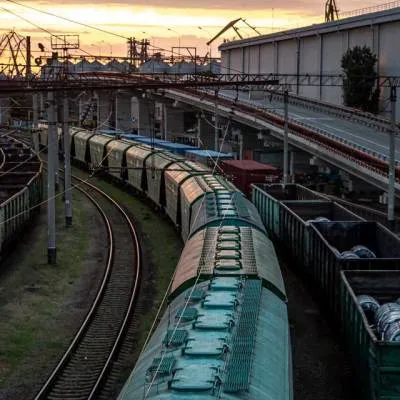
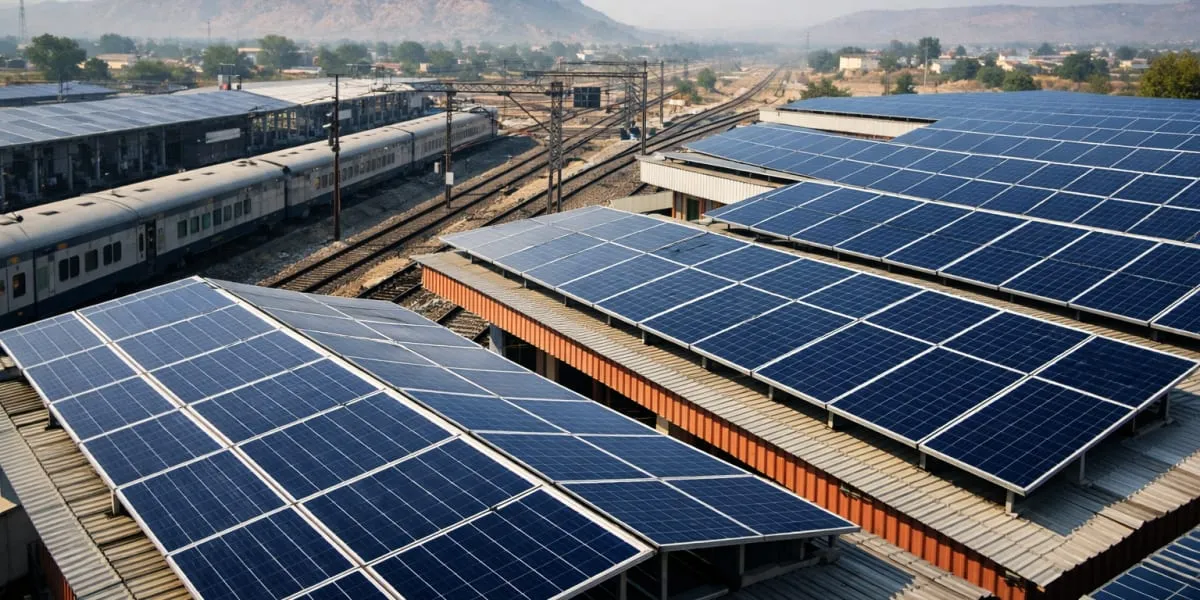
Seven Greens has completed and commissioned the Jaipur Railway Solar Project, comprising two point seven Megawatt (MW) of rooftop solar capacity installed across 23 railway stations along a 350-kilometre corridor under the North Western Railway zone. The geographically distributed deployment converts station rooftops into power generation assets that feed local consumption and relieve pressure on grid supply.

The project spans sites in Rajasthan and Haryana and is expected to reduce dependence on fossil-fuel-based grid electricity while lowering operational carbon emissions, supporting Indian Railways' broader net-zero ambitions. It is designed to provide resilient energy for station operations and to demonstrate the viability of distributed rooftop projects for public infrastructure. The deployment aligns with national aims to expand renewable capacity at institutional locations.

Seven Greens managed the project's end-to-end execution, covering system design, equipment procurement, logistics, installation and commissioning across all 23 sites. The work required coordinated engineering, supply-chain management and strict adherence to safety and quality standards while operating within an active railway corridor. The programme used modular designs to adapt to varied rooftop conditions and minimise disruption to station services.

Akshay Borkar, director of Seven Greens, said the successful commissioning demonstrates the company’s capability to execute large-scale, geographically distributed solar infrastructure and strengthens its presence in institutional and public sector clean energy projects. He added that the company intends to continue expanding rooftop and distributed solar solutions for enterprise and government customers. The project is presented as a template for replication in other zones seeking to integrate distributed generation into asset management.

The installation contributes incremental renewable capacity and offers operational cost benefits through reduced purchase of grid power during peak hours. Ongoing monitoring and maintenance arrangements are in place to sustain generation performance and to capture performance data for future projects. Stakeholders view the initiative as a measurable step towards decarbonising railway operations and enhancing energy resilience.

Seven Greens has completed and commissioned the Jaipur Railway Solar Project, comprising two point seven Megawatt (MW) of rooftop solar capacity installed across 23 railway stations along a 350-kilometre corridor under the North Western Railway zone. The geographically distributed deployment converts station rooftops into power generation assets that feed local consumption and relieve pressure on grid supply. The project spans sites in Rajasthan and Haryana and is expected to reduce dependence on fossil-fuel-based grid electricity while lowering operational carbon emissions, supporting Indian Railways' broader net-zero ambitions. It is designed to provide resilient energy for station operations and to demonstrate the viability of distributed rooftop projects for public infrastructure. The deployment aligns with national aims to expand renewable capacity at institutional locations. Seven Greens managed the project's end-to-end execution, covering system design, equipment procurement, logistics, installation and commissioning across all 23 sites. The work required coordinated engineering, supply-chain management and strict adherence to safety and quality standards while operating within an active railway corridor. The programme used modular designs to adapt to varied rooftop conditions and minimise disruption to station services. Akshay Borkar, director of Seven Greens, said the successful commissioning demonstrates the company’s capability to execute large-scale, geographically distributed solar infrastructure and strengthens its presence in institutional and public sector clean energy projects. He added that the company intends to continue expanding rooftop and distributed solar solutions for enterprise and government customers. The project is presented as a template for replication in other zones seeking to integrate distributed generation into asset management. The installation contributes incremental renewable capacity and offers operational cost benefits through reduced purchase of grid power during peak hours. Ongoing monitoring and maintenance arrangements are in place to sustain generation performance and to capture performance data for future projects. Stakeholders view the initiative as a measurable step towards decarbonising railway operations and enhancing energy resilience.

Related Stories

Gold Stories

Next Story
Infrastructure Energy

Inside a Pumped Storage Project: How It Actually Balances the Grid

What happens when the sun sets just as electricity demand starts to rise? Solar generation falls, but homes, factories and businesses still need power. Pumped storage power plants help bridge this gap by storing surplus electricity as gravitational potential energy in elevated water and releasing it when demand increases. As India adds more solar and wind capacity, this ability to shift electricity across hours is becoming increasingly important for grid flexibility.What is a Pumped Storage Power Plant?A pumped storage power plant (PSP) is a long-duration energy storage facility with two reser..

Next Story
Technology

LTTS launches FARM to accelerate deep-tech startups

L&T Technology Services (LTTS) has launched LTTS FARM, a startup engagement platform aimed at accelerating the commercialisation of deep-tech innovations through Engineering Intelligence-led collaboration, co-innovation and market access.Built on the theme of “Collaboration First, Commercialisation Next”, the platform targets startups with Technology Readiness Level (TRL) 4+ solutions that have demonstrated technical feasibility and are ready for industry adoption. LTTS FARM will support startups aligned with LTTS’ key technology focus areas, including Software Defined Mobility, Plan..

Next Story
Infrastructure Energy

REC Wins Top Honour for Hindi Policy Implementation

EC Limited has received the First Prize for outstanding implementation of the Official Language Policy for 2025-26 at the meeting of the Hindi Salahkar Samiti of the Ministry of Power, Government of India.The award was presented to REC by Shri Manohar Lal, Union Minister of Power and Housing and Urban Affairs. Shri Shripad Yesso Naik, Minister of State for Power and New and Renewable Energy; Shri Dinesh Sharma, Rajya Sabha MP; Shri Suresh Kumar Kashyap, Lok Sabha MP; and Shri Pankaj Agrawal, Secretary, Ministry of Power, were also present. Shri Jitendra Shrivastava, IAS, CMD, REC, received the..

Advertisement

Subscribe to Our Newsletter

Get daily newsletters around different themes from Construction world.

STAY CONNECTED

Advertisement

SPECIAL OFFER
QR Code