


+
Solar Project Costs Set To Rise 20 Per Cent
POWER & RENEWABLE ENERGY

Solar Project Costs Set To Rise 20 Per Cent

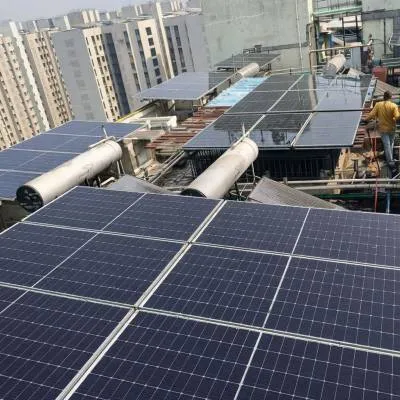
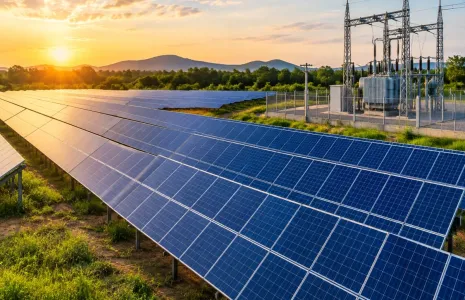
The cost of setting up solar projects in India is set to rise by 20 per cent over the next six to eight months as domestic cell premiums, higher input and freight costs and supply-chain disruption linked to West Asia squeeze strain project economics. The increase comes while over 150 GW of renewable projects were under construction as of 30 June 2026, raising the importance of timely execution. Rating agency Icra has said renewables including large hydro could supply more than 35 per cent of generation by FY30.

Icra cited a material price gap between domestic and imported cells, estimating modules using imported cells at around 16 cents per watt versus 22.5 cents per watt for domestic cells, a premium of six to seven cents. It noted registered module capacity growth while domestic cell capacity remained limited at about 31.8 GW, and warned module overcapacity could prompt consolidation that favours vertically integrated manufacturers.

Market activity has moderated, with renewable capacity awards falling markedly and unsigned power purchase agreement capacity remaining large at roughly 40 to 45 GW as of April 2026. Bidding has shifted towards firm, dispatchable and round the clock supply, and a demand-based tender discovered a tariff of Rs 5.25 per unit, below many new thermal plants at above Rs 6 per unit.

Grid constraints and curtailment, running at 30 to 50 per cent at some substations and with peak impacts in the western and northern regions, add to the challenge. Storage is increasingly central, with BESS at about 90 GWh across awarded, under construction and operational stages, and levelised costs for two to four hour systems estimated at Rs 4 to Rs 7 per unit versus about Rs 5 for pumped storage. At battery equipment costs near $70 to $75 per kWh, BESS capital costs are estimated at $110 to $130 per kWh, and some projects have cumulative debt-service coverage ratios of zero point eight to one point two times. Icra retained a Stable outlook but flagged risks from PPA delays, equipment costs, transmission availability and execution.

The cost of setting up solar projects in India is set to rise by 20 per cent over the next six to eight months as domestic cell premiums, higher input and freight costs and supply-chain disruption linked to West Asia squeeze strain project economics. The increase comes while over 150 GW of renewable projects were under construction as of 30 June 2026, raising the importance of timely execution. Rating agency Icra has said renewables including large hydro could supply more than 35 per cent of generation by FY30. Icra cited a material price gap between domestic and imported cells, estimating modules using imported cells at around 16 cents per watt versus 22.5 cents per watt for domestic cells, a premium of six to seven cents. It noted registered module capacity growth while domestic cell capacity remained limited at about 31.8 GW, and warned module overcapacity could prompt consolidation that favours vertically integrated manufacturers. Market activity has moderated, with renewable capacity awards falling markedly and unsigned power purchase agreement capacity remaining large at roughly 40 to 45 GW as of April 2026. Bidding has shifted towards firm, dispatchable and round the clock supply, and a demand-based tender discovered a tariff of Rs 5.25 per unit, below many new thermal plants at above Rs 6 per unit. Grid constraints and curtailment, running at 30 to 50 per cent at some substations and with peak impacts in the western and northern regions, add to the challenge. Storage is increasingly central, with BESS at about 90 GWh across awarded, under construction and operational stages, and levelised costs for two to four hour systems estimated at Rs 4 to Rs 7 per unit versus about Rs 5 for pumped storage. At battery equipment costs near $70 to $75 per kWh, BESS capital costs are estimated at $110 to $130 per kWh, and some projects have cumulative debt-service coverage ratios of zero point eight to one point two times. Icra retained a Stable outlook but flagged risks from PPA delays, equipment costs, transmission availability and execution.

Related Stories

Gold Stories

Next Story
Real Estate

BMC OC Amnesty Scheme Requires Key Approvals from Mumbai Societies

The Brihanmumbai Municipal Corporation (BMC) has clarified that housing societies applying under its Occupation Certificate (OC) amnesty scheme must possess key approvals linked to the original construction. The requirements include a valid Intimation of Disapproval (IOD), an approved building plan and a Commencement Certificate (CC), along with a No Objection Certificate (NOC) from the developer or original construction applicant. The Standard Operating Procedure (SOP) makes clear that the absence of an OC alone will not qualify a building for relief. Societies must establish that their build..

Next Story
Real Estate

Gurugram Emerges as Luxury Senior Living Hub

Gurugram is emerging as a potential hub for luxury senior living, supported by available land, healthcare infrastructure, connectivity and a concentration of affluent professionals, high-net-worth individuals and non-resident Indians. These factors could give the city an advantage over land-constrained metros such as Mumbai. A report by the Association of Senior Living India (ASLI) and JLL estimates that India’s organised senior living market could represent a $10.1 bn opportunity by 2030. The sector had about 25,050 organised units as of June 2026, while penetration stood at only 1.5 per ce..

Next Story
Real Estate

Corrosion Costs India’s Infrastructure Rs. 142 bn Annually

Corrosion costs India an estimated Rs. 1.42 tn annually, equivalent to 4.3 per cent of gross domestic product, according to a report by the Confederation of Indian Industry and the National Research Institute. Infrastructure accounts for Rs. 142 bn of the annual burden, making it the sector with the largest absolute cost among those examined. The report, presented at the CII Annual Infrastructure Summit 2026, said the infrastructure-sector cost equals about 2.9 per cent of the sector’s gross domestic product. It estimated that effective measures could generate maximum savings of Rs. 495.8 bn..

Advertisement

Subscribe to Our Newsletter

Get daily newsletters around different themes from Construction world.

STAY CONNECTED

Advertisement

SPECIAL OFFER
QR Code