+
Tamil Nadu To Introduce Battery Storage And Recycling Policy
POWER & RENEWABLE ENERGY

Tamil Nadu To Introduce Battery Storage And Recycling Policy

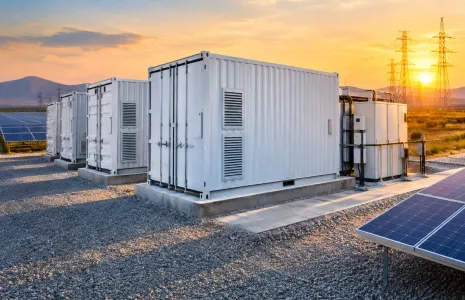
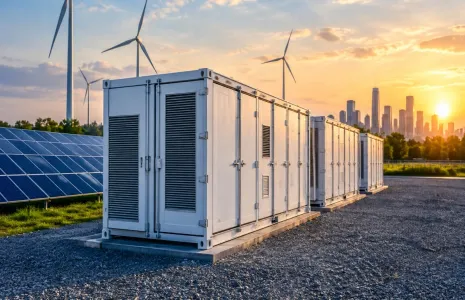
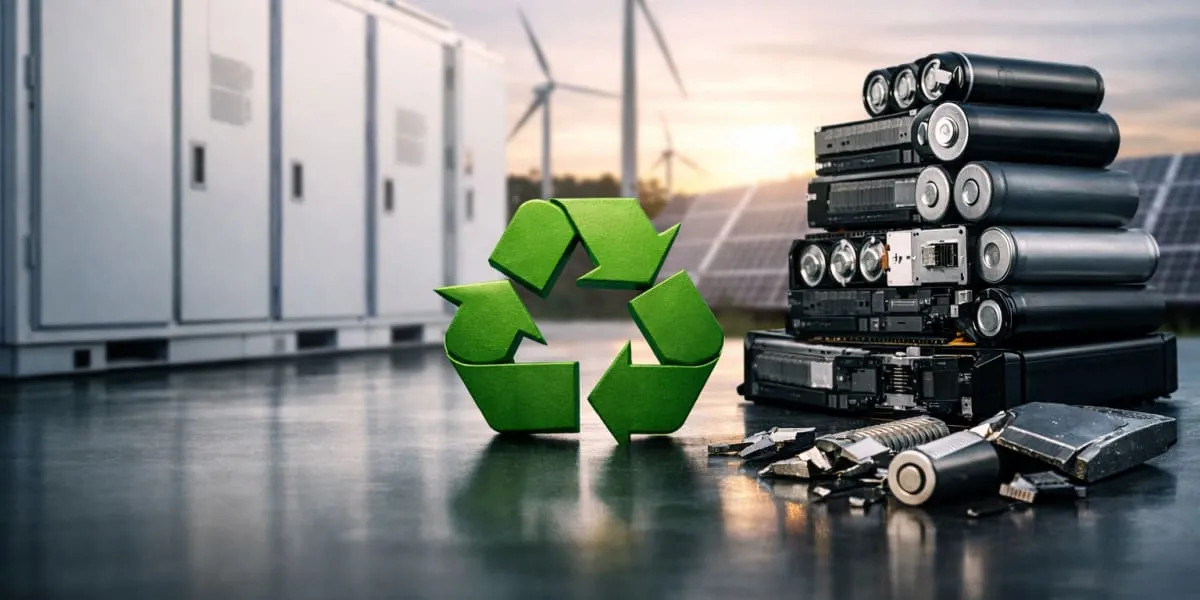
The Tamil Nadu government will roll out a policy on Battery Energy Storage Systems (BESS) and battery recycling within weeks as finalisation nears, the Electricity and Law Minister CTR Nirmal Kumar said after inspecting facilities at the Indian Institute of Technology Madras (IIT Madras). The initiative aims to support expansion of renewable energy and address future challenges in battery disposal and recycling. The minister added the study at IIT Madras will inform regulatory and infrastructure planning.

The Tamil Nadu Electricity Board (TNEB) has signed a memorandum of understanding with IIT Madras to undertake research on emerging technologies, including BESS and recycling techniques, the minister said. He said battery recycling will become a major challenge within five years and the policy will prepare the state in advance. The study is expected to help the TNEB manage peak-hour demand through energy storage solutions.

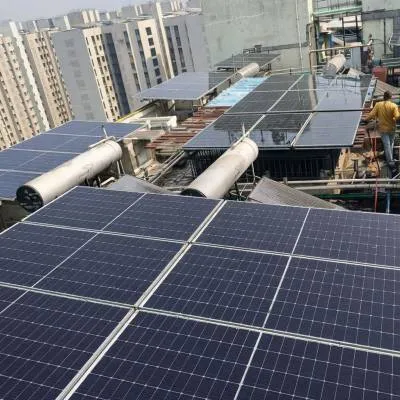
The minister stated the state's installed renewable energy generation capacity has reached nearly 30,000 MW and is approaching saturation, prompting a shift to streamline investments. Several investors have approached the Tamil Nadu Generation and Distribution Corporation Limited with proposals for new solar and wind projects, and the government will set conditions to ensure grid stability. A separate policy to promote rooftop solar installations is being prepared alongside a dedicated mobile application to provide consumers with complete system information.

The state is considering extending financial assistance to consumers in addition to central subsidies for rooftop installations, the minister added. He criticised the previous government for poor progress in rooftop solar and alleged irregularities in commercial approvals without proper load flow studies. The TVK government has sought explanations from around 350 companies and will accept fresh applications for solar projects in the coming weeks. Officials said the twin policies on BESS and rooftop solar aim to balance renewable uptake with environmental and grid management concerns.

The Tamil Nadu government will roll out a policy on Battery Energy Storage Systems (BESS) and battery recycling within weeks as finalisation nears, the Electricity and Law Minister CTR Nirmal Kumar said after inspecting facilities at the Indian Institute of Technology Madras (IIT Madras). The initiative aims to support expansion of renewable energy and address future challenges in battery disposal and recycling. The minister added the study at IIT Madras will inform regulatory and infrastructure planning. The Tamil Nadu Electricity Board (TNEB) has signed a memorandum of understanding with IIT Madras to undertake research on emerging technologies, including BESS and recycling techniques, the minister said. He said battery recycling will become a major challenge within five years and the policy will prepare the state in advance. The study is expected to help the TNEB manage peak-hour demand through energy storage solutions. The minister stated the state's installed renewable energy generation capacity has reached nearly 30,000 MW and is approaching saturation, prompting a shift to streamline investments. Several investors have approached the Tamil Nadu Generation and Distribution Corporation Limited with proposals for new solar and wind projects, and the government will set conditions to ensure grid stability. A separate policy to promote rooftop solar installations is being prepared alongside a dedicated mobile application to provide consumers with complete system information. The state is considering extending financial assistance to consumers in addition to central subsidies for rooftop installations, the minister added. He criticised the previous government for poor progress in rooftop solar and alleged irregularities in commercial approvals without proper load flow studies. The TVK government has sought explanations from around 350 companies and will accept fresh applications for solar projects in the coming weeks. Officials said the twin policies on BESS and rooftop solar aim to balance renewable uptake with environmental and grid management concerns.

Related Stories

Gold Stories

Next Story
Real Estate

BMC OC Amnesty Scheme Requires Key Approvals from Mumbai Societies

The Brihanmumbai Municipal Corporation (BMC) has clarified that housing societies applying under its Occupation Certificate (OC) amnesty scheme must possess key approvals linked to the original construction. The requirements include a valid Intimation of Disapproval (IOD), an approved building plan and a Commencement Certificate (CC), along with a No Objection Certificate (NOC) from the developer or original construction applicant. The Standard Operating Procedure (SOP) makes clear that the absence of an OC alone will not qualify a building for relief. Societies must establish that their build..

Next Story
Real Estate

Gurugram Emerges as Luxury Senior Living Hub

Gurugram is emerging as a potential hub for luxury senior living, supported by available land, healthcare infrastructure, connectivity and a concentration of affluent professionals, high-net-worth individuals and non-resident Indians. These factors could give the city an advantage over land-constrained metros such as Mumbai. A report by the Association of Senior Living India (ASLI) and JLL estimates that India’s organised senior living market could represent a $10.1 bn opportunity by 2030. The sector had about 25,050 organised units as of June 2026, while penetration stood at only 1.5 per ce..

Next Story
Real Estate

Corrosion Costs India’s Infrastructure Rs. 142 bn Annually

Corrosion costs India an estimated Rs. 1.42 tn annually, equivalent to 4.3 per cent of gross domestic product, according to a report by the Confederation of Indian Industry and the National Research Institute. Infrastructure accounts for Rs. 142 bn of the annual burden, making it the sector with the largest absolute cost among those examined. The report, presented at the CII Annual Infrastructure Summit 2026, said the infrastructure-sector cost equals about 2.9 per cent of the sector’s gross domestic product. It estimated that effective measures could generate maximum savings of Rs. 495.8 bn..

Advertisement

Subscribe to Our Newsletter

Get daily newsletters around different themes from Construction world.

STAY CONNECTED

Advertisement

SPECIAL OFFER
QR Code