



High-Rises Reshape Visakhapatnam Housing Market
Real Estate

High-Rises Reshape Visakhapatnam Housing Market

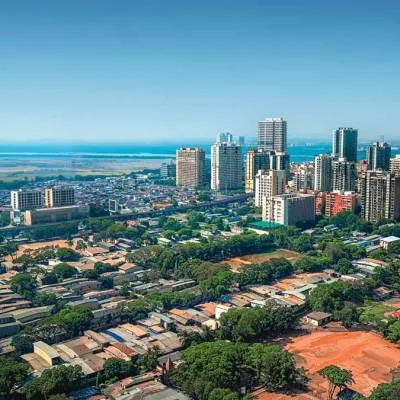
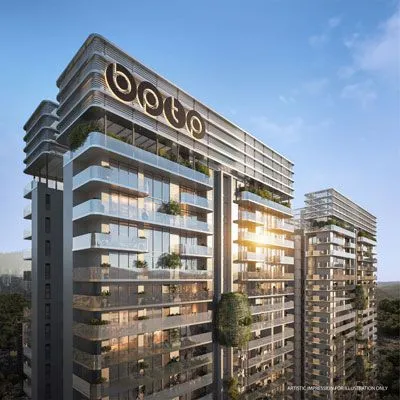
Developers in Visakhapatnam are increasingly shifting to high-rise residential projects as land prices rise and large, well located plots become scarce, the Confederation of Real Estate Developers' Associations of India (CREDAI) Visakhapatnam chapter has said. The chapter president E Ashok Kumar noted that escalating land values make low-rise projects difficult to sustain in prime areas and that vertical construction is a practical response. He added that building upwards allows firms to make more efficient use of limited urban land while keeping projects financially viable.

Industry representatives explained that high-rise schemes permit the distribution of land costs across a greater number of housing units, which helps manage rising expenses and preserve price competitiveness. The approach also permits developers to include security systems, dedicated parking and shared amenities that modern buyers increasingly expect. This shift assists developers in offering a range of unit sizes and configurations within a single project footprint.

Demand in the city has remained steady, and the chapter linked this to employment growth in the information technology (IT) sector and allied industries that support residential absorption near business hubs. Several micro markets are witnessing increased vertical residential launches, including the Madhurawada Kapuluppada corridor, Anandapuram Kommadi, the Bhogapuram Bheemili stretch and the Yendada Rushikonda coastal belt. Developers associate the trend with road expansions, infrastructure upgrades and improved connectivity that make taller schemes more feasible.

Officials emphasised that vertical expansion can improve land use efficiency and support planned urban growth when accompanied by adequate civic infrastructure such as water, sewage and transport services. They urged clearer regulations and faster approvals from authorities to ensure timely project completion and to keep construction and holding costs under control. Observers said that, provided planning keeps pace with density, high rises could provide a sustainable way to meet housing demand in the city.

Developers in Visakhapatnam are increasingly shifting to high-rise residential projects as land prices rise and large, well located plots become scarce, the Confederation of Real Estate Developers' Associations of India (CREDAI) Visakhapatnam chapter has said. The chapter president E Ashok Kumar noted that escalating land values make low-rise projects difficult to sustain in prime areas and that vertical construction is a practical response. He added that building upwards allows firms to make more efficient use of limited urban land while keeping projects financially viable. Industry representatives explained that high-rise schemes permit the distribution of land costs across a greater number of housing units, which helps manage rising expenses and preserve price competitiveness. The approach also permits developers to include security systems, dedicated parking and shared amenities that modern buyers increasingly expect. This shift assists developers in offering a range of unit sizes and configurations within a single project footprint. Demand in the city has remained steady, and the chapter linked this to employment growth in the information technology (IT) sector and allied industries that support residential absorption near business hubs. Several micro markets are witnessing increased vertical residential launches, including the Madhurawada Kapuluppada corridor, Anandapuram Kommadi, the Bhogapuram Bheemili stretch and the Yendada Rushikonda coastal belt. Developers associate the trend with road expansions, infrastructure upgrades and improved connectivity that make taller schemes more feasible. Officials emphasised that vertical expansion can improve land use efficiency and support planned urban growth when accompanied by adequate civic infrastructure such as water, sewage and transport services. They urged clearer regulations and faster approvals from authorities to ensure timely project completion and to keep construction and holding costs under control. Observers said that, provided planning keeps pace with density, high rises could provide a sustainable way to meet housing demand in the city.

Related Stories

Gold Stories
Next Story
Products

Koemmerling opens Navi Mumbai experience centre

Koemmerling, a brand of the profine Group, has expanded its presence in the Mumbai metropolitan region with the opening of a new experience centre in Navi Mumbai and launched its Allure S46 minimal sliding door system for the Indian market.Located in CBD Belapur, the facility was inaugurated by Peter Mrosik, Owner and CEO, profine Group, along with Farid Khan, Chairman and Managing Director, profine India, and Kamal Bajaj, CEO, profine India.The company said the new centre will showcase its portfolio of uPVC and aluminium window and door systems to architects, developers and homeowners.The ina..

Next Story
Products

India's waterproofing market nears Rs 150 bn milestone

India's waterproofing industry is approaching a market size of Rs 150 billion and is expected to surpass the $2 billion milestone, according to speakers at the 2nd India International Waterproofers Conference & Expo 2026 organised by the Waterproofers Association of India (WAI) in New Delhi.The two-day event brought together more than 20 speakers, 55 international delegates and 53 exhibition booths, with discussions focusing on climate-resilient construction, advanced waterproofing technologies and international collaboration.Inaugurating the event, Durga Shanker Mishra, former Secretary, ..

Next Story
Real Estate

Dilip Buildcon Q1 FY27 Revenue at Rs 23.78 billion

Dilip Buildcon Limited reported consolidated revenue from operations of Rs 2,378 crore in Q1 FY27, along with EBITDA of Rs 429 crore and profit after tax of Rs 128 crore.Consolidated EBITDA margin stood at 18.1%, improving from 17.1% in Q4 FY26. On a standalone basis, revenue from operations was Rs 1,930 crore, EBITDA stood at Rs 199 crore and PAT was Rs 39 crore, with an EBITDA margin of 10.3%.The company’s order book stood at Rs 27,691 crore as of 30 June 2026, compared with Rs 28,830 crore as of 31 March 2026. Roads and highways accounted for 17.1% of the order book, irrigation and water ..

Advertisement

Subscribe to Our Newsletter

Get daily newsletters around different themes from Construction world.

STAY CONNECTED

Advertisement