IGBC Hosts Green Marathwada Conclave 2026
Real Estate

IGBC Hosts Green Marathwada Conclave 2026

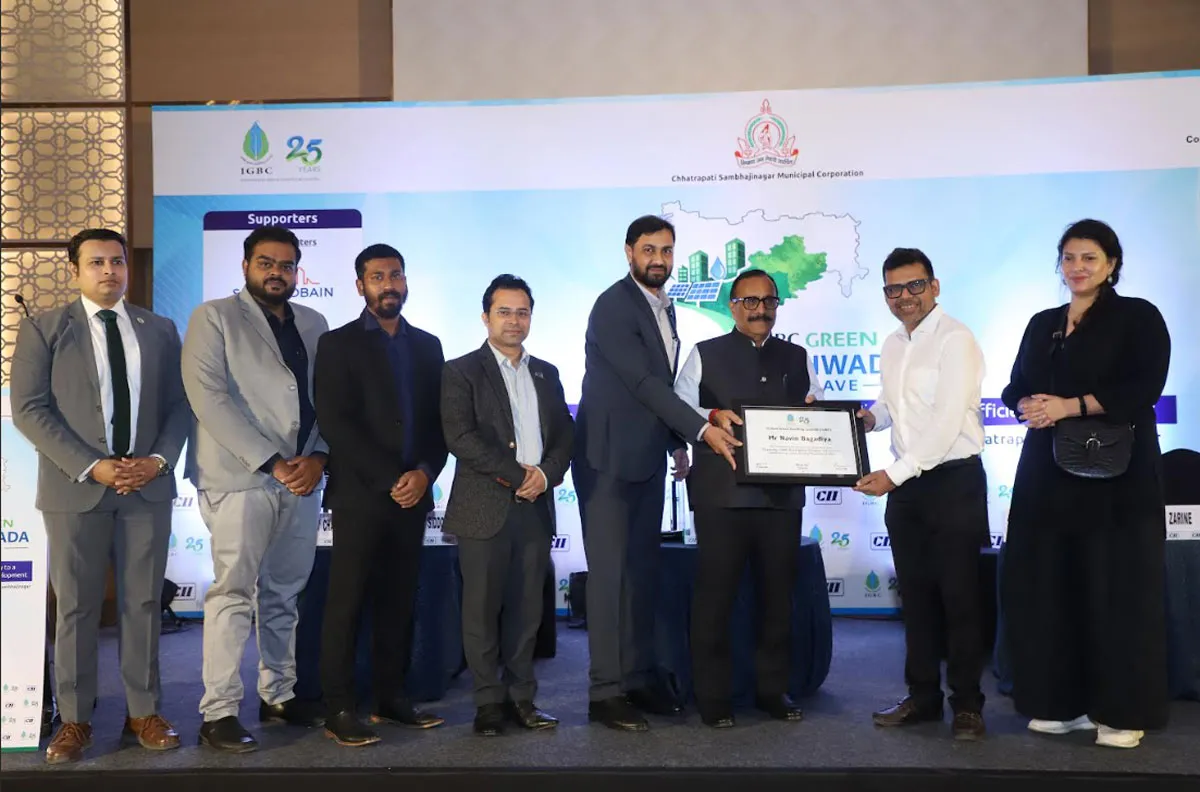
The CII Indian Green Building Council (IGBC) hosted the Green Marathwada Conclave 2026, bringing together policymakers, industry leaders and sustainability experts to discuss pathways for green and resource-efficient development in the region.
The conclave focused on sustainable urbanisation, climate resilience and green infrastructure under the theme ‘Marathwada 2030: A Pathway to a Greener Growth & Resource-Efficient Development’. Maharashtra currently leads India’s green building movement with 4,208 IGBC-registered projects covering 4.78 billion sq ft, of which 1,425 are certified.
Marathwada has emerged as a growing hub with 121 registered projects spanning over 100 million sq ft, including 60 certified developments. Aurangabad division accounts for 50 projects covering 15.78 million sq ft, reflecting increasing investor confidence and regional expansion.
The event highlighted the economic benefits of sustainability, noting that logistics and warehousing projects could incur avoidable inefficiency costs ranging from Rs 100 million to Rs 600 million annually, with long-term value erosion reaching Rs 1.5 billion to Rs 5 billion if green practices are not adopted.
Speaking at the conclave, Shri Atul Save, Hon’ble Minister of Renewable Energy, Government of Maharashtra, said, “Maharashtra is committed to accelerating its clean energy transition by fostering an ecosystem where sustainability and economic growth go hand in hand. Through progressive policies and targeted incentives, we are enabling industries and urban infrastructure to adopt energy-efficient, low-carbon solutions at scale. Marathwada is witnessing significant industrial investments, and it is imperative that this growth is anchored in sustainability to ensure long-term resilience and resource security. Rooftop solar presents a powerful opportunity for buildings to become decentralized energy generators, reducing dependence on conventional power, lowering costs, and contributing meaningfully to our renewable energy targets. The shift towards green infrastructure is not just an environmental necessity, but a strategic imperative for a future-ready Maharashtra.”
The conclave featured technical sessions on green buildings, energy efficiency, water conservation and net zero strategies, along with discussions on policy support and cross-sector collaboration. It underscored the role of urban local bodies in integrating sustainability into planning and infrastructure, positioning the region for balanced and resilient growth.

The CII Indian Green Building Council (IGBC) hosted the Green Marathwada Conclave 2026, bringing together policymakers, industry leaders and sustainability experts to discuss pathways for green and resource-efficient development in the region.The conclave focused on sustainable urbanisation, climate resilience and green infrastructure under the theme ‘Marathwada 2030: A Pathway to a Greener Growth & Resource-Efficient Development’. Maharashtra currently leads India’s green building movement with 4,208 IGBC-registered projects covering 4.78 billion sq ft, of which 1,425 are certified.Marathwada has emerged as a growing hub with 121 registered projects spanning over 100 million sq ft, including 60 certified developments. Aurangabad division accounts for 50 projects covering 15.78 million sq ft, reflecting increasing investor confidence and regional expansion.The event highlighted the economic benefits of sustainability, noting that logistics and warehousing projects could incur avoidable inefficiency costs ranging from Rs 100 million to Rs 600 million annually, with long-term value erosion reaching Rs 1.5 billion to Rs 5 billion if green practices are not adopted.Speaking at the conclave, Shri Atul Save, Hon’ble Minister of Renewable Energy, Government of Maharashtra, said, “Maharashtra is committed to accelerating its clean energy transition by fostering an ecosystem where sustainability and economic growth go hand in hand. Through progressive policies and targeted incentives, we are enabling industries and urban infrastructure to adopt energy-efficient, low-carbon solutions at scale. Marathwada is witnessing significant industrial investments, and it is imperative that this growth is anchored in sustainability to ensure long-term resilience and resource security. Rooftop solar presents a powerful opportunity for buildings to become decentralized energy generators, reducing dependence on conventional power, lowering costs, and contributing meaningfully to our renewable energy targets. The shift towards green infrastructure is not just an environmental necessity, but a strategic imperative for a future-ready Maharashtra.”The conclave featured technical sessions on green buildings, energy efficiency, water conservation and net zero strategies, along with discussions on policy support and cross-sector collaboration. It underscored the role of urban local bodies in integrating sustainability into planning and infrastructure, positioning the region for balanced and resilient growth.

Next Story
Infrastructure Transport

MMRDA advances 250 m on Orange Gate–Marine Drive tunnel

The Mumbai Metropolitan Region Development Authority (MMRDA) has completed 250 m of underground tunnelling for the Orange Gate–Marine Drive Urban Road Tunnel using India’s largest slurry shield tunnel boring machine (TBM) deployed for an urban road project.The project involves twin tunnels extending over 7 km beneath critical transport corridors, including Central Railway, Western Railway and Metro Line 3. The work requires high-precision engineering to navigate densely developed urban infrastructure.Once completed, the tunnel is expected to reduce travel time between Orange Gate and Marin..

Next Story
Infrastructure Urban

Hindustan Zinc Pays Rs 188.46 Billion in FY26

Hindustan Zinc contributed Rs 188.46 billion to the public exchequer in FY 2025-26, according to its 9th Tax Transparency Report. The contribution, equivalent to 46 per cent of the company’s revenue, included direct and indirect taxes, government royalties, dividends to the Government of India, withholding taxes and other statutory levies.The company’s five-year cumulative contribution to the exchequer stood at Rs 915.72 billion. In FY26, Hindustan Zinc reported revenue of Rs 408.44 billion, EBITDA of Rs 221.62 billion and profit after tax of Rs 138.32 billion. It also achieved its highest..

Next Story
Infrastructure Urban

World of Concrete India 2026 Opens in Mumbai

Informa Markets in India will host the 12th edition of World of Concrete India 2026 from 3–5 June 2026 at the Bombay Exhibition Centre, Mumbai. The specialised B2B exhibition will bring together manufacturers, suppliers, contractors, developers, architects, consultants, infrastructure companies, project leaders and government stakeholders.The event is expected to feature over 350 brands and more than 18,000 trade professionals. It will cover concrete and cement, dry mortar, precast technologies, formwork, construction chemicals, industrial and commercial flooring, scaffolding, safety solutio..

Advertisement

Subscribe to Our Newsletter

Get daily newsletters around different themes from Construction world.

STAY CONNECTED

Advertisement

Advertisement

Advertisement