Pimpri-Chinchwad Sees 60% Rise in Residential Construction
Real Estate

Pimpri-Chinchwad Sees 60% Rise in Residential Construction

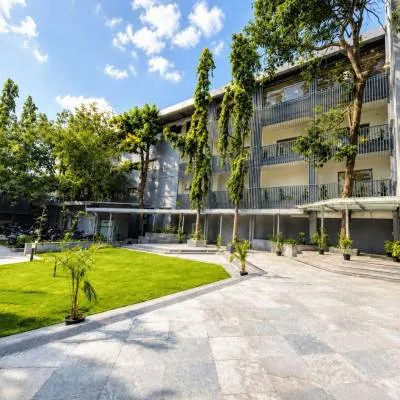
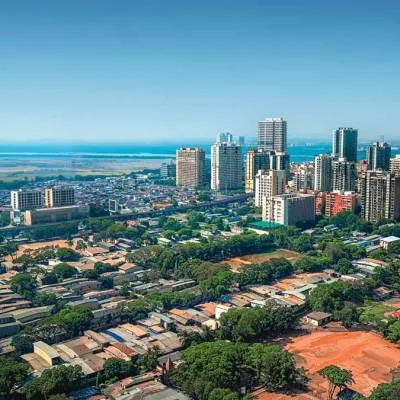
Pimpri-Chinchwad has recently witnessed a sharp rise in residential construction, with around 60 per cent of the city’s total developed area coming under construction over the past year, driven by improved livability and infrastructure upgrades. Once known primarily as an industrial hub, the city is now increasingly being viewed as one of the most livable urban centres by residents.

The central government had recognised Pimpri-Chinchwad as a leading livable city by awarding it the top rank in 2020, a reputation the city has maintained over the last five years. Since then, demand for residential development has grown steadily, particularly in areas such as Mamurdi, Kiwale, Ravet, Wakad, Tathawade, Punawale, Moshi, Borhadewadi and Charholi.

According to surveys conducted under the Smart City initiative, the city has focused on enhancing public spaces, cultural landmarks and recreational areas. Key attractions include Bhakti-Shakti, Chhatrapati Sambhaji Maharaj Srishti, Durgadevi Tekdi, Krantiveer Chapekar Bandhu Wada, the Auto Cluster Science Park and the Bharat Ratna J R D Tata Flyover. The city is also positioning itself as a smart, clean, green and digital urban centre.

The Pimpri Chinchwad Municipal Corporation has prioritised basic civic amenities to sustain growth. Connectivity has improved through metro services and BRT routes, while water supply has been strengthened through sources such as Pawana, Bhama-Askhed and Andra dams, alongside long-term planning for future demand.

Over the past three years, more than 5,000 new construction projects have received approvals, accelerating urban expansion. Authorities said infrastructure planning for water supply, sewage treatment and solid waste management is being aligned with development plans, as the city’s population is estimated to have doubled over the last decade.

Pimpri-Chinchwad has recently witnessed a sharp rise in residential construction, with around 60 per cent of the city’s total developed area coming under construction over the past year, driven by improved livability and infrastructure upgrades. Once known primarily as an industrial hub, the city is now increasingly being viewed as one of the most livable urban centres by residents. The central government had recognised Pimpri-Chinchwad as a leading livable city by awarding it the top rank in 2020, a reputation the city has maintained over the last five years. Since then, demand for residential development has grown steadily, particularly in areas such as Mamurdi, Kiwale, Ravet, Wakad, Tathawade, Punawale, Moshi, Borhadewadi and Charholi. According to surveys conducted under the Smart City initiative, the city has focused on enhancing public spaces, cultural landmarks and recreational areas. Key attractions include Bhakti-Shakti, Chhatrapati Sambhaji Maharaj Srishti, Durgadevi Tekdi, Krantiveer Chapekar Bandhu Wada, the Auto Cluster Science Park and the Bharat Ratna J R D Tata Flyover. The city is also positioning itself as a smart, clean, green and digital urban centre. The Pimpri Chinchwad Municipal Corporation has prioritised basic civic amenities to sustain growth. Connectivity has improved through metro services and BRT routes, while water supply has been strengthened through sources such as Pawana, Bhama-Askhed and Andra dams, alongside long-term planning for future demand. Over the past three years, more than 5,000 new construction projects have received approvals, accelerating urban expansion. Authorities said infrastructure planning for water supply, sewage treatment and solid waste management is being aligned with development plans, as the city’s population is estimated to have doubled over the last decade.

Next Story
Real Estate

A Paradigm Shift

The Indian real-estate and construction sector, which employs a significant number of organised and unorganised workers in the country, has embarked on a paradigm shift in its regulatory framework from an employment law perspective. With the four Labour Codes – the Code on Wages, 2019 (Wage Code); the Industrial Relations Code, 2020 (IR Code); the Code on Social Security, 2020 (SS Code) and the Occupational Safety, Health and Working Conditions Code, 2020 (OSH Code) – coming into effect in India from November 21, 2025, the industry is shifting away from a fragmented, contractor- driven com..

Next Story
Technology

We offer end-to-end traceability at scale

mjunction has evolved from an e-auction pioneer into a multi-vertical digital commerce platform with deep expertise in complex steel and coal supply chains. Its end-to-end, AI-led architecture focuses on price discovery, traceability, compliance and scalability, enabling transparent procurement, efficient logistics and data-driven decision-making across geographies. Vinaya Varma, MD, shares more about the company in conversation with CW.From a technology standpoint, what are the core USPs of mjunction today that differentiate it in steel and coal supply chains?mjunction has evolved b..

Next Story
Infrastructure Urban

Henkel, Rotary Recycle PoP Ganesha Idols Under Project HARMONY

Henkel India, in partnership with the Rotary Club of Navi Mumbai – Joy of Giving and with support from the Navi Mumbai Municipal Corporation (NMMC), has advanced circular sustainability through Project HARMONY by recycling Plaster of Paris (PoP) Ganesha idols into community learning assets. The initiative highlights an integrated approach to environmental restoration and social impact.As part of the project, materials collected after Ganesh Visarjan 2025 at Nerul were responsibly diverted from land and water bodies and processed at an authorised recycling facility, with on-ground execution s..

Advertisement

Subscribe to Our Newsletter

Get daily newsletters around different themes from Construction world.

STAY CONNECTED

Advertisement

Advertisement

Advertisement

Advertisement

Open In App