+
Centre Approves Rs 2.83 Billion For Dimapur Station Modernisation
ECONOMY & POLICY

Centre Approves Rs 2.83 Billion For Dimapur Station Modernisation

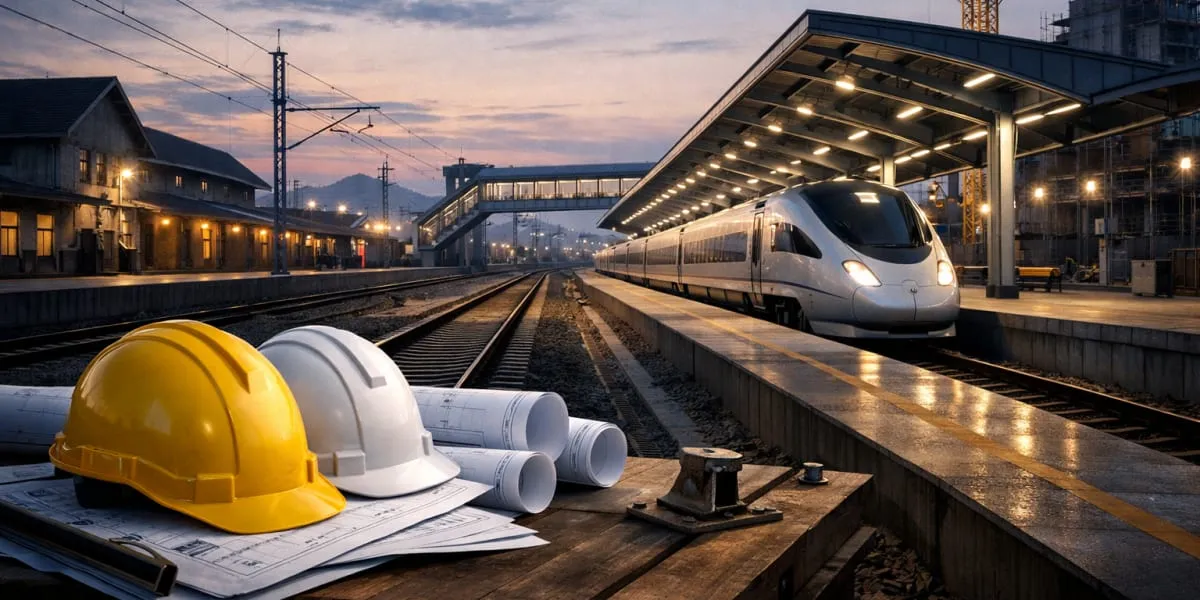
The Central government has sanctioned Rs 2.83 billion (Rs 2.83 bn) for the modernisation of the 123-year-old Dimapur railway station in Nagaland, a state minister informed the assembly. The facility, inaugurated in 1903, serves as the main rail hub for Nagaland and is located about 70 km from the state capital, Kohima. The funds are intended to upgrade passenger amenities, improve infrastructure and support future rail expansion in the region.

The minister indicated that the station remains the second highest revenue earning station in the north east region and that both the concerned department and landowners have written to the Ministry of Railways seeking compensation, for which a response is awaited. The state government has called for an amicable settlement of land related issues to ensure the project proceeds without delay.

The chief minister noted that the station predates the formation of Nagaland as a state and that constitutional provisions relating to land ownership did not exist when the railway occupied and measured the land for rail purposes. He observed that encroachments increased over the years while administrative authorities regularised some areas, complicating the present situation and requiring constructive dialogue between the state and Indian Railways. The chief minister urged that compensation demands should not be set at excessively high rates to avoid obstructing development.

A local legislator warned of negligence by stakeholders and said three options remain: payment of compensation, forceful eviction, or relocation of the station, while acknowledging ongoing rail expansion towards Kohima and other areas. He suggested those new stations would be smaller and that Dimapur would continue to serve as the principal station for the state, and the assembly discussion highlighted land issues as the main hurdle to facilitate the modernisation project. The issue was debated during the assembly's eighth session earlier on Monday.

The Central government has sanctioned Rs 2.83 billion (Rs 2.83 bn) for the modernisation of the 123-year-old Dimapur railway station in Nagaland, a state minister informed the assembly. The facility, inaugurated in 1903, serves as the main rail hub for Nagaland and is located about 70 km from the state capital, Kohima. The funds are intended to upgrade passenger amenities, improve infrastructure and support future rail expansion in the region. The minister indicated that the station remains the second highest revenue earning station in the north east region and that both the concerned department and landowners have written to the Ministry of Railways seeking compensation, for which a response is awaited. The state government has called for an amicable settlement of land related issues to ensure the project proceeds without delay. The chief minister noted that the station predates the formation of Nagaland as a state and that constitutional provisions relating to land ownership did not exist when the railway occupied and measured the land for rail purposes. He observed that encroachments increased over the years while administrative authorities regularised some areas, complicating the present situation and requiring constructive dialogue between the state and Indian Railways. The chief minister urged that compensation demands should not be set at excessively high rates to avoid obstructing development. A local legislator warned of negligence by stakeholders and said three options remain: payment of compensation, forceful eviction, or relocation of the station, while acknowledging ongoing rail expansion towards Kohima and other areas. He suggested those new stations would be smaller and that Dimapur would continue to serve as the principal station for the state, and the assembly discussion highlighted land issues as the main hurdle to facilitate the modernisation project. The issue was debated during the assembly's eighth session earlier on Monday.

Next Story
Infrastructure Urban

Implementation Status of Jal Jeevan Mission

Since August 2019 the Government has implemented Jal Jeevan Mission to provide assured potable water through household tap connections in rural India. At the start of the mission only 32.3 million (mn) rural households, representing 16.7 per cent, were reported to have tap water connections. States and union territories have reported that 125.8 mn additional rural households have since been provided with tap connections. As a result, of about 193.6 mn rural households roughly 158.2 mn, or 81.71 per cent, are reported to have tap water supply at home.\n\nThe State, district and village level st..

Next Story
Infrastructure Urban

Jal Jeevan Mission Reaches Eighty One Per Cent Rural Coverage

The Government reported substantial progress under the Jal Jeevan Mission, launched in August 2019 to provide tap water to every rural household. At launch only 32.3 million (mn) rural households had tap connections and states and Union territories reported provision of 125.8 mn additional households by March 2026. Consequently, out of about 193.6 mn rural households around 158.2 mn, or 81.71 per cent, are reported to have tap water at home. The Finance Minister announced extension of the mission until 2028 in the 2025-26 budget speech. The Swachh Bharat Mission Grameen, launched in October 20..

Next Story
Infrastructure Urban

Empowering Local Governance for Sustainable Rural Water Supply

The Ministry of Jal Shakti has aligned the Jal Jeevan Mission (JJM) with the 73rd Amendment to strengthen village level planning and community ownership of water supply. Gram Panchayats, village water and sanitation committees and Pani Samitis are to plan, implement, manage and maintain piped water systems, with gram sabha processes formalising handover and oversight. Implementation support agencies including non government organisations, community based organisations and self help groups have been empanelled to train local committees and promote women participation. Under JJM, the department ..

Advertisement

Subscribe to Our Newsletter

Get daily newsletters around different themes from Construction world.

STAY CONNECTED

Advertisement

Advertisement

Advertisement