ICAR and Dr Reddy's Foundation Sign MoU to Boost Agricultural Skills
ECONOMY & POLICY

ICAR and Dr Reddy's Foundation Sign MoU to Boost Agricultural Skills

The Indian Council of Agricultural Research (ICAR) and Dr Reddy's Foundation (DRF) signed a memorandum of understanding at ICAR NAARM in Hyderabad to enhance vocational training, farmer extension services and capacity in modern agricultural practices across rural India. The partnership will combine ICAR research with DRF extension models to scale climate smart and sustainable farming. The initiative was described as a milestone in public private cooperation for rural livelihoods and skills.

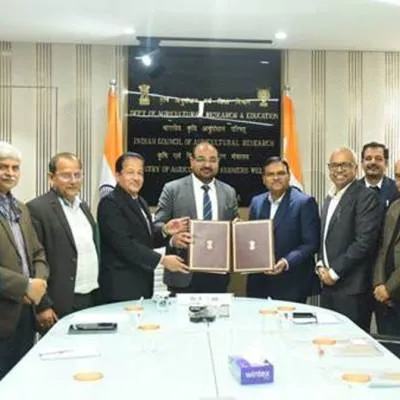
The agreement was formalised in the presence of senior officials at ICAR NAARM, with MoU documents exchanged by DRF and ICAR representatives and witnessed by directors of ICAR NAARM and ATARI centres. Strategic coordination will be led by ICAR leadership, and the collaboration will draw on ICAR research stations and Krishi Vigyan Kendras for grassroots delivery.

Under the strategic framework, the partners will develop and deliver vocational programmes in agriculture and allied sectors and build capacity of small and marginal farmers using the Lead Farmers Platform (LFP) model. Joint research will prioritise climate smart practices, soil health solutions and sustainable crop residue management with emphasis on carbon incentivisation and local risk mitigation. Skill programmes will align with the National Skill Qualification Framework to support youth employability.

ICAR brings nearly 10 decades of expertise in agricultural research, extension, knowledge management and policy support and will provide technical guidance, curriculum inputs and access to its network of scientists. DRF has impacted over two million (mn) lives and its MITRA programme has enabled over 80,000 farmers to adopt improved practices. The partners plan to scale the LFP to bridge last mile extension gaps and strengthen market linkages and digital literacy for smallholders.

The MoU is effective from 16 February 2026 for an initial period of five years and will be reviewed for renewal based on performance. A joint monitoring committee will track progress against milestones and ensure quality standards, while programmes will initially focus on Andhra Pradesh, Telangana, Bihar, Madhya Pradesh, Himachal Pradesh and Uttar Pradesh. The collaboration aligns with national initiatives on skill development, vocational education and climate resilient agriculture.

The Indian Council of Agricultural Research (ICAR) and Dr Reddy's Foundation (DRF) signed a memorandum of understanding at ICAR NAARM in Hyderabad to enhance vocational training, farmer extension services and capacity in modern agricultural practices across rural India. The partnership will combine ICAR research with DRF extension models to scale climate smart and sustainable farming. The initiative was described as a milestone in public private cooperation for rural livelihoods and skills. The agreement was formalised in the presence of senior officials at ICAR NAARM, with MoU documents exchanged by DRF and ICAR representatives and witnessed by directors of ICAR NAARM and ATARI centres. Strategic coordination will be led by ICAR leadership, and the collaboration will draw on ICAR research stations and Krishi Vigyan Kendras for grassroots delivery. Under the strategic framework, the partners will develop and deliver vocational programmes in agriculture and allied sectors and build capacity of small and marginal farmers using the Lead Farmers Platform (LFP) model. Joint research will prioritise climate smart practices, soil health solutions and sustainable crop residue management with emphasis on carbon incentivisation and local risk mitigation. Skill programmes will align with the National Skill Qualification Framework to support youth employability. ICAR brings nearly 10 decades of expertise in agricultural research, extension, knowledge management and policy support and will provide technical guidance, curriculum inputs and access to its network of scientists. DRF has impacted over two million (mn) lives and its MITRA programme has enabled over 80,000 farmers to adopt improved practices. The partners plan to scale the LFP to bridge last mile extension gaps and strengthen market linkages and digital literacy for smallholders. The MoU is effective from 16 February 2026 for an initial period of five years and will be reviewed for renewal based on performance. A joint monitoring committee will track progress against milestones and ensure quality standards, while programmes will initially focus on Andhra Pradesh, Telangana, Bihar, Madhya Pradesh, Himachal Pradesh and Uttar Pradesh. The collaboration aligns with national initiatives on skill development, vocational education and climate resilient agriculture.

Related Stories

Gold Stories

Next Story
Infrastructure Urban

KONE Opens India's First Digital Experience Centre in Pune

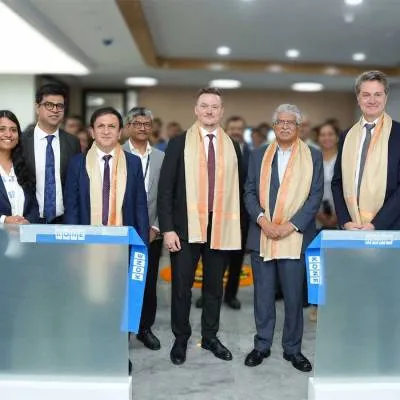
KONE, a global elevator and escalator manufacturer, has inaugurated its first Digital Experience Centre (DEC) in India, located in Pune. The facility aims to showcase how artificial intelligence (AI), connectivity and data-driven technologies can enhance customer experiences and improve building operations.The centre was inaugurated by Jussi Herlin, Executive Vice Chair, KONE Corporation; Philippe Delorme, President and CEO, KONE; and Nandan Nilekani, Co-founder and Chairman of the Board, Infosys.Designed as an interactive customer environment, the facility demonstrates digital solutions cover..

Next Story
Infrastructure Urban

CII GreenCo Launches Circularity Guidelines for Indian Industry

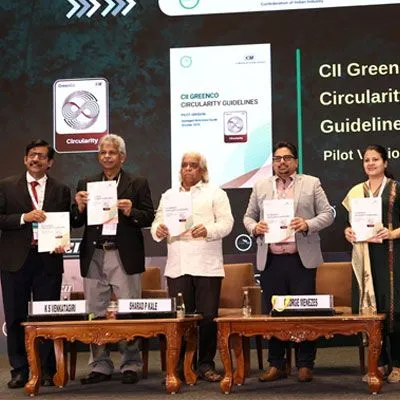
The Confederation of Indian Industry (CII) GreenCo Council has launched the CII GreenCo Circularity Guidelines – Pilot Version at the 17th CII GreenCo Waste & Resource Management Summit 2026 in Chennai. The initiative aims to strengthen resource efficiency, waste reduction and circular economy practices across Indian manufacturing and process industries.The guidelines introduce a structured framework with circularity indices covering raw materials, consumables, packaging and other resource inputs. These indicators will help industries assess existing practices, identify opportunities to ..

Next Story
Infrastructure Energy

Global Electronics Association Launches IPC-1783-CO2E Standard

The Global Electronics Association has introduced IPC-1783-CO2E, a new international standard aimed at improving consistency, transparency and comparability in product carbon footprint reporting across the electronics manufacturing industry.The standard, titled International Standard for Data Collection and Reporting of CO2 Equivalent (CO2e) Emissions for the Electronics Manufacturing Supply Chain, provides industry-specific guidance for collecting, estimating and reporting carbon emissions data.With increasing regulatory requirements and customer expectations, electronics manufacturers face c..

Advertisement

Subscribe to Our Newsletter

Get daily newsletters around different themes from Construction world.

STAY CONNECTED

Advertisement

SPECIAL OFFER
QR Code