+
India And Sweden Deepen AI Partnership Through SITAC
ECONOMY & POLICY

India And Sweden Deepen AI Partnership Through SITAC

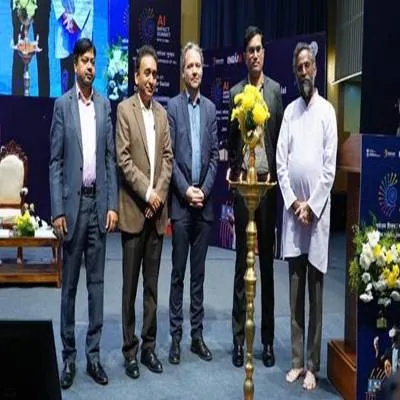
On the sidelines of the India AI Impact Summit 2026, the IndiaAI Mission and Business Sweden signed a Statement of Intent to strengthen bilateral cooperation in AI and digital technologies and to promote trade and investment between India and Sweden.

The framework aims to support the development, application and deployment of artificial intelligence solutions with emphasis on industrial and societal outcomes.

The Statement establishes the Sweden–India Technology and Artificial Intelligence Corridor (SITAC) as a dedicated programme and will serve as a flagship platform to facilitate structured engagement among government agencies, industry stakeholders, startups and academic institutions from both countries. The corridor builds on the long-standing partnership and reflects shared national priorities in leveraging AI for innovation, economic growth and sustainable development while addressing associated risks. Senior officials from both sides described the agreement as a step towards translating strategic vision into concrete collaborative outcomes.

Under SITAC, the partners plan a programme of conferences, seminars and thematic workshops along with exchanges between the Indian and Swedish AI ecosystems and field visits to innovation hubs and centres of excellence. They will also pursue engagements among companies, investors, researchers and policymakers to identify opportunities for joint innovation platforms and investment corridors and to promote bilateral deployment of AI solutions across priority sectors. The initiatives are intended to connect complementary strengths such as IndiaAI Mission's focus on access to compute, data and talent with Sweden's industrial innovation and advanced research capabilities.

The collaboration is expected to support enterprises, startups and research institutions in both countries in jointly developing scalable and inclusive AI solutions and in pursuing responsible implementation at scale. The partners signalled a commitment to value-based, sustainable and trusted approaches to AI that reflect democratic values and to creating new business opportunities by connecting ecosystems. The agreement was announced during the India AI Impact Summit 2026 in New Delhi.

On the sidelines of the India AI Impact Summit 2026, the IndiaAI Mission and Business Sweden signed a Statement of Intent to strengthen bilateral cooperation in AI and digital technologies and to promote trade and investment between India and Sweden. The framework aims to support the development, application and deployment of artificial intelligence solutions with emphasis on industrial and societal outcomes. The Statement establishes the Sweden–India Technology and Artificial Intelligence Corridor (SITAC) as a dedicated programme and will serve as a flagship platform to facilitate structured engagement among government agencies, industry stakeholders, startups and academic institutions from both countries. The corridor builds on the long-standing partnership and reflects shared national priorities in leveraging AI for innovation, economic growth and sustainable development while addressing associated risks. Senior officials from both sides described the agreement as a step towards translating strategic vision into concrete collaborative outcomes. Under SITAC, the partners plan a programme of conferences, seminars and thematic workshops along with exchanges between the Indian and Swedish AI ecosystems and field visits to innovation hubs and centres of excellence. They will also pursue engagements among companies, investors, researchers and policymakers to identify opportunities for joint innovation platforms and investment corridors and to promote bilateral deployment of AI solutions across priority sectors. The initiatives are intended to connect complementary strengths such as IndiaAI Mission's focus on access to compute, data and talent with Sweden's industrial innovation and advanced research capabilities. The collaboration is expected to support enterprises, startups and research institutions in both countries in jointly developing scalable and inclusive AI solutions and in pursuing responsible implementation at scale. The partners signalled a commitment to value-based, sustainable and trusted approaches to AI that reflect democratic values and to creating new business opportunities by connecting ecosystems. The agreement was announced during the India AI Impact Summit 2026 in New Delhi.

Next Story
Infrastructure Urban

Implementation Status of Jal Jeevan Mission

Since August 2019 the Government has implemented Jal Jeevan Mission to provide assured potable water through household tap connections in rural India. At the start of the mission only 32.3 million (mn) rural households, representing 16.7 per cent, were reported to have tap water connections. States and union territories have reported that 125.8 mn additional rural households have since been provided with tap connections. As a result, of about 193.6 mn rural households roughly 158.2 mn, or 81.71 per cent, are reported to have tap water supply at home.\n\nThe State, district and village level st..

Next Story
Infrastructure Urban

Jal Jeevan Mission Reaches Eighty One Per Cent Rural Coverage

The Government reported substantial progress under the Jal Jeevan Mission, launched in August 2019 to provide tap water to every rural household. At launch only 32.3 million (mn) rural households had tap connections and states and Union territories reported provision of 125.8 mn additional households by March 2026. Consequently, out of about 193.6 mn rural households around 158.2 mn, or 81.71 per cent, are reported to have tap water at home. The Finance Minister announced extension of the mission until 2028 in the 2025-26 budget speech. The Swachh Bharat Mission Grameen, launched in October 20..

Next Story
Infrastructure Urban

Empowering Local Governance for Sustainable Rural Water Supply

The Ministry of Jal Shakti has aligned the Jal Jeevan Mission (JJM) with the 73rd Amendment to strengthen village level planning and community ownership of water supply. Gram Panchayats, village water and sanitation committees and Pani Samitis are to plan, implement, manage and maintain piped water systems, with gram sabha processes formalising handover and oversight. Implementation support agencies including non government organisations, community based organisations and self help groups have been empanelled to train local committees and promote women participation. Under JJM, the department ..

Advertisement

Subscribe to Our Newsletter

Get daily newsletters around different themes from Construction world.

STAY CONNECTED

Advertisement

Advertisement

Advertisement