Palakkad-Ernakulam MEMU Services Upgraded To 12 Coaches
ECONOMY & POLICY

Palakkad-Ernakulam MEMU Services Upgraded To 12 Coaches

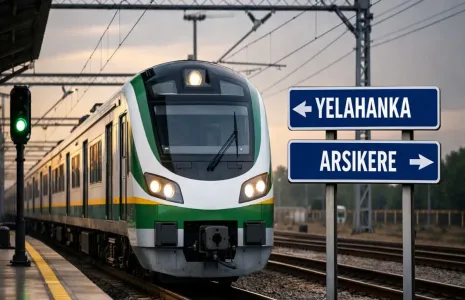
The Railways has permanently increased the number of coaches in the Palakkad Junction–Ernakulam Junction Mainline Electric Multiple Unit (MEMU) service, raising the formation from eight to 12 coaches with effect from February 23. The change applies to train numbers 66609/66610 and is intended to ease congestion on one of Kerala's busiest short-distance routes. The augmentation will raise the train's seating capacity from 600 to 900 seats.

The Southern Railway has also approved permanent augmentation of the Kollam–Ernakulam MEMU (train numbers 06169/06170) and the Kollam–Kottayam MEMU (train numbers 66316/66315) to 12 coaches from the same date. The decision follows sustained pressure and joint recommendations from political representatives, railway passengers associations and officers of the Palakkad and Thiruvananthapuram divisions. The addition of four more coaches is expected to ease overcrowding considerably during peak hours.

The Palakkad–Ernakulam MEMU forms a crucial daily commuter link connecting towns and employment hubs including Ottapalam, Shoranur, Thrissur, Aluva and Ernakulam. The service previously had a seating capacity of around 600 passengers but has been witnessing severe overcrowding, with more than 3,000 passengers using it daily. Railway passenger organisations had staged protests and submitted multiple representations demanding additional coaches, and public representatives including MPs had written to the Divisional Railway Manager (DRM) seeking permanent augmentation. Authorities approved the augmentation after reviewing passenger load data and stakeholder representations.

Passenger groups welcomed the permanent increase and reiterated demands to raise the rake length of MEMU and passenger trains to 16 coaches and to operate services on all days. Railway officials indicated that the present augmentation forms part of ongoing measures to improve commuter facilities and may be followed by further capacity reviews. The revised formations and schedules will be implemented from February 23 and commuters have been advised to check official notices for operational details.

The Railways has permanently increased the number of coaches in the Palakkad Junction–Ernakulam Junction Mainline Electric Multiple Unit (MEMU) service, raising the formation from eight to 12 coaches with effect from February 23. The change applies to train numbers 66609/66610 and is intended to ease congestion on one of Kerala's busiest short-distance routes. The augmentation will raise the train's seating capacity from 600 to 900 seats. The Southern Railway has also approved permanent augmentation of the Kollam–Ernakulam MEMU (train numbers 06169/06170) and the Kollam–Kottayam MEMU (train numbers 66316/66315) to 12 coaches from the same date. The decision follows sustained pressure and joint recommendations from political representatives, railway passengers associations and officers of the Palakkad and Thiruvananthapuram divisions. The addition of four more coaches is expected to ease overcrowding considerably during peak hours. The Palakkad–Ernakulam MEMU forms a crucial daily commuter link connecting towns and employment hubs including Ottapalam, Shoranur, Thrissur, Aluva and Ernakulam. The service previously had a seating capacity of around 600 passengers but has been witnessing severe overcrowding, with more than 3,000 passengers using it daily. Railway passenger organisations had staged protests and submitted multiple representations demanding additional coaches, and public representatives including MPs had written to the Divisional Railway Manager (DRM) seeking permanent augmentation. Authorities approved the augmentation after reviewing passenger load data and stakeholder representations. Passenger groups welcomed the permanent increase and reiterated demands to raise the rake length of MEMU and passenger trains to 16 coaches and to operate services on all days. Railway officials indicated that the present augmentation forms part of ongoing measures to improve commuter facilities and may be followed by further capacity reviews. The revised formations and schedules will be implemented from February 23 and commuters have been advised to check official notices for operational details.

Related Stories

Gold Stories

Next Story
Infrastructure Urban

KONE Opens India's First Digital Experience Centre in Pune

KONE, a global elevator and escalator manufacturer, has inaugurated its first Digital Experience Centre (DEC) in India, located in Pune. The facility aims to showcase how artificial intelligence (AI), connectivity and data-driven technologies can enhance customer experiences and improve building operations.The centre was inaugurated by Jussi Herlin, Executive Vice Chair, KONE Corporation; Philippe Delorme, President and CEO, KONE; and Nandan Nilekani, Co-founder and Chairman of the Board, Infosys.Designed as an interactive customer environment, the facility demonstrates digital solutions cover..

Next Story
Infrastructure Urban

CII GreenCo Launches Circularity Guidelines for Indian Industry

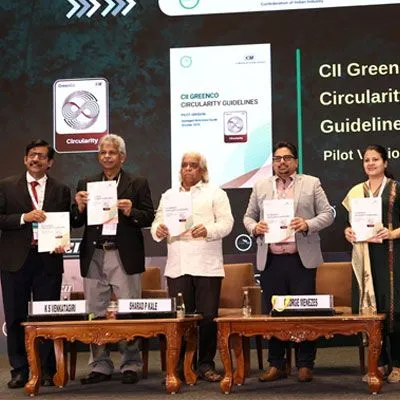
The Confederation of Indian Industry (CII) GreenCo Council has launched the CII GreenCo Circularity Guidelines – Pilot Version at the 17th CII GreenCo Waste & Resource Management Summit 2026 in Chennai. The initiative aims to strengthen resource efficiency, waste reduction and circular economy practices across Indian manufacturing and process industries.The guidelines introduce a structured framework with circularity indices covering raw materials, consumables, packaging and other resource inputs. These indicators will help industries assess existing practices, identify opportunities to ..

Next Story
Infrastructure Energy

Global Electronics Association Launches IPC-1783-CO2E Standard

The Global Electronics Association has introduced IPC-1783-CO2E, a new international standard aimed at improving consistency, transparency and comparability in product carbon footprint reporting across the electronics manufacturing industry.The standard, titled International Standard for Data Collection and Reporting of CO2 Equivalent (CO2e) Emissions for the Electronics Manufacturing Supply Chain, provides industry-specific guidance for collecting, estimating and reporting carbon emissions data.With increasing regulatory requirements and customer expectations, electronics manufacturers face c..

Advertisement

Subscribe to Our Newsletter

Get daily newsletters around different themes from Construction world.

STAY CONNECTED

Advertisement

SPECIAL OFFER
QR Code