PFBR At Kalpakkam Attains Criticality, Prime Minister Congratulates
ECONOMY & POLICY

PFBR At Kalpakkam Attains Criticality, Prime Minister Congratulates

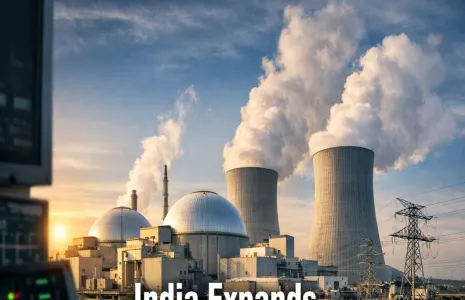
The Prime Minister congratulated India's scientists and engineers after the indigenously developed Prototype Fast Breeder Reactor (PFBR) at Kalpakkam attained criticality. He described the event as a defining step forward in the country's civil nuclear journey and said it marked significant progress in the second stage of the nuclear programme. The Prime Minister noted that the reactor represents the culmination of sustained research and engineering effort and reflects deep domestic capability. He also acknowledged the collective commitment of the teams involved in reaching the milestone.

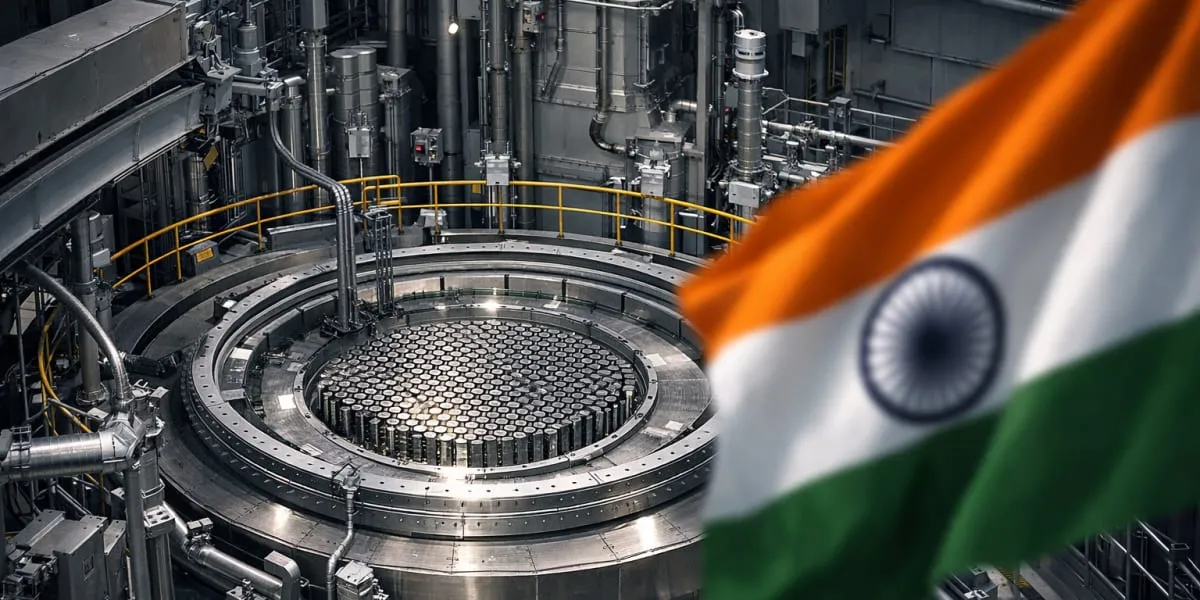
The PFBR, designed and built in India, has the capability to generate more fuel than it consumes, which the Prime Minister said demonstrates strengthened technical competence and robust engineering enterprise. Such breeder reactors are intended to expand the fissile material available to the nuclear sector and thereby enhance the sustainability of the national fuel cycle. Observers consider the technology to be central to plans for long-term deployment of thorium-based resources.

The Prime Minister indicated that this achievement paves the way for effectively harnessing India's vast thorium reserves in the third stage of the nuclear programme and underlined its strategic significance for energy security. He conveyed that the milestone will inform further stages of development and contribute to institutional learning across research and engineering establishments. The announcement was presented as a proud moment for the nation and an affirmation of domestic scientific talent.

The government signalled continued support for scientific endeavour that advances the national nuclear capability and for the integration of this achievement within broader energy planning. Attention is expected to shift to subsequent testing, validation and steps required to operationalise the reactor safely and efficiently. Authorities reiterated their commitment to maintain stringent safety and regulatory standards as the programme progresses.

The Prime Minister congratulated India's scientists and engineers after the indigenously developed Prototype Fast Breeder Reactor (PFBR) at Kalpakkam attained criticality. He described the event as a defining step forward in the country's civil nuclear journey and said it marked significant progress in the second stage of the nuclear programme. The Prime Minister noted that the reactor represents the culmination of sustained research and engineering effort and reflects deep domestic capability. He also acknowledged the collective commitment of the teams involved in reaching the milestone. The PFBR, designed and built in India, has the capability to generate more fuel than it consumes, which the Prime Minister said demonstrates strengthened technical competence and robust engineering enterprise. Such breeder reactors are intended to expand the fissile material available to the nuclear sector and thereby enhance the sustainability of the national fuel cycle. Observers consider the technology to be central to plans for long-term deployment of thorium-based resources. The Prime Minister indicated that this achievement paves the way for effectively harnessing India's vast thorium reserves in the third stage of the nuclear programme and underlined its strategic significance for energy security. He conveyed that the milestone will inform further stages of development and contribute to institutional learning across research and engineering establishments. The announcement was presented as a proud moment for the nation and an affirmation of domestic scientific talent. The government signalled continued support for scientific endeavour that advances the national nuclear capability and for the integration of this achievement within broader energy planning. Attention is expected to shift to subsequent testing, validation and steps required to operationalise the reactor safely and efficiently. Authorities reiterated their commitment to maintain stringent safety and regulatory standards as the programme progresses.

Next Story
Infrastructure Urban

Mineral Auction Rules Amended To Speed Mine Operationalisation

The Ministry of Mines notified the Mineral (Auction) Second Amendment Rules, 2026 on 30 March 2026 to accelerate operationalisation of mines and improve ease of doing business in the mining sector. The amendment follows a prior change to the Mineral (Auction) Rules, 2015 effected on 17 October 2025 that introduced intermediary timelines between issuance of a letter of intent (LoI) and execution of the mining lease. The 2025 change provided that one per cent of performance security would be appropriated for each month of delay by the preferred bidder and introduced incentives for early operatio..

Next Story
Infrastructure Transport

Indian Railways Strengthens Telecom And AI Safety Systems

Indian Railways strengthened its telecom and digital infrastructure during 2025-26 with the aim of improving safety, operational efficiency and the passenger experience. The programme promoted modernisation through advanced technologies, robust communication systems and passenger-centric solutions. These measures were presented as part of a drive to build a digitally integrated rail ecosystem. A key development was the enhancement of the Internet Protocol Multi-Protocol Label Switching (IP MPLS) backbone, commissioned at 1,396 stations to meet bandwidth needs of mission-critical applications. ..

Next Story
Infrastructure Transport

NHAI Holds Workshop on Litigation Management and Coordination

The National Highways Authority of India (NHAI) organised a day-long workshop in New Delhi to strengthen capacity and interdepartmental synergy for faster execution of national highway projects. The event was held under Mission Karmayogi – Sadhana Saptah, an initiative of the Government of India to enhance governance through capacity building and improved processes. The workshop focused on structured and solution oriented deliberations to address implementation constraints. The session was chaired by the NHAI chairman Santosh Kumar Yadav and brought together senior officials from NHAI, the M..

Advertisement

Subscribe to Our Newsletter

Get daily newsletters around different themes from Construction world.

STAY CONNECTED

Advertisement

Advertisement

Advertisement