+
Research Symposium at India AI Impact Summit Draws Global Minds
ECONOMY & POLICY

Research Symposium at India AI Impact Summit Draws Global Minds

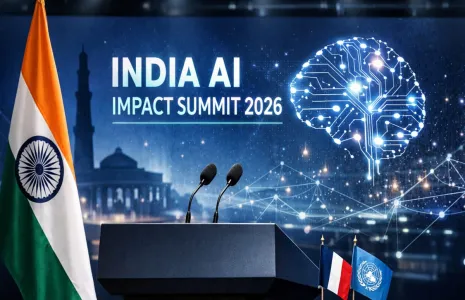
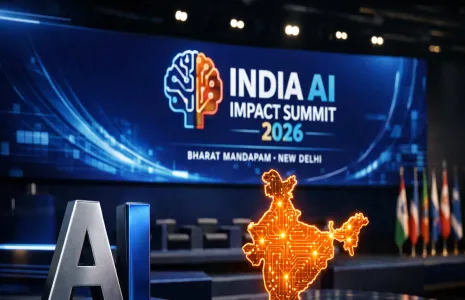
The Research Symposium on artificial intelligence (AI) and its Impact is being organised as part of the India AI Impact Summit 2026 and has received a strong response with 250 submissions. It is designed to bring AI research closer to real-world decision-making and to serve as a bridge between research, policy and practice. The event is scheduled for 18 February 2026 at Bharat Mandapam and will feature 30 selected posters under the Global South Poster Track, 15 from the India Forum Showcase and 15 under the Students Showcase.

The Symposium has been conceived as an interdisciplinary forum bringing together leading researchers and practitioners from India, the Global South and the wider international community to present frontier work on the impact of AI, exchange methods and evidence, and forge collaborations. Participants will engage on key areas such as human capital, inclusion, safety and trust, resilience, innovation and science, and on the use of AI for economic growth and social good.

The programme will broadly feature plenary keynotes and research dialogues, international research panels and the Global South Research and Posters Showcase. Plenary sessions will include in-depth discussions led by eminent Indian and international researchers exploring theoretical foundations, practical applications and societal implications of AI. The international research panels will offer short focused presentations by global research leaders highlighting cutting-edge methodologies, novel algorithms and breakthrough applications.

During the Global South Research and Posters Showcase there will be a vibrant presentation of research by students and collaborative teams, celebrating emerging talent and fostering mentorship opportunities. The organisers expect the Symposium to yield clear implementable outcomes, stronger collaboration between research institutions and decision makers, and improved use of research to support responsible and impactful adoption of AI. Interested stakeholders are encouraged to visit the official summit website for more information and registration.

The Research Symposium on artificial intelligence (AI) and its Impact is being organised as part of the India AI Impact Summit 2026 and has received a strong response with 250 submissions. It is designed to bring AI research closer to real-world decision-making and to serve as a bridge between research, policy and practice. The event is scheduled for 18 February 2026 at Bharat Mandapam and will feature 30 selected posters under the Global South Poster Track, 15 from the India Forum Showcase and 15 under the Students Showcase. The Symposium has been conceived as an interdisciplinary forum bringing together leading researchers and practitioners from India, the Global South and the wider international community to present frontier work on the impact of AI, exchange methods and evidence, and forge collaborations. Participants will engage on key areas such as human capital, inclusion, safety and trust, resilience, innovation and science, and on the use of AI for economic growth and social good. The programme will broadly feature plenary keynotes and research dialogues, international research panels and the Global South Research and Posters Showcase. Plenary sessions will include in-depth discussions led by eminent Indian and international researchers exploring theoretical foundations, practical applications and societal implications of AI. The international research panels will offer short focused presentations by global research leaders highlighting cutting-edge methodologies, novel algorithms and breakthrough applications. During the Global South Research and Posters Showcase there will be a vibrant presentation of research by students and collaborative teams, celebrating emerging talent and fostering mentorship opportunities. The organisers expect the Symposium to yield clear implementable outcomes, stronger collaboration between research institutions and decision makers, and improved use of research to support responsible and impactful adoption of AI. Interested stakeholders are encouraged to visit the official summit website for more information and registration.

Next Story
Infrastructure Urban

Implementation Status of Jal Jeevan Mission

Since August 2019 the Government has implemented Jal Jeevan Mission to provide assured potable water through household tap connections in rural India. At the start of the mission only 32.3 million (mn) rural households, representing 16.7 per cent, were reported to have tap water connections. States and union territories have reported that 125.8 mn additional rural households have since been provided with tap connections. As a result, of about 193.6 mn rural households roughly 158.2 mn, or 81.71 per cent, are reported to have tap water supply at home.\n\nThe State, district and village level st..

Next Story
Infrastructure Urban

Jal Jeevan Mission Reaches Eighty One Per Cent Rural Coverage

The Government reported substantial progress under the Jal Jeevan Mission, launched in August 2019 to provide tap water to every rural household. At launch only 32.3 million (mn) rural households had tap connections and states and Union territories reported provision of 125.8 mn additional households by March 2026. Consequently, out of about 193.6 mn rural households around 158.2 mn, or 81.71 per cent, are reported to have tap water at home. The Finance Minister announced extension of the mission until 2028 in the 2025-26 budget speech. The Swachh Bharat Mission Grameen, launched in October 20..

Next Story
Infrastructure Urban

Empowering Local Governance for Sustainable Rural Water Supply

The Ministry of Jal Shakti has aligned the Jal Jeevan Mission (JJM) with the 73rd Amendment to strengthen village level planning and community ownership of water supply. Gram Panchayats, village water and sanitation committees and Pani Samitis are to plan, implement, manage and maintain piped water systems, with gram sabha processes formalising handover and oversight. Implementation support agencies including non government organisations, community based organisations and self help groups have been empanelled to train local committees and promote women participation. Under JJM, the department ..

Advertisement

Subscribe to Our Newsletter

Get daily newsletters around different themes from Construction world.

STAY CONNECTED

Advertisement

Advertisement

Advertisement