


+
RLDA Plans 99-Year Lease For Yeshwantpur Housing
ECONOMY & POLICY

RLDA Plans 99-Year Lease For Yeshwantpur Housing

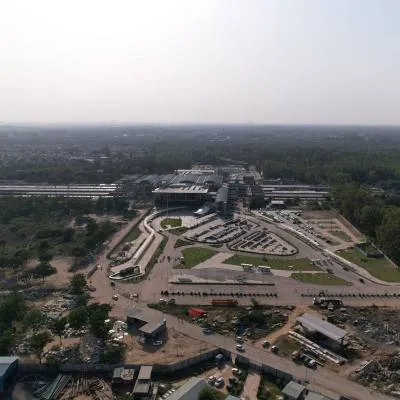
The Rail Land Development Authority (RLDA) has announced plans to offer a 99-year lease for a residential development at the Yeshwantpur railway colony in Bengaluru. The proposal is aimed at unlocking land held by railways for long term housing use and attracting private sector investment. The authority indicated that the long lease tenure is intended to provide certainty for capital allocation and sustained urban development.

Under the plan, the lease will be structured to allow comprehensive redevelopment of the colony while preserving essential railway operational needs. The RLDA intends to set terms that balance developer obligations with public interest and to require adherence to local planning and zoning norms. The move follows wider efforts to monetise railway land to meet growing urban housing demand.

Officials expect the initiative to improve housing availability in the Yeshwantpur area and to create opportunities for modern residential amenities and supporting infrastructure. The authority believes that a long tenure will enable developers to plan phased construction and deliver sustained maintenance regimes.

The process is expected to involve defined timelines for tendering and selection and to incorporate safeguards for displaced residents and heritage structures where applicable. Stakeholders will be encouraged to propose mixed use solutions that integrate community facilities, green spaces and transport connectivity. RLDA will work with municipal agencies to ensure alignment with Bengaluru city planning priorities.

Consultation with local communities and municipal authorities is expected to be part of the project planning to address social and environmental concerns and to refine land use proposals. Proposals are likely to include commitments for affordable housing components and measures to enhance pedestrian and public transport access. The authority will monitor compliance through staged approvals and performance guarantees to ensure project delivery and long term upkeep. The plan aligns with broader urban renewal objectives for the city centre.

The Rail Land Development Authority (RLDA) has announced plans to offer a 99-year lease for a residential development at the Yeshwantpur railway colony in Bengaluru. The proposal is aimed at unlocking land held by railways for long term housing use and attracting private sector investment. The authority indicated that the long lease tenure is intended to provide certainty for capital allocation and sustained urban development. Under the plan, the lease will be structured to allow comprehensive redevelopment of the colony while preserving essential railway operational needs. The RLDA intends to set terms that balance developer obligations with public interest and to require adherence to local planning and zoning norms. The move follows wider efforts to monetise railway land to meet growing urban housing demand. Officials expect the initiative to improve housing availability in the Yeshwantpur area and to create opportunities for modern residential amenities and supporting infrastructure. The authority believes that a long tenure will enable developers to plan phased construction and deliver sustained maintenance regimes. The process is expected to involve defined timelines for tendering and selection and to incorporate safeguards for displaced residents and heritage structures where applicable. Stakeholders will be encouraged to propose mixed use solutions that integrate community facilities, green spaces and transport connectivity. RLDA will work with municipal agencies to ensure alignment with Bengaluru city planning priorities. Consultation with local communities and municipal authorities is expected to be part of the project planning to address social and environmental concerns and to refine land use proposals. Proposals are likely to include commitments for affordable housing components and measures to enhance pedestrian and public transport access. The authority will monitor compliance through staged approvals and performance guarantees to ensure project delivery and long term upkeep. The plan aligns with broader urban renewal objectives for the city centre.

Next Story
Infrastructure Urban

India Expands Semiconductor Training To 500 Institutions

Under the Chips to Startups programme of the India Semiconductor Mission, the Union minister responsible for Railways, Information and Broadcasting, and Electronics and IT reported notable progress in talent development. He indicated that over the past four years substantial steps have been taken towards a 10-year target of training 85,000 engineers in semiconductor design. World-class EDA tools have been deployed in 315 academic institutions across the country to provide students with practical exposure to chip design. These EDA tools are supported by leading global firms and are accessible t..

Next Story
Infrastructure Urban

Delhi Institutions Support India Semiconductor Mission

The Government of India has prioritised talent development through training, upskilling and workforce development under the Chips to Startups initiative of the India Semiconductor Mission, with officials noting progress in four years towards a 10-year target of training 85,000 engineers in semiconductor design. Electronic design automation tools provided by Synopsys, Cadence, Siemens, Renesas, Ansys and AMD have been deployed in 315 academic institutions, enabling students to gain practical chip design experience. Chips have been fabricated and tested at the Semiconductor Laboratory, Mohali, a..

Next Story
Infrastructure Urban

NHA Announces Winners Of NHCX Hackathon At IIT Hyderabad

The National Health Authority (NHA) has concluded the NHCX Hackathon under the Ayushman Bharat Digital Mission (ABDM) to stimulate innovation around the National Health Claims Exchange (NHCX). The winning teams presented their solutions at the NHCX Innovation Meet held at IIT Hyderabad during a two-day event in March 2026 that also served as the hackathon grand finale. The hackathon itself ran from 22 to 28 February 2026 and aimed to accelerate paperless, transparent claims processing across India. The event was organised with a range of ecosystem partners, including the Insurance Regulatory a..

Advertisement

Subscribe to Our Newsletter

Get daily newsletters around different themes from Construction world.

STAY CONNECTED

Advertisement

Advertisement

Advertisement