Sahkar Se Samriddhi Vision Guides National Cooperative Review
ECONOMY & POLICY

Sahkar Se Samriddhi Vision Guides National Cooperative Review

A two-day Sahkar se Samriddhi National Review Conference is being held in Varanasi under the leadership of Union Home and Cooperation Minister Amit Shah, guided by the Prime Minister's vision of Sahkar se Samriddhi. The conference convened senior officials from the Centre, States and major cooperative institutions on the ninth to 10th April 2026 to review progress and accelerate implementation of flagship initiatives.

The Secretary of the Ministry of Cooperation, Dr Ashish Kumar Bhutani, said this is the seventh in a series of national workshops since October 2024 and that sustained engagements have created a platform for coordination and shared learning. He urged a shift from deliberation to execution with clear district level, time bound implementation plans to convert targets into outcomes.

The review highlighted the target of two lakh Primary Agricultural Credit Societies; this was presented as zero point two million (mn) Primary Agricultural Credit Societies (PACS) to convey scale. Dr Bhutani called for renewed efforts and convergence among stakeholders to sustain momentum and achieve the desired scale while reassessing performance gaps and strengthening State coordination.

Discussion of Primary Agricultural Credit Societies computerisation noted considerable movement in the last six to nine months but stressed the need for sustainability beyond the scheme period ending in March 2027. The conference reviewed integration with national platforms such as Agri Stack and Kisan Credit Card (KCC) systems and urged States to internalise benefits and continue reforms beyond scheme funding.

Participants examined the world’s largest grain storage plan with presentations by the Food Corporation of India (FCI) and National Bank for Agriculture and Rural Development (NABARD) and other implementing agencies, covering site selection, capacity planning and eNWR based systems. Attention was given to strengthening cooperative banking through District Central Cooperative Banks (DCCBs), cyber security, Aadhaar seeding and doorstep banking to align financial systems with the growing role of PACS as grassroots service delivery institutions. The deliberations reflected the Ministry's continued commitment to structured planning, technology integration and grassroots implementation to build a self reliant and inclusive economy driven by cooperation.

A two-day Sahkar se Samriddhi National Review Conference is being held in Varanasi under the leadership of Union Home and Cooperation Minister Amit Shah, guided by the Prime Minister's vision of Sahkar se Samriddhi. The conference convened senior officials from the Centre, States and major cooperative institutions on the ninth to 10th April 2026 to review progress and accelerate implementation of flagship initiatives. The Secretary of the Ministry of Cooperation, Dr Ashish Kumar Bhutani, said this is the seventh in a series of national workshops since October 2024 and that sustained engagements have created a platform for coordination and shared learning. He urged a shift from deliberation to execution with clear district level, time bound implementation plans to convert targets into outcomes. The review highlighted the target of two lakh Primary Agricultural Credit Societies; this was presented as zero point two million (mn) Primary Agricultural Credit Societies (PACS) to convey scale. Dr Bhutani called for renewed efforts and convergence among stakeholders to sustain momentum and achieve the desired scale while reassessing performance gaps and strengthening State coordination. Discussion of Primary Agricultural Credit Societies computerisation noted considerable movement in the last six to nine months but stressed the need for sustainability beyond the scheme period ending in March 2027. The conference reviewed integration with national platforms such as Agri Stack and Kisan Credit Card (KCC) systems and urged States to internalise benefits and continue reforms beyond scheme funding. Participants examined the world’s largest grain storage plan with presentations by the Food Corporation of India (FCI) and National Bank for Agriculture and Rural Development (NABARD) and other implementing agencies, covering site selection, capacity planning and eNWR based systems. Attention was given to strengthening cooperative banking through District Central Cooperative Banks (DCCBs), cyber security, Aadhaar seeding and doorstep banking to align financial systems with the growing role of PACS as grassroots service delivery institutions. The deliberations reflected the Ministry's continued commitment to structured planning, technology integration and grassroots implementation to build a self reliant and inclusive economy driven by cooperation.

Related Stories

Gold Stories

Next Story
Real Estate

Anshul Singhal launches Vantrock with Rs 42 billion development plan

Real estate professional Anshul Singhal has launched Vantrock Real Assets Private Limited (VRAPL), a Mumbai-headquartered platform focused initially on warehousing, industrial and logistics parks. The company plans to develop approximately 11.5 million sq ft of assets, with an estimated gross development value (GDV) of Rs 42 billion (approximately USD 434 million) on completion.The first phase will cover around 3 million sq ft across the National Capital Region (NCR), Bengaluru and Pune, with an estimated development value of Rs 11 billion (approximately USD 113 million). Construction is sched..
Next Story
Infrastructure Transport

Afcons wins CII award for biodiversity management

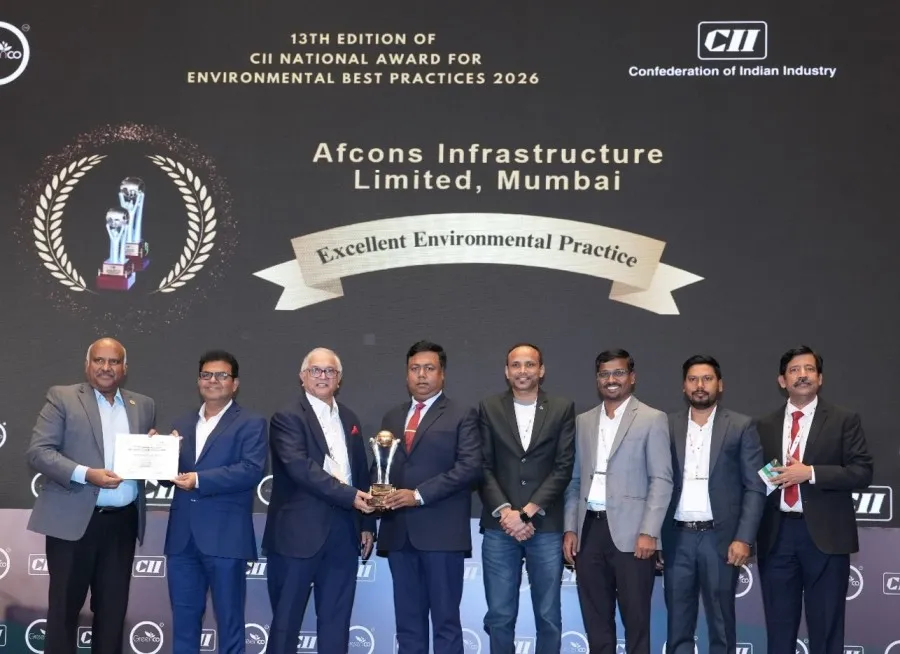
Afcons Infrastructure has received the Confederation of Indian Industry (CII) National Award for Environmental Best Practices 2026 in the Biodiversity Management category for its work on the Mumbai-Ahmedabad High Speed Rail Project’s C-2 package.The award was presented at a ceremony in Chennai on 9 October 2026. It was received by Mihir Mishra, Vice-President, CPE, and Sumon Paul, Assistant General Manager, HSE, along with the Afcons team.The project adopted several resource recovery and waste management practices. These included recycling concrete washout waste to recover sand, aggregates a..
Next Story
Technology

Indian businesses lead globally in planned AI investment, says Autodesk

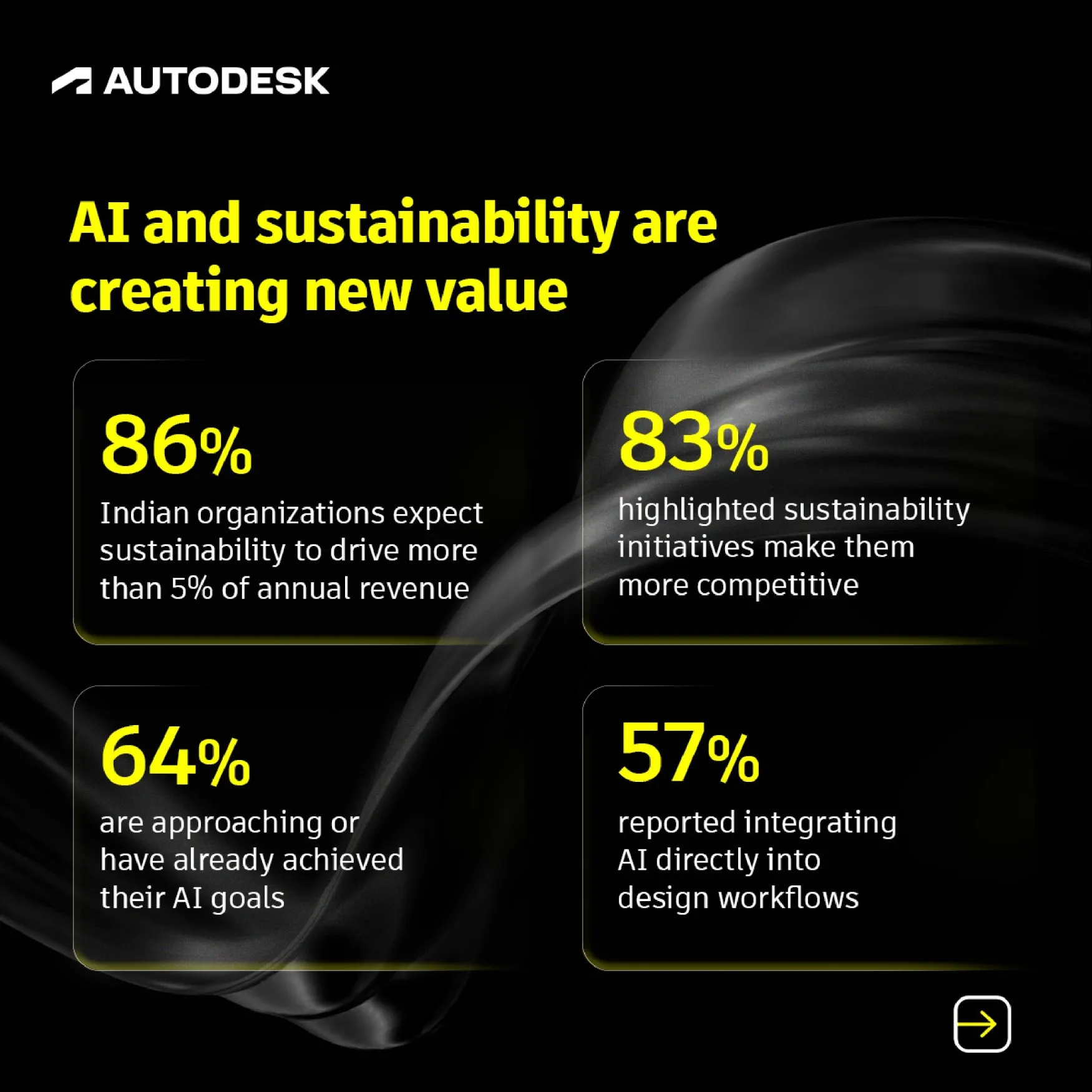
Indian organisations are moving towards deeper integration of artificial intelligence (AI), digital technologies and sustainability into business operations, according to Autodesk’s 2026 State of Design & Make report. The fourth edition of the annual study highlights growing AI adoption, measurable outcomes from digital transformation and the role of sustainability in long-term business growth.The report found that 64 per cent of Indian organisations are approaching or have achieved their current AI goals. While 88 per cent believe AI will enhance their industry, up from 78 per cent in 2..

Advertisement

Subscribe to Our Newsletter

Get daily newsletters around different themes from Construction world.

STAY CONNECTED

Advertisement

SPECIAL OFFER
QR Code