Noida Electric Buses Roll Out Ahead Of Jewar Airport Opening
AVIATION & AIRPORTS

Noida Electric Buses Roll Out Ahead Of Jewar Airport Opening

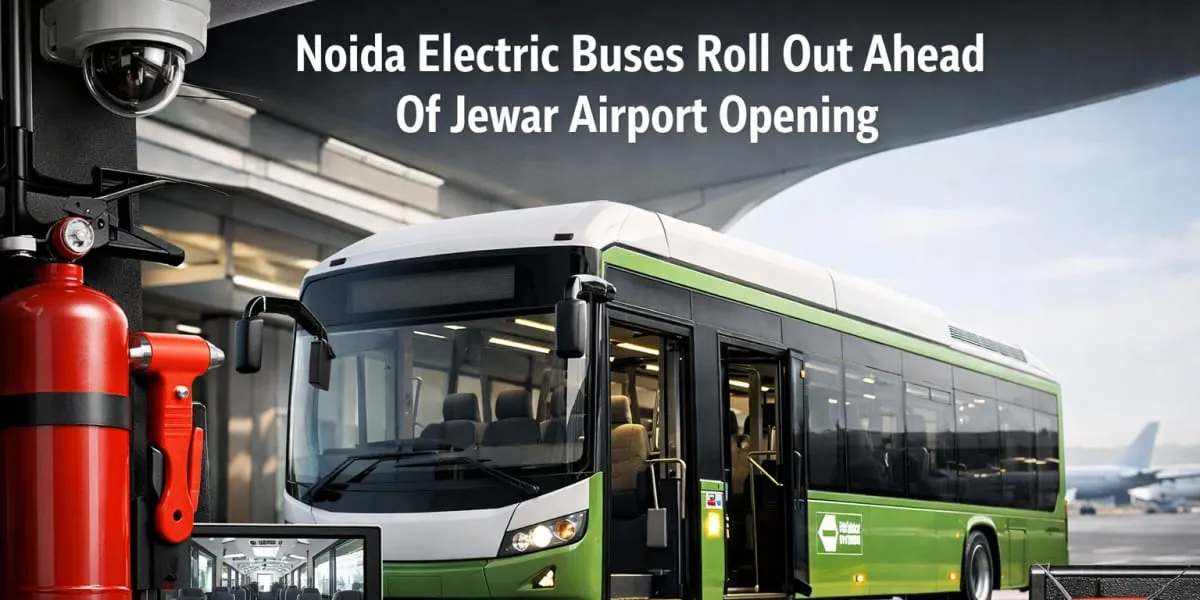
The Noida region has rolled out a fleet of electric buses ahead of the opening of Jewar airport next week, with authorities highlighting passenger friendly and safety features. Each vehicle is fitted with closed circuit television cameras, driver screens and emergency exits on both sides. Glass breaking hammers, fire safety equipment and strategically positioned extinguishing systems allow rapid response in incidents.

Interiors are designed for comfort with cushioned seats similar to long distance coaches and capacity for around 41 passengers. Dedicated luggage areas assist airport bound travellers and mobile charging points address commuter needs. The blend of seating, storage and tech features aims to enhance daily convenience.

Affordability has been emphasised with fares indicated to range from roughly Rs 20 to Rs 50 depending on route, while earlier reports suggested some stretches may start at Rs 10. Residents of Greater Noida West stand to gain after years of reliance on private vehicles, cabs and auto rickshaws. The electric fleet is offered as an accessible alternative to reduce dependence on personal transport.

Beyond mobility improvements, the buses produce zero tailpipe emissions and have lower operating costs compared with conventional diesel vehicles, aligning with the state government s push for sustainable public transportation. Planners expect efficiency gains and lower environmental impact as services scale. The initiative is positioned as part of broader efforts to modernise urban transit.

Officials have underlined that safety measures and passenger amenities aim to provide a modern, safe and eco friendly mode of travel that addresses the needs of women and families. The service combines operational readiness with accessible fares and practical features to encourage daily patronage and reduce traffic pressure on arterial routes. With the airport opening imminent, the electric bus service is presented as a durable addition to the region s transport network.

The Noida region has rolled out a fleet of electric buses ahead of the opening of Jewar airport next week, with authorities highlighting passenger friendly and safety features. Each vehicle is fitted with closed circuit television cameras, driver screens and emergency exits on both sides. Glass breaking hammers, fire safety equipment and strategically positioned extinguishing systems allow rapid response in incidents. Interiors are designed for comfort with cushioned seats similar to long distance coaches and capacity for around 41 passengers. Dedicated luggage areas assist airport bound travellers and mobile charging points address commuter needs. The blend of seating, storage and tech features aims to enhance daily convenience. Affordability has been emphasised with fares indicated to range from roughly Rs 20 to Rs 50 depending on route, while earlier reports suggested some stretches may start at Rs 10. Residents of Greater Noida West stand to gain after years of reliance on private vehicles, cabs and auto rickshaws. The electric fleet is offered as an accessible alternative to reduce dependence on personal transport. Beyond mobility improvements, the buses produce zero tailpipe emissions and have lower operating costs compared with conventional diesel vehicles, aligning with the state government s push for sustainable public transportation. Planners expect efficiency gains and lower environmental impact as services scale. The initiative is positioned as part of broader efforts to modernise urban transit. Officials have underlined that safety measures and passenger amenities aim to provide a modern, safe and eco friendly mode of travel that addresses the needs of women and families. The service combines operational readiness with accessible fares and practical features to encourage daily patronage and reduce traffic pressure on arterial routes. With the airport opening imminent, the electric bus service is presented as a durable addition to the region s transport network.

Next Story
Infrastructure Transport

Surya Roshni delivers customised lighting for NCRTC RRTS stations

Surya Roshni has supplied customised indoor lighting solutions for 18 elevated stations on the National Capital Region Transport Corporation's (NCRTC) Rapid Rail Transit System (RRTS), strengthening its presence in India's infrastructure lighting segment.The project involved the design and deployment of lighting systems for platforms, concourses, foot overbridges (FOBs) and back-of-house (BOH) areas. According to the company, the luminaires were developed specifically to meet NCRTC's design, operational and performance requirements rather than using standard products.Surya introduced two custo..

Next Story
Real Estate

Hilton debuts Tapestry Collection brand in Vietnam

Hilton has opened NHAAN Resort & Spa Hoi An, Tapestry Collection by Hilton, marking the debut of the Tapestry Collection brand in Vietnam and expanding its lifestyle hospitality portfolio in Southeast Asia.Located along the Co Co River in Cam Thanh village, the 174-key resort provides access to Hoi An Ancient Town, Cua Dai Beach and the Cam Thanh Nipa Forest. The property has been designed by Vietnamese architect Vo Trong Nghia, incorporating biophilic architecture, locally sourced materials and riverfront landscapes.The resort offers a mix of guest rooms and suites, including family-frien..

Next Story
Building Material

Electrent expands lithium energy storage system portfolio

Electrent Energy has expanded its lithium-based energy storage portfolio with the launch of the ESS 850 and ESS 1050, targeting compact and maintenance-free power backup solutions for Indian homes.The new systems integrate a Home UPS and a LiFePO4 lithium battery into a single unit, extending the company's product range following the launch of its ESS 1350 and ESS 2500 models.Designed for apartments and smaller homes, the ESS 850 provides up to 1 hour 15 minutes of backup, while the ESS 1050 offers up to 1 hour 45 minutes on a typical 400 W household load. The systems can power essential appli..

Advertisement

Subscribe to Our Newsletter

Get daily newsletters around different themes from Construction world.

STAY CONNECTED

Advertisement

Advertisement

Advertisement