Barrier-less Tolling To Transform Highway Travel And Cut Pollution
ROADS & HIGHWAYS

Barrier-less Tolling To Transform Highway Travel And Cut Pollution

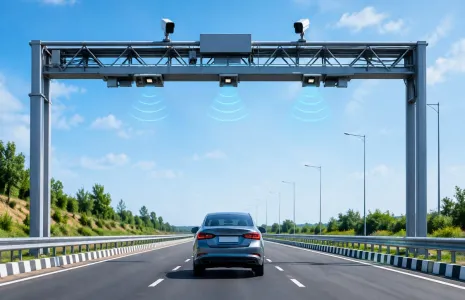
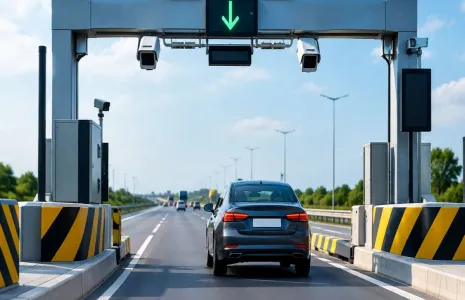
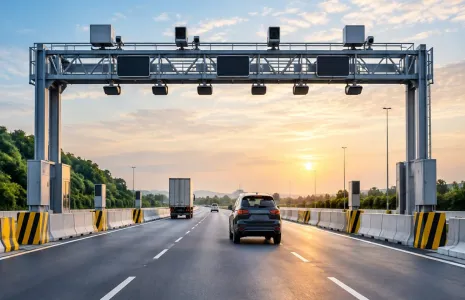
The Government inaugurated a barrier-less toll plaza at Mundka–Bakkarwala on the Urban Extension Road in the National Capital Region, introducing the Multi-Lane Free Flow tolling system. The minister for road transport and highways led the launch and acknowledged officials and stakeholders involved in the project. The MLFF system is intended to permit uninterrupted vehicle movement through toll points without stopping.

The framework combines Automatic Number Plate Recognition technology with FASTag based electronic toll collection and deploys artificial intelligence for monitoring and traffic management. Officials estimate that the system will cut waiting time at plazas, improve traffic flow and reduce congestion, generating fuel savings of about 2.5 billion (bn) litres annually and cutting roughly 81,000 tonnes (t) of carbon emissions. The minister observed that operational expenditure on toll collection, which was 15 per cent, is expected to fall to around 3-4 per cent, producing annual savings of about Rs 50-60 billion (bn).

Users will need to maintain sufficient FASTag balance and non payment will be handled through electronic notices that provide a 72 hour window for payment and grievance redressal. Failure to comply within the period will incur a charge at twice the normal rate for the vehicle category and may lead to blacklisting and restrictions on other vehicle related services. The ministry pointed to a recent MLFF launch at the Chorayasi plaza on the Surat–Bharuch section as part of broader rollout plans.

The announcement highlighted efforts to adopt waste to wealth practices by using processed municipal waste and bio bitumen from crop residue in road construction to reduce import dependence and pollution. The ministry said technology driven reforms will strengthen transparency, lower logistics costs and improve the tolling ecosystem across the national highway network. Authorities appealed to citizens and media to support awareness of the changes and ensure a smooth transition.

The Government inaugurated a barrier-less toll plaza at Mundka–Bakkarwala on the Urban Extension Road in the National Capital Region, introducing the Multi-Lane Free Flow tolling system. The minister for road transport and highways led the launch and acknowledged officials and stakeholders involved in the project. The MLFF system is intended to permit uninterrupted vehicle movement through toll points without stopping. The framework combines Automatic Number Plate Recognition technology with FASTag based electronic toll collection and deploys artificial intelligence for monitoring and traffic management. Officials estimate that the system will cut waiting time at plazas, improve traffic flow and reduce congestion, generating fuel savings of about 2.5 billion (bn) litres annually and cutting roughly 81,000 tonnes (t) of carbon emissions. The minister observed that operational expenditure on toll collection, which was 15 per cent, is expected to fall to around 3-4 per cent, producing annual savings of about Rs 50-60 billion (bn). Users will need to maintain sufficient FASTag balance and non payment will be handled through electronic notices that provide a 72 hour window for payment and grievance redressal. Failure to comply within the period will incur a charge at twice the normal rate for the vehicle category and may lead to blacklisting and restrictions on other vehicle related services. The ministry pointed to a recent MLFF launch at the Chorayasi plaza on the Surat–Bharuch section as part of broader rollout plans. The announcement highlighted efforts to adopt waste to wealth practices by using processed municipal waste and bio bitumen from crop residue in road construction to reduce import dependence and pollution. The ministry said technology driven reforms will strengthen transparency, lower logistics costs and improve the tolling ecosystem across the national highway network. Authorities appealed to citizens and media to support awareness of the changes and ensure a smooth transition.

Related Stories

Gold Stories

Next Story
Infrastructure Urban

KONE Opens India's First Digital Experience Centre in Pune

KONE, a global elevator and escalator manufacturer, has inaugurated its first Digital Experience Centre (DEC) in India, located in Pune. The facility aims to showcase how artificial intelligence (AI), connectivity and data-driven technologies can enhance customer experiences and improve building operations.The centre was inaugurated by Jussi Herlin, Executive Vice Chair, KONE Corporation; Philippe Delorme, President and CEO, KONE; and Nandan Nilekani, Co-founder and Chairman of the Board, Infosys.Designed as an interactive customer environment, the facility demonstrates digital solutions cover..

Next Story
Infrastructure Urban

CII GreenCo Launches Circularity Guidelines for Indian Industry

The Confederation of Indian Industry (CII) GreenCo Council has launched the CII GreenCo Circularity Guidelines – Pilot Version at the 17th CII GreenCo Waste & Resource Management Summit 2026 in Chennai. The initiative aims to strengthen resource efficiency, waste reduction and circular economy practices across Indian manufacturing and process industries.The guidelines introduce a structured framework with circularity indices covering raw materials, consumables, packaging and other resource inputs. These indicators will help industries assess existing practices, identify opportunities to ..

Next Story
Infrastructure Energy

Global Electronics Association Launches IPC-1783-CO2E Standard

The Global Electronics Association has introduced IPC-1783-CO2E, a new international standard aimed at improving consistency, transparency and comparability in product carbon footprint reporting across the electronics manufacturing industry.The standard, titled International Standard for Data Collection and Reporting of CO2 Equivalent (CO2e) Emissions for the Electronics Manufacturing Supply Chain, provides industry-specific guidance for collecting, estimating and reporting carbon emissions data.With increasing regulatory requirements and customer expectations, electronics manufacturers face c..

Advertisement

Subscribe to Our Newsletter

Get daily newsletters around different themes from Construction world.

STAY CONNECTED

Advertisement

SPECIAL OFFER
QR Code