+
Bogibeel Bridge Marks Seven Years Of Transforming Connectivity
ROADS & HIGHWAYS

Bogibeel Bridge Marks Seven Years Of Transforming Connectivity

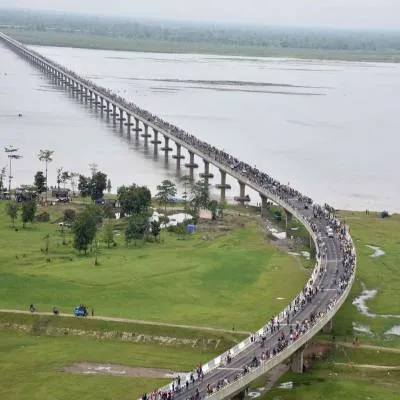
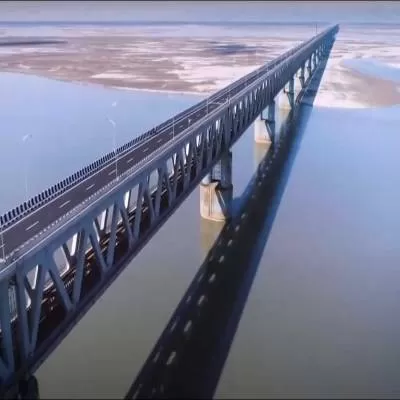
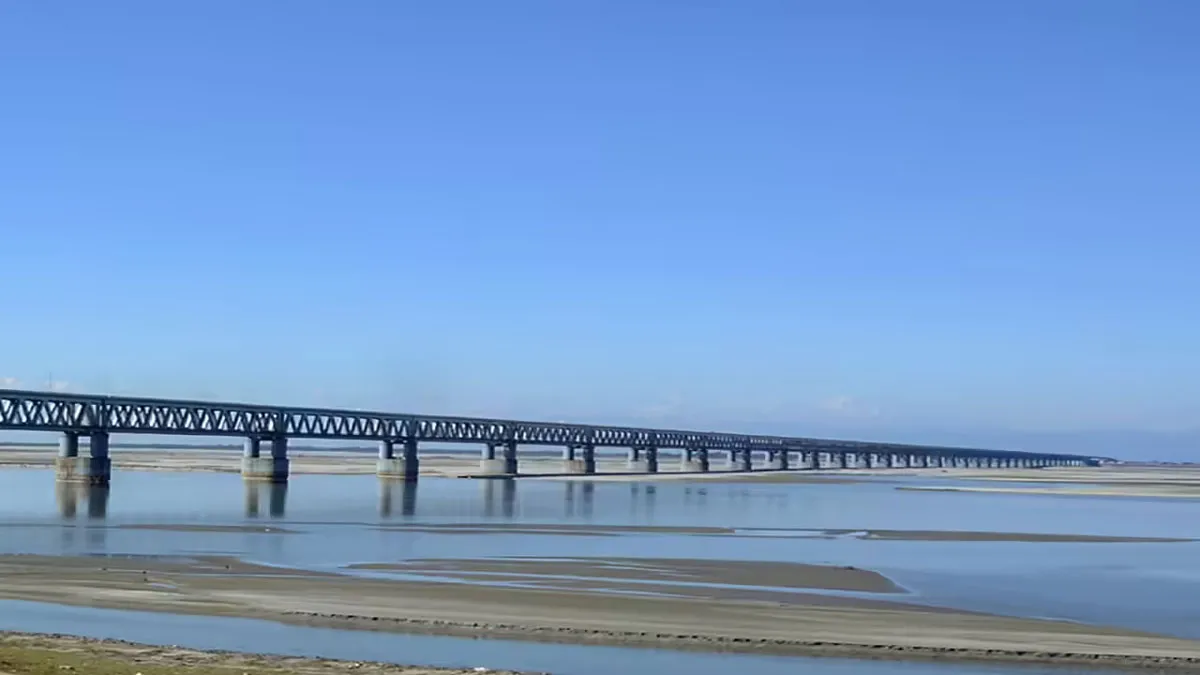
India’s longest rail-cum-road bridge, the Bogibeel Bridge, marked seven years of operation on Thursday since its inauguration by Prime Minister Narendra Modi on December 25, 2018. Located near Dibrugarh in Assam, the bridge has emerged as a landmark of connectivity, progress and national integration in the northeast.

Spanning 4.94 kilometres across the Brahmaputra, the bridge links the river’s northern and southern banks, connecting Dibrugarh with Dhemaji. Built as part of a strategic Indian Railways infrastructure project, the bridge has significantly improved transport, trade and defence logistics across the region. By serving as both a rail and road corridor, it has sharply reduced travel time between upper Assam and Arunachal Pradesh.

Residents and daily commuters on both sides of the Brahmaputra marked the occasion by recalling the dramatic change in regional mobility. Bhaskar Gogoi, a resident of Dibrugarh, said that ferry crossings earlier took several hours, while the bridge now allows travel to Dhemaji in around 20 minutes, transforming access for families and businesses alike.

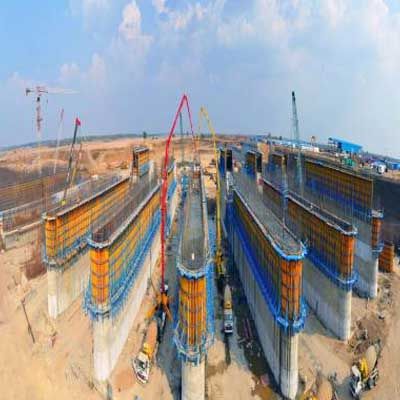
Constructed at a cost of about Rs 59 billion, the Bogibeel Bridge was dedicated to the nation on Good Governance Day, coinciding with the birth anniversary of former Prime Minister Atal Bihari Vajpayee, under whose government the project gathered momentum in 2002. The project was executed by Hindustan Construction Company and completed after years of complex engineering work in the challenging terrain of the Brahmaputra river.

Officials from the Northeast Frontier Railway said the bridge continues to function as a critical connectivity hub, driving socio-economic development and supporting the mobility of the armed forces along India’s eastern frontier.

Calling it more than just a piece of infrastructure, a senior railway official said the Bogibeel Bridge has become a lifeline for the northeast, playing a vital role in regional integration and long-term development.

India’s longest rail-cum-road bridge, the Bogibeel Bridge, marked seven years of operation on Thursday since its inauguration by Prime Minister Narendra Modi on December 25, 2018. Located near Dibrugarh in Assam, the bridge has emerged as a landmark of connectivity, progress and national integration in the northeast. Spanning 4.94 kilometres across the Brahmaputra, the bridge links the river’s northern and southern banks, connecting Dibrugarh with Dhemaji. Built as part of a strategic Indian Railways infrastructure project, the bridge has significantly improved transport, trade and defence logistics across the region. By serving as both a rail and road corridor, it has sharply reduced travel time between upper Assam and Arunachal Pradesh. Residents and daily commuters on both sides of the Brahmaputra marked the occasion by recalling the dramatic change in regional mobility. Bhaskar Gogoi, a resident of Dibrugarh, said that ferry crossings earlier took several hours, while the bridge now allows travel to Dhemaji in around 20 minutes, transforming access for families and businesses alike. Constructed at a cost of about Rs 59 billion, the Bogibeel Bridge was dedicated to the nation on Good Governance Day, coinciding with the birth anniversary of former Prime Minister Atal Bihari Vajpayee, under whose government the project gathered momentum in 2002. The project was executed by Hindustan Construction Company and completed after years of complex engineering work in the challenging terrain of the Brahmaputra river. Officials from the Northeast Frontier Railway said the bridge continues to function as a critical connectivity hub, driving socio-economic development and supporting the mobility of the armed forces along India’s eastern frontier. Calling it more than just a piece of infrastructure, a senior railway official said the Bogibeel Bridge has become a lifeline for the northeast, playing a vital role in regional integration and long-term development.

Related Stories

Gold Stories

Next Story
Infrastructure Transport

Mumbai-Ahmedabad Bullet Train’s Surat-Vapi Section Set for 2027

The first section of the Mumbai-Ahmedabad Bullet Train corridor, linking Surat and Vapi, is targeted to begin services in 2027. Construction is expected to be completed by December 2026, while Railway Minister Ashwini Vaishnaw has indicated that an inauguration could take place around the middle of 2027. The National High Speed Rail Corporation (NHSRCL) said the train being manufactured in India is expected to reach the tracks around April or May 2027. The train will undergo extensive testing before the section is opened for passenger services. The project began construction in 2021 and includ..

Next Story
Infrastructure Transport

Indian Railways Approves Four Projects Worth Rs. 7.36 bn Across Four States

Indian Railways has approved four projects with a combined value of Rs. 7.36 bn across Uttar Pradesh, Maharashtra, Andhra Pradesh and Gujarat. The programme covers train protection, signalling, electric traction supply and a road overbridge, with each project assigned to a different railway zone. In Uttar Pradesh, Rs. 2.52 bn has been approved to extend the Kavach 4.0 automatic train protection system across 607.7 km in the Lucknow Division of North Eastern Railway. The system monitors train movements and can apply the brakes if a driver fails to observe a signal or exceeds a safe speed. The w..

Next Story
Infrastructure Urban

Chandru Raheja Sells 1.49% Stake in Mindspace REIT for Rs. 5 bn

Billionaire Chandru Lachmandas Raheja has sold a 1.49 per cent holding in Mindspace Business Parks REIT for Rs. 5 bn through a bulk deal on the BSE. The transaction involved 9.9 mn units and was executed at an average price of Rs. 505 per unit, according to exchange data. Following the sale, units of Mindspace Business Parks REIT were trading 0.18 per cent lower at Rs. 504.05 on Tuesday. Exchange data did not identify the buyers involved in the transaction. Raheja is the chairman of real estate company K Raheja Corp. The sale involved 99,00,990 units, representing 1.49 per cent of the Mumbai-b..

Advertisement

Subscribe to Our Newsletter

Get daily newsletters around different themes from Construction world.

STAY CONNECTED

Advertisement

SPECIAL OFFER
QR Code