Delhi-Mumbai expressway’s Narmada steel bridge built in 32 months
ROADS & HIGHWAYS

Delhi-Mumbai expressway’s Narmada steel bridge built in 32 months

Minister of Road Transport and Highways Nitin Gadkari inspected the Bharuch area of the Delhi-Mumbai Expressway and has said that the Narmada steel bridge was built in 32 months.

Gadkari said that the span between two piers of the Narmada steel bridge is 120 metres. He said that wildlife has been kept in consideration while constructing the highway. The road transport minister also said that farmers have been compensated well for their land.

Time travel between Delhi and Mumbai will be reduced to 12 hours by car compared to the previous travel time of 48 hours.

This highway crosses the tribal districts of Gujarat, Rajasthan, and Madhya Pradesh.

Gadkari also inspected the iconic bridge built across the Narmada river near Bharuch, Gujarat. The 2 km long extradosed cable span bridge is set to be India's first eight-lane bridge to be constructed across the Delhi-Mumbai Expressway (DME).

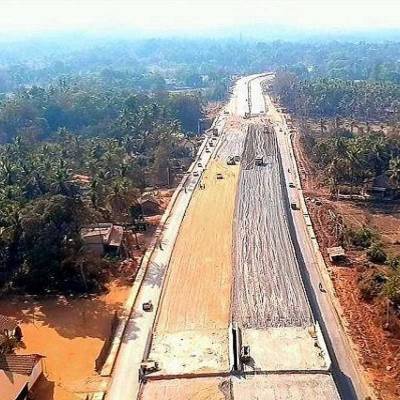
According to an official release by MoRTH, the expressway is being developed at a cost of Rs 98,000 crore. The 1,380 km long Delhi-Mumbai expressway will be the longest expressway in India.

The expressway will connect the urban areas of Delhi through the Delhi-Faridabad-Sohna sector of the corridor along with an extension to Jewar Airport and Jawaharlal Nehru Port to Mumbai through connectivity in Mumbai.

Image Source


Also read: Nitin Gadkari to survey MP stretch of Mumbai-Delhi expressway
Also read: MoRTH to construct electric highway from Delhi to Jaipur

Minister of Road Transport and Highways Nitin Gadkari inspected the Bharuch area of the Delhi-Mumbai Expressway and has said that the Narmada steel bridge was built in 32 months. Gadkari said that the span between two piers of the Narmada steel bridge is 120 metres. He said that wildlife has been kept in consideration while constructing the highway. The road transport minister also said that farmers have been compensated well for their land. Time travel between Delhi and Mumbai will be reduced to 12 hours by car compared to the previous travel time of 48 hours. This highway crosses the tribal districts of Gujarat, Rajasthan, and Madhya Pradesh. Gadkari also inspected the iconic bridge built across the Narmada river near Bharuch, Gujarat. The 2 km long extradosed cable span bridge is set to be India's first eight-lane bridge to be constructed across the Delhi-Mumbai Expressway (DME). According to an official release by MoRTH, the expressway is being developed at a cost of Rs 98,000 crore. The 1,380 km long Delhi-Mumbai expressway will be the longest expressway in India. The expressway will connect the urban areas of Delhi through the Delhi-Faridabad-Sohna sector of the corridor along with an extension to Jewar Airport and Jawaharlal Nehru Port to Mumbai through connectivity in Mumbai. Image SourceAlso read: Nitin Gadkari to survey MP stretch of Mumbai-Delhi expressway Also read: MoRTH to construct electric highway from Delhi to Jaipur

Related Stories

Gold Stories

Next Story
Infrastructure Urban

KONE Opens India's First Digital Experience Centre in Pune

KONE, a global elevator and escalator manufacturer, has inaugurated its first Digital Experience Centre (DEC) in India, located in Pune. The facility aims to showcase how artificial intelligence (AI), connectivity and data-driven technologies can enhance customer experiences and improve building operations.The centre was inaugurated by Jussi Herlin, Executive Vice Chair, KONE Corporation; Philippe Delorme, President and CEO, KONE; and Nandan Nilekani, Co-founder and Chairman of the Board, Infosys.Designed as an interactive customer environment, the facility demonstrates digital solutions cover..

Next Story
Infrastructure Urban

CII GreenCo Launches Circularity Guidelines for Indian Industry

The Confederation of Indian Industry (CII) GreenCo Council has launched the CII GreenCo Circularity Guidelines – Pilot Version at the 17th CII GreenCo Waste & Resource Management Summit 2026 in Chennai. The initiative aims to strengthen resource efficiency, waste reduction and circular economy practices across Indian manufacturing and process industries.The guidelines introduce a structured framework with circularity indices covering raw materials, consumables, packaging and other resource inputs. These indicators will help industries assess existing practices, identify opportunities to ..

Next Story
Infrastructure Energy

Global Electronics Association Launches IPC-1783-CO2E Standard

The Global Electronics Association has introduced IPC-1783-CO2E, a new international standard aimed at improving consistency, transparency and comparability in product carbon footprint reporting across the electronics manufacturing industry.The standard, titled International Standard for Data Collection and Reporting of CO2 Equivalent (CO2e) Emissions for the Electronics Manufacturing Supply Chain, provides industry-specific guidance for collecting, estimating and reporting carbon emissions data.With increasing regulatory requirements and customer expectations, electronics manufacturers face c..

Advertisement

Subscribe to Our Newsletter

Get daily newsletters around different themes from Construction world.

STAY CONNECTED

Advertisement

SPECIAL OFFER
QR Code