Gadkari Sets Reform Agenda For India’s Road Transport
ROADS & HIGHWAYS

Gadkari Sets Reform Agenda For India’s Road Transport

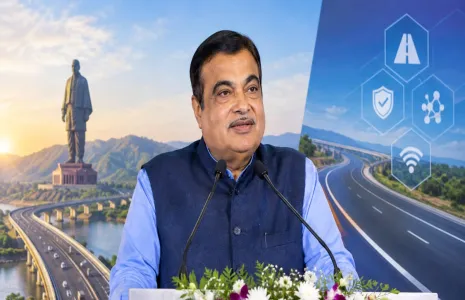
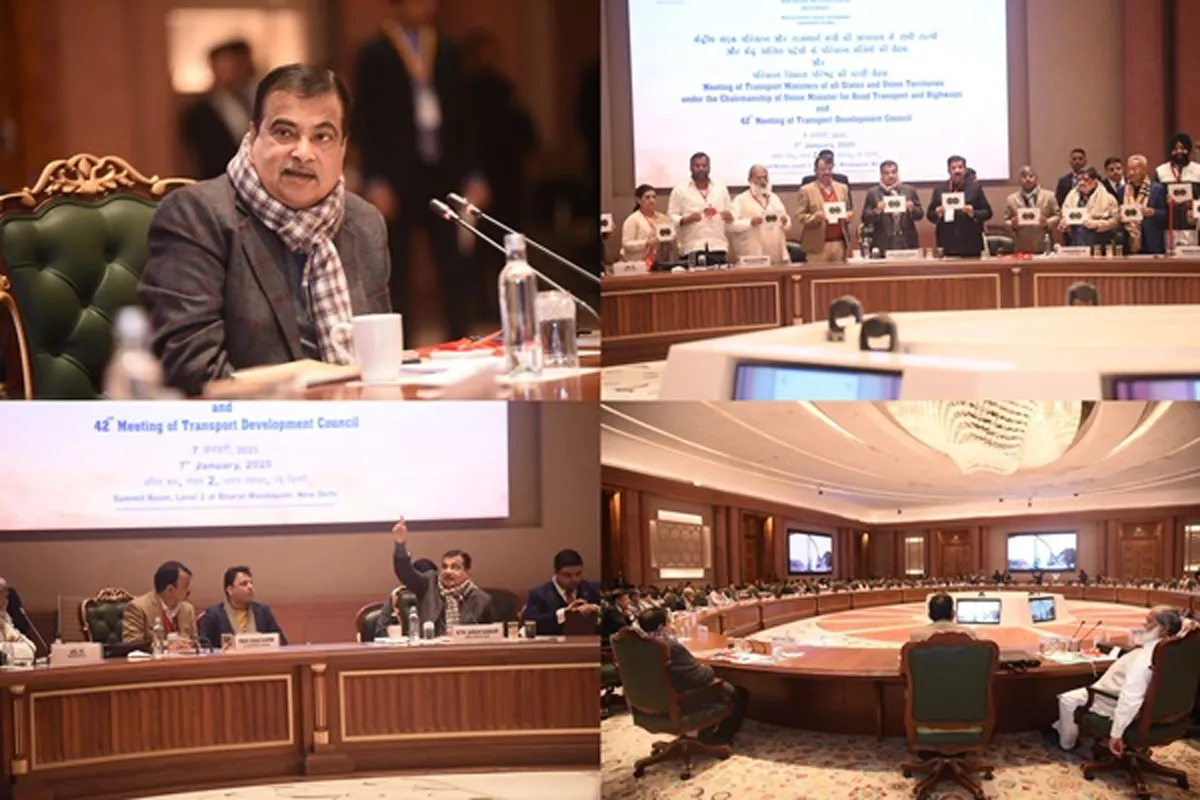
Nitin Gadkari, Union Minister for Road Transport and Highways, chaired the annual meeting of Transport Ministers from States and Union Territories in New Delhi, outlining a coordinated and reform-driven roadmap for transforming India’s road transport ecosystem.

The high-level discussions focused on road safety, passenger convenience, ease of doing business, digitisation of transport services, and automobile and emissions regulations. The meeting underlined the importance of close Centre–State coordination in a sector governed under the Concurrent List of the Constitution.

Addressing the gathering, Gadkari stressed that continuous consultation between the Union and State governments is vital to strengthen cooperative federalism and deliver safe, efficient and citizen-centric transport systems nationwide.

The meeting marked the culmination of a two-day national workshop held on 7–8 January 2026 at Bharat Mandapam. The workshop was designed to comprehensively assess challenges, solutions and implementation pathways for the road transport sector.

On the first day, technical and administrative discussions were held with Transport Secretaries from States and Union Territories, chaired by V. Umashankar, Secretary, Road Transport and Highways. The deliberations were structured by Additional Secretary Mahmood Ahmed. The second day brought together Transport Ministers under Gadkari’s chairmanship, with renewed emphasis on road safety and the Road Safety Pledge.

The discussions concluded with the 43rd Transport Development Council meeting, during which inputs from transport associations, including AIMTC and BOCI, were reviewed with Ministers and senior officials.

During the workshop, the Centre and States aligned on action across ten priority reform areas. These included the digitisation and standardisation of transport services through the Vahan and Sarathi platforms, with a focus on harmonising more than 100 online services, reducing physical visits and improving data quality and security.

Proposed legislative amendments to the Motor Vehicles Act, including Jan Vishwas 2.0, were discussed to simplify compliance, decriminalise minor offences and strengthen road safety. States also reviewed measures to reduce road fatalities through safer infrastructure, improved enforcement and enhanced post-crash care, including preparedness for the statutory cashless treatment scheme for accident victims and wider adoption of the e-DAR accident reporting system.

Other focus areas included higher vehicular safety standards, district-level road safety initiatives, expansion of the vehicle scrapping policy, uniform implementation of PUCC 2.0 emissions norms, strengthening intelligent transport systems and e-enforcement, and scaling up driver training and capacity-building infrastructure.

The Ministry also highlighted the Sadak Suraksha Mitra programme, launched with the Ministry of Youth Affairs and Sports, to involve trained youth volunteers in district-level road safety efforts, accident hotspot identification and basic post-crash assistance.

Key outcomes from the deliberations include nationwide standardisation of online transport services, large-scale data sanitisation of vehicle and licence records, rollout of a central digital data-sharing framework compliant with the DPDP Act, strengthened oversight of vehicle testing and scrapping facilities, mandatory affixation of high-security registration plates for vehicles registered before 1 April 2019, and exploration of a points-based system to track traffic violations.

In his concluding address, Gadkari called for integrating these reforms into a unified, forward-looking vision for the transport sector. He said coordinated efforts by the Centre, States and stakeholders would lay the foundation for a safer, more efficient, digitally empowered and future-ready transport system. Officials said the outcomes will guide policy action and implementation over the coming year, with a strong focus on safety, sustainability and ease of doing business.

Nitin Gadkari, Union Minister for Road Transport and Highways, chaired the annual meeting of Transport Ministers from States and Union Territories in New Delhi, outlining a coordinated and reform-driven roadmap for transforming India’s road transport ecosystem. The high-level discussions focused on road safety, passenger convenience, ease of doing business, digitisation of transport services, and automobile and emissions regulations. The meeting underlined the importance of close Centre–State coordination in a sector governed under the Concurrent List of the Constitution. Addressing the gathering, Gadkari stressed that continuous consultation between the Union and State governments is vital to strengthen cooperative federalism and deliver safe, efficient and citizen-centric transport systems nationwide. The meeting marked the culmination of a two-day national workshop held on 7–8 January 2026 at Bharat Mandapam. The workshop was designed to comprehensively assess challenges, solutions and implementation pathways for the road transport sector. On the first day, technical and administrative discussions were held with Transport Secretaries from States and Union Territories, chaired by V. Umashankar, Secretary, Road Transport and Highways. The deliberations were structured by Additional Secretary Mahmood Ahmed. The second day brought together Transport Ministers under Gadkari’s chairmanship, with renewed emphasis on road safety and the Road Safety Pledge. The discussions concluded with the 43rd Transport Development Council meeting, during which inputs from transport associations, including AIMTC and BOCI, were reviewed with Ministers and senior officials. During the workshop, the Centre and States aligned on action across ten priority reform areas. These included the digitisation and standardisation of transport services through the Vahan and Sarathi platforms, with a focus on harmonising more than 100 online services, reducing physical visits and improving data quality and security. Proposed legislative amendments to the Motor Vehicles Act, including Jan Vishwas 2.0, were discussed to simplify compliance, decriminalise minor offences and strengthen road safety. States also reviewed measures to reduce road fatalities through safer infrastructure, improved enforcement and enhanced post-crash care, including preparedness for the statutory cashless treatment scheme for accident victims and wider adoption of the e-DAR accident reporting system. Other focus areas included higher vehicular safety standards, district-level road safety initiatives, expansion of the vehicle scrapping policy, uniform implementation of PUCC 2.0 emissions norms, strengthening intelligent transport systems and e-enforcement, and scaling up driver training and capacity-building infrastructure. The Ministry also highlighted the Sadak Suraksha Mitra programme, launched with the Ministry of Youth Affairs and Sports, to involve trained youth volunteers in district-level road safety efforts, accident hotspot identification and basic post-crash assistance. Key outcomes from the deliberations include nationwide standardisation of online transport services, large-scale data sanitisation of vehicle and licence records, rollout of a central digital data-sharing framework compliant with the DPDP Act, strengthened oversight of vehicle testing and scrapping facilities, mandatory affixation of high-security registration plates for vehicles registered before 1 April 2019, and exploration of a points-based system to track traffic violations. In his concluding address, Gadkari called for integrating these reforms into a unified, forward-looking vision for the transport sector. He said coordinated efforts by the Centre, States and stakeholders would lay the foundation for a safer, more efficient, digitally empowered and future-ready transport system. Officials said the outcomes will guide policy action and implementation over the coming year, with a strong focus on safety, sustainability and ease of doing business.

Next Story
Real Estate

R.Evolution Launches Eywa Way of Water on Dubai Water Canal

R.Evolution has unveiled Eywa Way of Water, a landmark waterfront residential development along the Dubai Water Canal, marking the second project in its Eywa Collection. Conceived as a holistic living ecosystem, the development seeks to redefine ultra-luxury living by integrating principles of well-being, longevity and regenerative design.Building on the philosophy established with the first Eywa project, Eywa Way of Water explores the relationship between architecture, nature, energy and human experience. Inspired by the rhythm and intelligence of the ocean, the project incorporates water, ai..

Next Story
Equipment

Liebherr Launches Power Deals 2026 With Financing and Discounts

Liebherr has kicked off 2026 with the launch of its “Power Deals” campaign, introducing three limited-period promotional offers aimed at supporting customers across the earthmoving and material handling segments. Available in selected markets through participating sales and service partners, the initiatives combine financing incentives, anniversary benefits and cost-saving maintenance solutions.As part of Power Deal 1, Liebherr is offering a financing subsidy on selected construction and material handling machines purchased in the first half of 2026. Customers can avail of an annual subsid..

Next Story
Infrastructure Urban

Haver & Boecker Niagara to Showcase Largest Booth at CONEXPO 2026

Haver & Boecker Niagara has announced that it will unveil its largest and most interactive exhibit to date at CONEXPO-CON/AGG 2026, scheduled to be held from March 3 to 7 in Las Vegas. The company’s expansive booth, located at C32616 in the Central Hall, has been designed as an immersive, museum-style experience offering visitors a comprehensive view of its latest mineral processing technologies.The exhibit will feature multiple themed rooms highlighting Haver & Boecker Niagara’s end-to-end solutions, including diagnostics, processing equipment, screen media, and aftermarket servic..

Advertisement

Subscribe to Our Newsletter

Get daily newsletters around different themes from Construction world.

STAY CONNECTED

Advertisement

Advertisement

Advertisement

Advertisement

Open In App