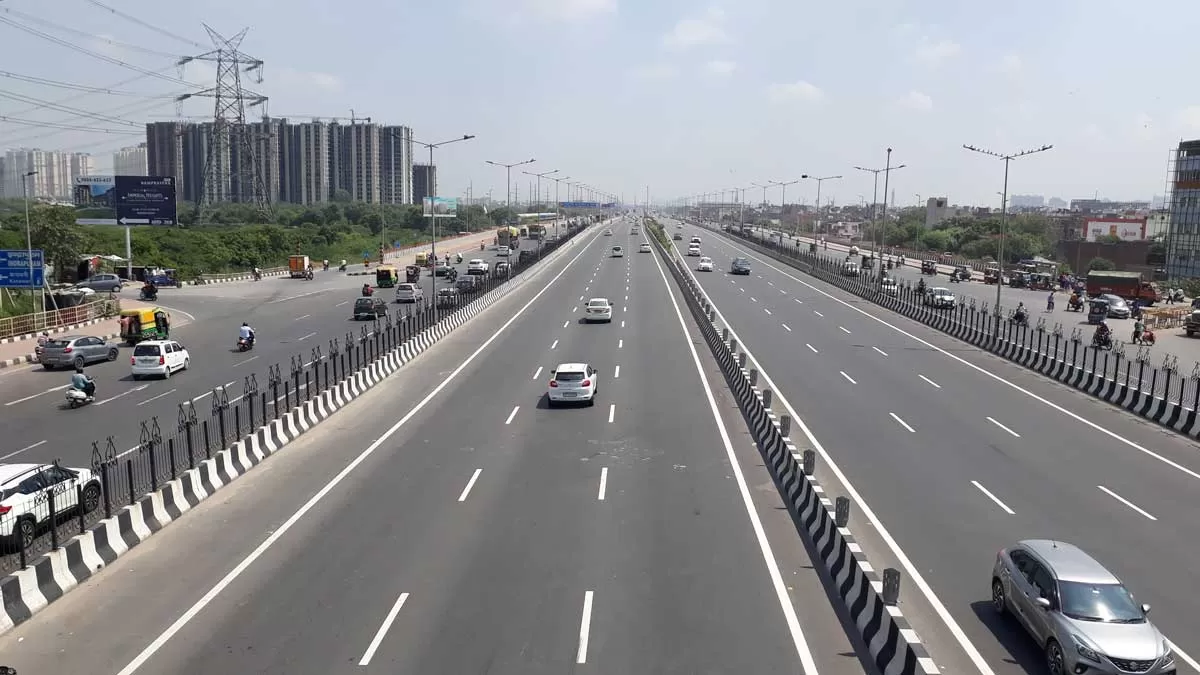
Government mandates resilient materials for safer highways
ROADS & HIGHWAYS

Government mandates resilient materials for safer highways

The possibility of eliminating cracked and sticky pavements and roads during the summer heat may soon become a reality. There are new directives regarding road construction that will mandate the use of surfacing materials based on both traffic volume and pavement temperature. This initiative aims to enhance the smoothness and safety of Indian highways.

The Ministry of Road Transport and Highways has issued fresh guidelines for highways and expressways. These guidelines stipulate that all upcoming road projects must employ surfacing materials chosen according to variations in temperature and axle load (traffic weight), departing from the current practice solely based on weight-carrying capacity.

The amendments will revise the specifications concerning the use of bituminous binders for highways. Henceforth, different grades of binders will be specified according to factors such as prevailing loading, ambient temperature, rainfall, snowfall, and speed. This adjustment is anticipated to enhance pavement durability and render highways safer to navigate, minimising or even eliminating the occurrence of breaks or potholes.

The possibility of eliminating cracked and sticky pavements and roads during the summer heat may soon become a reality. There are new directives regarding road construction that will mandate the use of surfacing materials based on both traffic volume and pavement temperature. This initiative aims to enhance the smoothness and safety of Indian highways. The Ministry of Road Transport and Highways has issued fresh guidelines for highways and expressways. These guidelines stipulate that all upcoming road projects must employ surfacing materials chosen according to variations in temperature and axle load (traffic weight), departing from the current practice solely based on weight-carrying capacity. The amendments will revise the specifications concerning the use of bituminous binders for highways. Henceforth, different grades of binders will be specified according to factors such as prevailing loading, ambient temperature, rainfall, snowfall, and speed. This adjustment is anticipated to enhance pavement durability and render highways safer to navigate, minimising or even eliminating the occurrence of breaks or potholes.

Next Story
Infrastructure Energy

CMPDIL And MECL Sign MoU To Boost Mineral Exploration

Union Minister of State for Coal and Mines Satish Chandra Dubey chaired a meeting in Ranchi to review the performance of the Central Mine Planning and Design Institute (CMPDIL). The meeting on May 14 was attended by Chaudhari Shivraj Singh, chair and managing director of CMPDIL, Nilendu Kumar Singh, chair and managing director of Central Coalfields Limited, and I D Narayan, chair and managing director of Mineral Exploration and Consultancy (MECL), together with technical directors and senior officers. The ministry said the review covered exploration activities, report preparation, capital expe..

Next Story
Infrastructure Urban

Government Extends Rs 72.8 bn Rare Earth Magnet Scheme Deadline

The Ministry of Heavy Industries has extended the bid submission deadline for the Rs 72.8 billion (bn) scheme to promote domestic manufacturing of rare earth permanent magnets, setting the new closing date at June 29. The decision followed representations from industry stakeholders seeking additional time to prepare and submit proposals under the global tender process. The ministry said the move aims to widen participation as India pushes to build domestic capacity in critical high?tech materials. The scheme is designed to develop integrated manufacturing facilities for sintered rare earth per..

Next Story
Infrastructure Transport

IndianOil To Form JV For Sustainable Aviation Fuel Project At Paradip

The Board of Indian Oil Corporation (IndianOil) approved the formation of a 50:50 joint venture with M11 Energy Transition Private Limited to develop a 100 KTPA Hydroprocessed Esters and Fatty Acids (HEFA) based Sustainable Aviation Fuel plant at Paradip. The decision was taken at the company board meeting on 18 May 2026, and the project cost is estimated at Rs 10,636 million with a plus or minus thirty per cent tolerance. The proposal remains subject to statutory and Government approvals from NITI Aayog and DIPAM. The project is intended to accelerate the development of sustainable and low-ca..

Advertisement

Subscribe to Our Newsletter

Get daily newsletters around different themes from Construction world.

STAY CONNECTED

Advertisement

Advertisement

Advertisement

-->