Jammu And Kashmir Road Upgrades Enhance Connectivity
ROADS & HIGHWAYS

Jammu And Kashmir Road Upgrades Enhance Connectivity

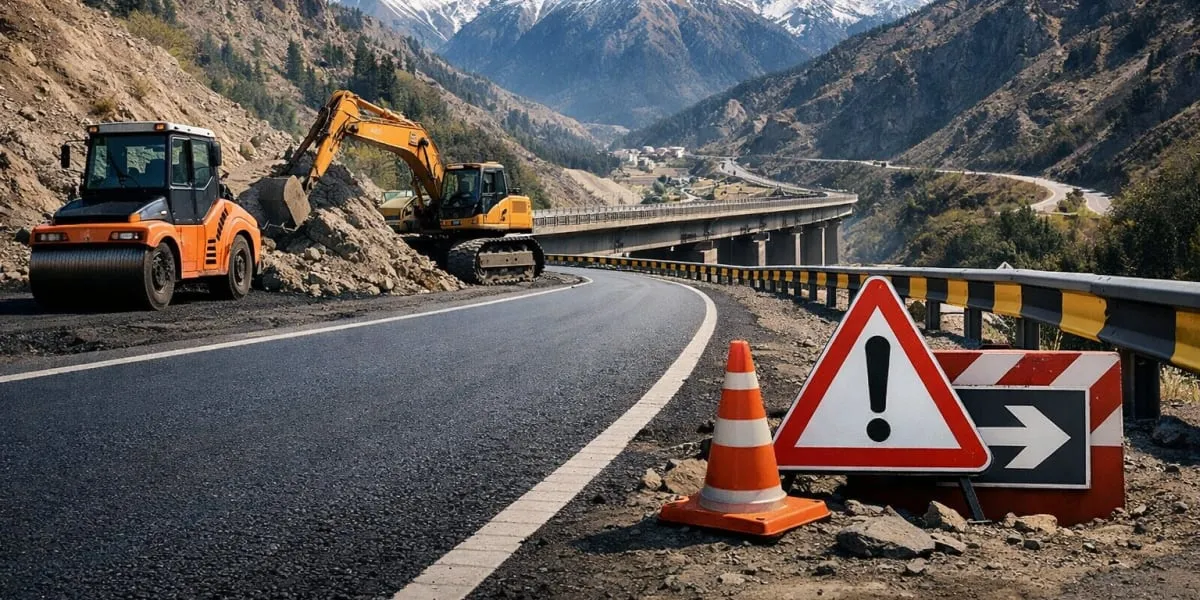
Authorities have accelerated a programme of road upgrades across Jammu and Kashmir to enhance regional connectivity and support border development, according to reports compiled by TNM with inputs from ANI. The upgrades include resurfacing, widening and construction of link roads to improve access to remote communities and to facilitate movement for both civilian and security purposes. The work is being coordinated by central and local agencies and is being prioritised in strategic sectors. Officials indicate that timelines vary according to terrain and weather.

Officials indicate that improved roads will reduce travel times to district centres and market towns, thereby supporting economic activity and access to services. Enhanced links are expected to benefit agricultural producers, traders and small businesses by making it easier to transport goods and to reach markets. The projects are also framed as measures to strengthen logistic support for border forces and to ensure quicker deployment where required. Local transport departments will coordinate with communities on scheduling.

Local administrations are focusing on ensuring sustainability of the upgraded corridors through drainage works and regular maintenance schedules, while engineers assess terrain challenges in hilly areas. Attention is being paid to environmental safeguards and to minimising disruption to local populations during construction phases. Community engagement has been undertaken to align priorities and to address concerns about land use and access. Funding mechanisms and contractor selection follow established procurement norms.

The initiative is presented as part of a broader effort to integrate remote areas with mainstream economic networks and to promote tourism potential where security conditions permit. Observers note that better connectivity may improve delivery of public services and disaster response capacity. Authorities will continue to monitor progress and to report on milestones as the upgrades advance through planned phases in the coming months. Authorities expect visible results within a few months.

Authorities have accelerated a programme of road upgrades across Jammu and Kashmir to enhance regional connectivity and support border development, according to reports compiled by TNM with inputs from ANI. The upgrades include resurfacing, widening and construction of link roads to improve access to remote communities and to facilitate movement for both civilian and security purposes. The work is being coordinated by central and local agencies and is being prioritised in strategic sectors. Officials indicate that timelines vary according to terrain and weather. Officials indicate that improved roads will reduce travel times to district centres and market towns, thereby supporting economic activity and access to services. Enhanced links are expected to benefit agricultural producers, traders and small businesses by making it easier to transport goods and to reach markets. The projects are also framed as measures to strengthen logistic support for border forces and to ensure quicker deployment where required. Local transport departments will coordinate with communities on scheduling. Local administrations are focusing on ensuring sustainability of the upgraded corridors through drainage works and regular maintenance schedules, while engineers assess terrain challenges in hilly areas. Attention is being paid to environmental safeguards and to minimising disruption to local populations during construction phases. Community engagement has been undertaken to align priorities and to address concerns about land use and access. Funding mechanisms and contractor selection follow established procurement norms. The initiative is presented as part of a broader effort to integrate remote areas with mainstream economic networks and to promote tourism potential where security conditions permit. Observers note that better connectivity may improve delivery of public services and disaster response capacity. Authorities will continue to monitor progress and to report on milestones as the upgrades advance through planned phases in the coming months. Authorities expect visible results within a few months.

Related Stories

Gold Stories

Next Story
Infrastructure Urban

KONE Opens India's First Digital Experience Centre in Pune

KONE, a global elevator and escalator manufacturer, has inaugurated its first Digital Experience Centre (DEC) in India, located in Pune. The facility aims to showcase how artificial intelligence (AI), connectivity and data-driven technologies can enhance customer experiences and improve building operations.The centre was inaugurated by Jussi Herlin, Executive Vice Chair, KONE Corporation; Philippe Delorme, President and CEO, KONE; and Nandan Nilekani, Co-founder and Chairman of the Board, Infosys.Designed as an interactive customer environment, the facility demonstrates digital solutions cover..

Next Story
Infrastructure Urban

CII GreenCo Launches Circularity Guidelines for Indian Industry

The Confederation of Indian Industry (CII) GreenCo Council has launched the CII GreenCo Circularity Guidelines – Pilot Version at the 17th CII GreenCo Waste & Resource Management Summit 2026 in Chennai. The initiative aims to strengthen resource efficiency, waste reduction and circular economy practices across Indian manufacturing and process industries.The guidelines introduce a structured framework with circularity indices covering raw materials, consumables, packaging and other resource inputs. These indicators will help industries assess existing practices, identify opportunities to ..

Next Story
Infrastructure Energy

Global Electronics Association Launches IPC-1783-CO2E Standard

The Global Electronics Association has introduced IPC-1783-CO2E, a new international standard aimed at improving consistency, transparency and comparability in product carbon footprint reporting across the electronics manufacturing industry.The standard, titled International Standard for Data Collection and Reporting of CO2 Equivalent (CO2e) Emissions for the Electronics Manufacturing Supply Chain, provides industry-specific guidance for collecting, estimating and reporting carbon emissions data.With increasing regulatory requirements and customer expectations, electronics manufacturers face c..

Advertisement

Subscribe to Our Newsletter

Get daily newsletters around different themes from Construction world.

STAY CONNECTED

Advertisement

SPECIAL OFFER
QR Code