NHAI Launches Rajasthan's First Barrierless Tolling on NH-48
ROADS & HIGHWAYS

NHAI Launches Rajasthan's First Barrierless Tolling on NH-48

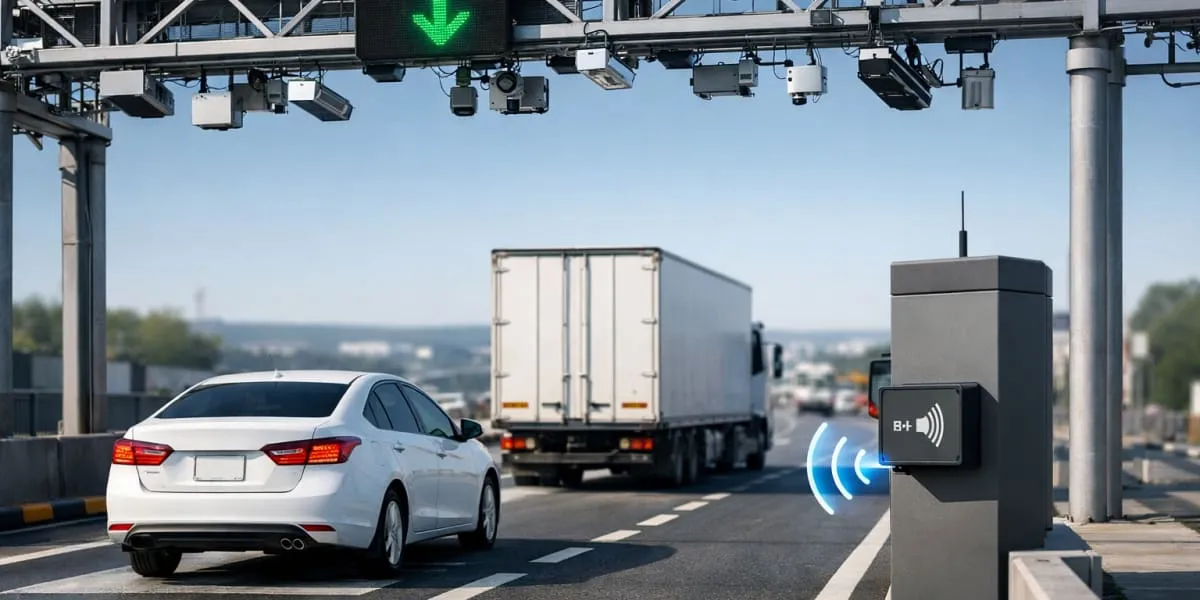
The National Highways Authority of India (NHAI) has launched the Multi-Lane Free Flow (MLFF) tolling system at the Daulatpura Toll Plaza on the Delhi-Jaipur section of National Highway 48 in Rajasthan. The MLFF framework introduces barrier-less tolling with minimal human intervention and enables vehicles to pass through toll locations without stopping, maintaining uninterrupted traffic flow. The launch marks a step in the national rollout of digital toll infrastructure and follows prior deployments elsewhere.

The system integrates Automatic Number Plate Recognition (ANPR) technology with FASTag-based Electronic Toll Collection (ETC) to facilitate automated collection of user fees with reduced need for staff. NHAI has indicated plans to transition the Shahjahanpur and Manoharpur toll plazas on the same corridor to the MLFF model, aiming to make commuting on the busy Delhi to Jaipur route barrier-free. Authorities expect the approach to simplify operations at high volume locations.

Earlier implementations of MLFF were completed at the Chorayasi Toll Plaza on the Surat–Bharuch section of NH-48 in Gujarat and at the Mundka Bakkarwala Toll Plaza on the Urban Extension Road?II in Delhi. By enabling zero waiting time and uninterrupted vehicular movement, MLFF is intended to save time, improve fuel efficiency and reduce vehicular emissions at toll sites. The technology is presented as a major advancement in the development of digital national highway infrastructure.

Users are required to maintain sufficient balance in their FASTag accounts to ensure a seamless MLFF experience and are subject to an Electronic Notice for cases of insufficient balance, invalid or non-functional FASTag. The notice requires payment of the normal user fee within 72 hours and specifies that non-compliance after that period results in the fee being charged at twice the normal vehicle category rate. E-Notices are accessible and payable through the designated portal at https://nhfeenotice.parivahan.gov.in/#/ and grievances may be raised within 72 hours of issuance.

The implementation is expected to strengthen the tolling ecosystem by enhancing transparency and reducing operational costs at toll plazas. The initiative aligns with the Government of India vision to deliver citizen-centric services and improve ease of living.

"Join industry leaders at RAHSTA Expo, India's premier platform for roads, highways and traffic infrastructure. Register now to explore innovations, network with experts and shape the future of mobility."

The National Highways Authority of India (NHAI) has launched the Multi-Lane Free Flow (MLFF) tolling system at the Daulatpura Toll Plaza on the Delhi-Jaipur section of National Highway 48 in Rajasthan. The MLFF framework introduces barrier-less tolling with minimal human intervention and enables vehicles to pass through toll locations without stopping, maintaining uninterrupted traffic flow. The launch marks a step in the national rollout of digital toll infrastructure and follows prior deployments elsewhere. The system integrates Automatic Number Plate Recognition (ANPR) technology with FASTag-based Electronic Toll Collection (ETC) to facilitate automated collection of user fees with reduced need for staff. NHAI has indicated plans to transition the Shahjahanpur and Manoharpur toll plazas on the same corridor to the MLFF model, aiming to make commuting on the busy Delhi to Jaipur route barrier-free. Authorities expect the approach to simplify operations at high volume locations. Earlier implementations of MLFF were completed at the Chorayasi Toll Plaza on the Surat–Bharuch section of NH-48 in Gujarat and at the Mundka Bakkarwala Toll Plaza on the Urban Extension Road?II in Delhi. By enabling zero waiting time and uninterrupted vehicular movement, MLFF is intended to save time, improve fuel efficiency and reduce vehicular emissions at toll sites. The technology is presented as a major advancement in the development of digital national highway infrastructure. Users are required to maintain sufficient balance in their FASTag accounts to ensure a seamless MLFF experience and are subject to an Electronic Notice for cases of insufficient balance, invalid or non-functional FASTag. The notice requires payment of the normal user fee within 72 hours and specifies that non-compliance after that period results in the fee being charged at twice the normal vehicle category rate. E-Notices are accessible and payable through the designated portal at https://nhfeenotice.parivahan.gov.in/#/ and grievances may be raised within 72 hours of issuance. The implementation is expected to strengthen the tolling ecosystem by enhancing transparency and reducing operational costs at toll plazas. The initiative aligns with the Government of India vision to deliver citizen-centric services and improve ease of living.

Next Story
Real Estate

Bharat Shah Family Buys Four Luxury Apartments In Worli For Rs1.8 bn

The family of veteran investor Bharat Shah has acquired four ultra-luxury apartments on the higher floors of Kalpataru One in Worli, South Mumbai, for Rs1.8 billion (bn). The purchases were registered on 6 July 2026 and were executed through Preeti Bharat Shah and Kinnari Bharat Shah, who bought the flats from Kalpataru Properties Limited. Property registration documents reviewed by Zapkey show the total consideration at Rs1.7941 billion. The transactions recorded a per square foot RERA carpet price of Rs0.101 million (mn), with each apartment valued at about Rs448.5 million. The four residenc..

Next Story
Infrastructure Urban

NITI Aayog Consultation On Critical Mineral Supply Chains

NITI Aayog convened a stakeholder consultation in New Delhi on Wednesday to assess requirements for critical minerals across strategic sectors, bringing together experts from government, research institutions, academia and industry. The meeting aimed to estimate current and future demand, identify supply chain vulnerabilities and discuss measures to strengthen domestic capabilities in exploration, processing and recycling. The exercise formed part of broader efforts to secure mineral value chains essential for economic growth, technological advancement and national security.\n\nDiscussions con..

Next Story
Infrastructure Urban

Gujarat Tops India in Renewable Energy With 50.386 GW Capacity

Gujarat has emerged as India’s leading renewable energy state with a total installed renewable energy capacity of 50.386 GW, according to the Chief Minister’s Office. The capacity includes 15,850.56 megawatt (MW) of wind power and 32,302.7 megawatt (MW) of solar power, and the state accounts for 17.82 per cent of India’s total renewable energy capacity. The state ranks first in installed wind capacity and second in solar capacity. Gujarat has also installed more than 1.3 million (mn) rooftop solar systems generating 7,408.10 megawatt (MW). Ground mounted solar projects account for 23,259..

Advertisement

Subscribe to Our Newsletter

Get daily newsletters around different themes from Construction world.

STAY CONNECTED

Advertisement

Advertisement

Advertisement