Delhi CM Launches Inderlok-Indraprastha Underground Metro
RAILWAYS & METRO RAIL

Delhi CM Launches Inderlok-Indraprastha Underground Metro

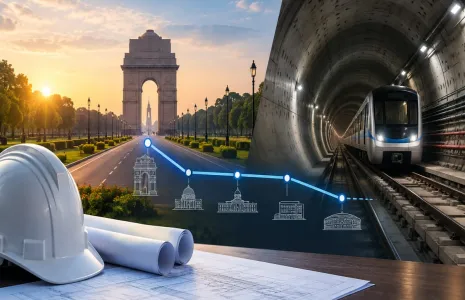
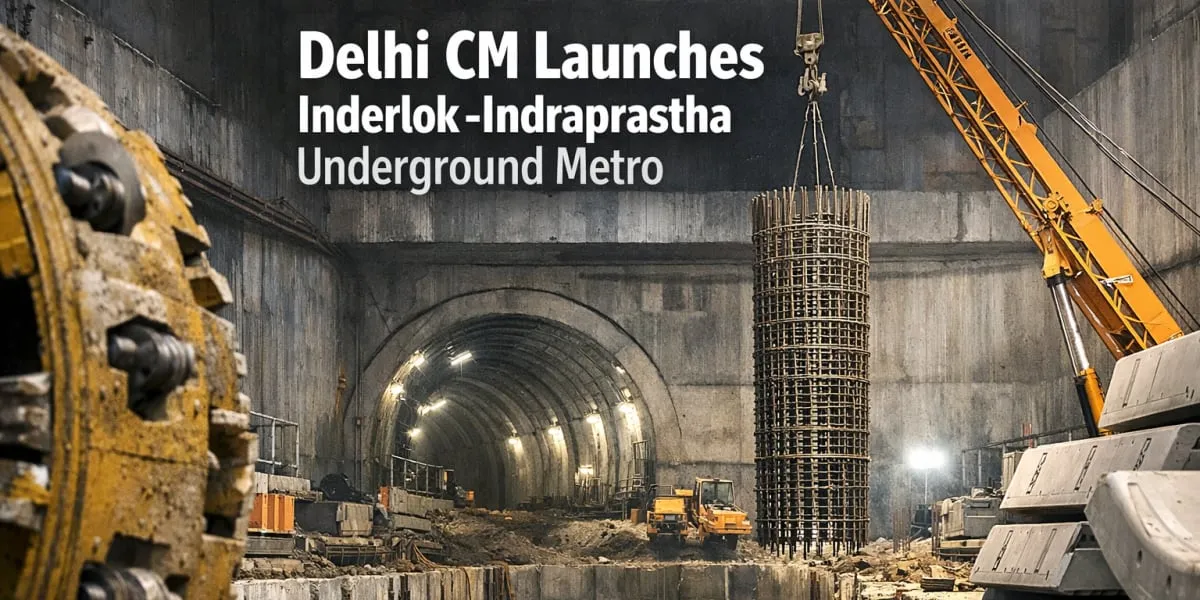
Delhi Chief Minister Rekha Gupta launched construction of the 12.377-km underground Inderlok-Indraprastha corridor of the Delhi Metro Rail Corporation (DMRC) at the Sarai Rohilla Metro Station construction site. Work began with the construction of the diaphragm wall at Sarai Rohilla, marking the first phase of the project, according to an official statement. The corridor is a fully underground extension of the Magenta Line and will comprise 10 modern underground metro stations.

The 10 stations will be located at Inderlok, Daya Basti, Sarai Rohilla, Ajmal Khan Park, Jhandewalan Temple, Nabi Karim, New Delhi, Delhi Gate, Delhi Sachivalaya-IG Stadium and Indraprastha. Once completed, the Magenta Line will extend to nearly 89 kilometres, making it the longest Metro line in the Delhi Metro network. The extension will raise the number of interchange and underground stations on the line, improving travel times and operational flexibility.

The corridor will connect with seven major Metro lines and provide interchange options across key transit routes. Commuters will be able to change to the Red and Green Lines at Inderlok, to the Magenta Line at Nabi Karim, to the Yellow Line and the Airport Express at New Delhi, to the Violet Line at Delhi Gate and to the Blue Line at Indraprastha. This network integration is expected to shorten journey lengths and distribute passenger flows more evenly across the system.

Planners said the new corridor will provide seamless access to Sarai Rohilla Railway Station, New Delhi Railway Station, Delhi Sachivalaya, Jhandewalan Temple, Arun Jaitley Stadium, Indira Gandhi Indoor Stadium, Delhi Gate, Kartavya Path, India Gate, the National War Memorial and Central Vista. It will directly benefit government employees, students, traders, tourists and the lakhs of people who commute daily. The Delhi government anticipates that closer integration with the central government and DMRC will support urban mobility objectives and strengthen public transport across the national capital.

"Join industry leaders at RAHSTA Expo, India's premier platform for roads, highways and traffic infrastructure. Register now to explore innovations, network with experts and shape the future of mobility."

Delhi Chief Minister Rekha Gupta launched construction of the 12.377-km underground Inderlok-Indraprastha corridor of the Delhi Metro Rail Corporation (DMRC) at the Sarai Rohilla Metro Station construction site. Work began with the construction of the diaphragm wall at Sarai Rohilla, marking the first phase of the project, according to an official statement. The corridor is a fully underground extension of the Magenta Line and will comprise 10 modern underground metro stations. The 10 stations will be located at Inderlok, Daya Basti, Sarai Rohilla, Ajmal Khan Park, Jhandewalan Temple, Nabi Karim, New Delhi, Delhi Gate, Delhi Sachivalaya-IG Stadium and Indraprastha. Once completed, the Magenta Line will extend to nearly 89 kilometres, making it the longest Metro line in the Delhi Metro network. The extension will raise the number of interchange and underground stations on the line, improving travel times and operational flexibility. The corridor will connect with seven major Metro lines and provide interchange options across key transit routes. Commuters will be able to change to the Red and Green Lines at Inderlok, to the Magenta Line at Nabi Karim, to the Yellow Line and the Airport Express at New Delhi, to the Violet Line at Delhi Gate and to the Blue Line at Indraprastha. This network integration is expected to shorten journey lengths and distribute passenger flows more evenly across the system. Planners said the new corridor will provide seamless access to Sarai Rohilla Railway Station, New Delhi Railway Station, Delhi Sachivalaya, Jhandewalan Temple, Arun Jaitley Stadium, Indira Gandhi Indoor Stadium, Delhi Gate, Kartavya Path, India Gate, the National War Memorial and Central Vista. It will directly benefit government employees, students, traders, tourists and the lakhs of people who commute daily. The Delhi government anticipates that closer integration with the central government and DMRC will support urban mobility objectives and strengthen public transport across the national capital.

Next Story
Real Estate

VeARC leases 27,000 sq ft office space in Bengaluru

VeARC India has leased approximately 27,000 sq ft of office space at The Executive Centre's (TEC) Helios Business Park on Outer Ring Road (ORR), Bengaluru, to support the expansion of its Global Capability Centre (GCC) operations.The new workspace accommodates more than 450 workstations and is intended to support the company's growing workforce in India. VeARC India serves as the Global Capability Centre for Long Arc Capital.Located on Bengaluru's Outer Ring Road, the office provides access to one of the city's key technology and business corridors. The expansion comes amid continued growth in..

Next Story
Real Estate

Bharat Shah Family Buys Four Luxury Apartments In Worli For Rs1.8 bn

The family of veteran investor Bharat Shah has acquired four ultra-luxury apartments on the higher floors of Kalpataru One in Worli, South Mumbai, for Rs1.8 billion (bn). The purchases were registered on 6 July 2026 and were executed through Preeti Bharat Shah and Kinnari Bharat Shah, who bought the flats from Kalpataru Properties Limited. Property registration documents reviewed by Zapkey show the total consideration at Rs1.7941 billion. The transactions recorded a per square foot RERA carpet price of Rs0.101 million (mn), with each apartment valued at about Rs448.5 million. The four residenc..

Next Story
Infrastructure Urban

NITI Aayog Consultation On Critical Mineral Supply Chains

NITI Aayog convened a stakeholder consultation in New Delhi on Wednesday to assess requirements for critical minerals across strategic sectors, bringing together experts from government, research institutions, academia and industry. The meeting aimed to estimate current and future demand, identify supply chain vulnerabilities and discuss measures to strengthen domestic capabilities in exploration, processing and recycling. The exercise formed part of broader efforts to secure mineral value chains essential for economic growth, technological advancement and national security.\n\nDiscussions con..

Advertisement

Subscribe to Our Newsletter

Get daily newsletters around different themes from Construction world.

STAY CONNECTED

Advertisement

Advertisement

Advertisement